

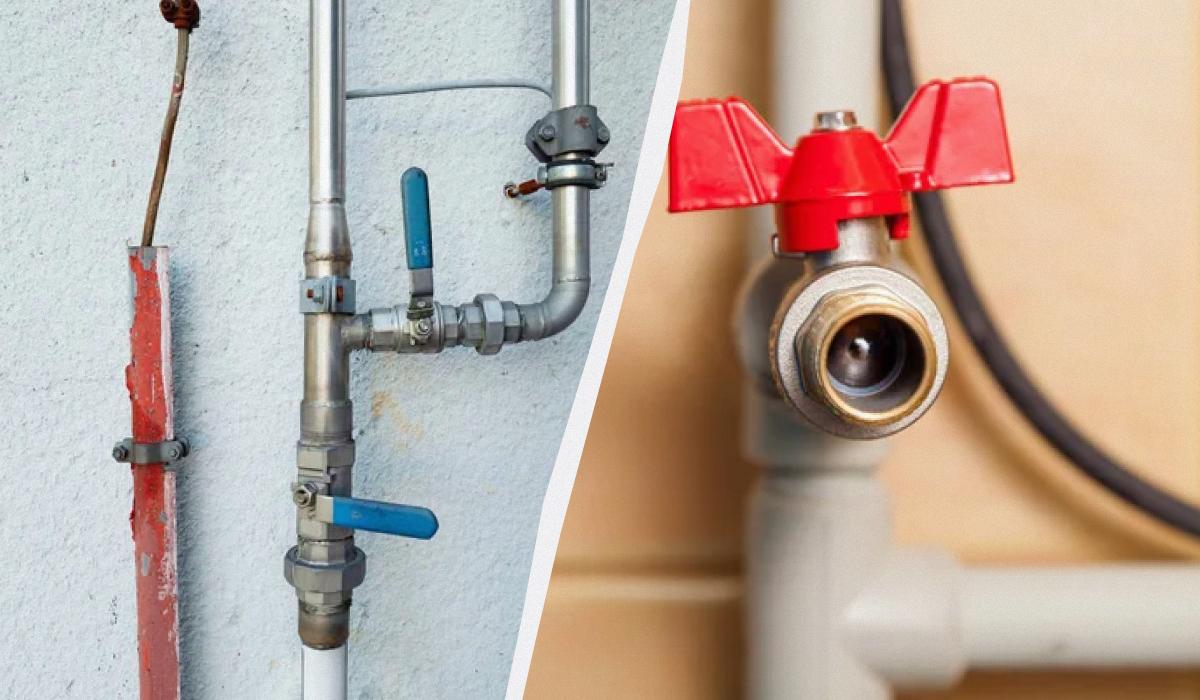
Ball valves on hot and cold water supply lines can be freed without calling a plumber by applying penetrating lubricant and gently rocking the handle side to side.
Attempting to force a seized valve handle with maximum strength is the most critical error during home repairs, as excessive pressure often snaps the metal stem and breaks the pipe fixture entirely.
Ball valves are quarter turn shutoff valves standard across domestic plumbing networks, gas lines, and utility connections. Inside the valve body, a stainless steel or brass sphere with a center bore pivots between rubber seats to control fluid flow, but long periods without use allow limescale, dirt, and rust to weld moving parts together.
Pressure relief and joint cleaning
Before attempting to turn a stuck valve, homeowners must isolate the water line further upstream. Opening the nearest working tap higher up the supply pipe releases trapped hydraulic pressure from the jammed section before any mechanical work begins.
The external junction where the handle attaches to the valve stem shaft must then be scrubbed clean. Removing surface scale, dirt, and rust buildup around the exterior gap ensures that chemical treatments can enter the housing.
Lubrication and handle movement
A liberal application of penetrating lubricant should be sprayed directly onto the stem joint and left undisturbed for 10 to 15 minutes. Penetrating oils feature low surface tension, allowing the fluid to creep by capillary action into microscopic gaps to dissolve rust and soften hardened debris.
Once the lubricant has soaked into the fitting, homeowners should grip the handle and rock it side to side using two or three short left and right movements. Forcing the handle directly in its intended turning direction must be avoided, as direct force concentrates stress on the frozen stem.
As the internal mechanism begins to give way, the side to side motion should be continued while gradually increasing the angle of movement. Repeating this process frees the stem until the handle completes a full half turn left or right to restore or shut off water flow.
Valve replacement and routine prevention
If penetrating lubricant and mechanical rocking fail to free the valve, the internal mechanism has reached the end of its operational lifespan. In such cases, the old valve must be unbolted from the pipeline, cleared of rust and dirt deposits, and replaced with a new unit.
To prevent ball valves from seizing in the future, homeowners should regularly open and close shutoff valves on water lines to keep internal seals active and prevent scale build up during long periods of idleness.


