


Actresses Barbara Stanwyck and Lana Turner defined 1940s Hollywood film noir by portraying ambitious and hyper-sexualised domestic villains, according to film critic Lluis Fernandez.
Their starring roles in Double Indemnity and The Postman Always Rings Twice brought a new form of middle-class female antihero to American cinema in the years preceding World War II.
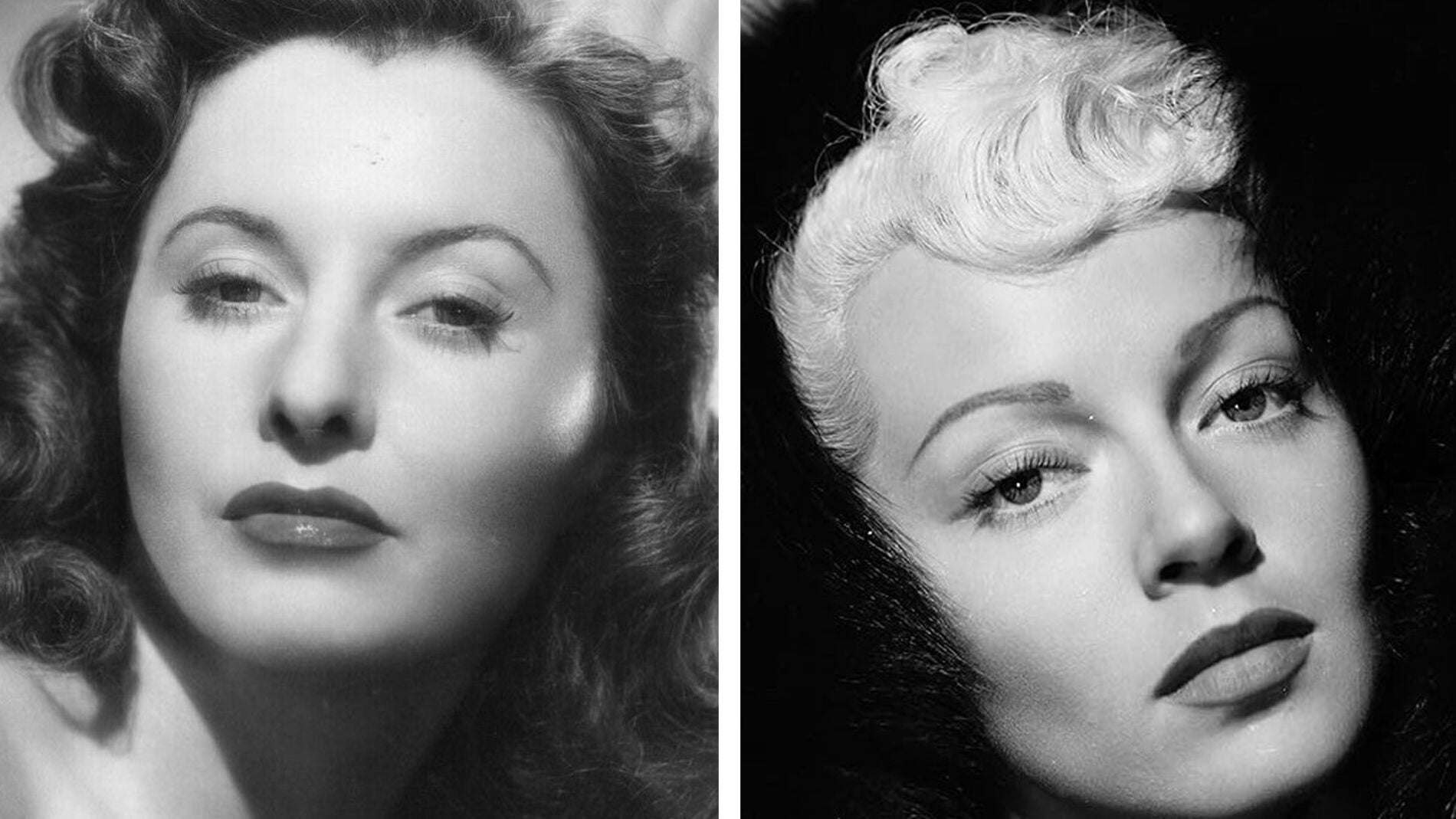
Film noir emerged during the 1940s as a distinct style of Hollywood crime cinema, characterised by dark lighting, cynical themes, and morally complex characters operating in urban settings.
The cinematic trend of the domestic female killer began at the start of the decade with Bette Davis. Davis played murderer Leslie Crosbie in the 1940 drama The Letter, embodying a new archetype of middle-class women who were ambitious, manipulative, and willing to kill when necessary.
Davis was already one of Hollywood's premier dramatic actresses, known for playing intense and unsympathetic figures. Unlike traditional screen divas who redeemed themselves for love, characters like Crosbie operated out of pure self-interest. Crosbie declared after her crime that with all her affection, she still loved the man she killed.
Stanwyck and Turner expanded this archetype through hyper-sexualised glamour. Turner made a memorable appearance in white shorts opposite vagabond John Garfield in The Postman Always Rings Twice, while Stanwyck appeared in Double Indemnity wearing a blonde wig with the fever of desire in her eyes.
Turner, born Julia Jean Mildred Frances Turner, was one of Metro-Goldwyn-Mayer's top glamour stars, while Stanwyck was a versatile performer who received four Academy Award nominations during her career before receiving an honorary Oscar in 1982.
Both actresses established their stardom in the years prior to the Second World War and maintained active careers into the 1980s. Their screen presence was renewed late in life through starring roles in American television soap operas, including Dynasty in 1981, Falcon Crest in 1982, and The Colbys in 1985.
These prime-time television serials provided a final opportunity for older actresses to play villainous roles on screen, offering starring parts for Jane Wyman, Kim Novak, Gina Lollobrigida, Turner, and Stanwyck.
Ruthless motives and Chandler dialogue
The image of the ruthless woman willing to kill for money was highlighted in dialogue written by Raymond Chandler for the 1944 release Double Indemnity.
Chandler, one of America's most famous hardboiled crime novelists, adapted the screenplay from James M. Cain's fiction. In one central exchange after shooting her lover, Walter Neff tells Phyllis Dietrichson that they are both scoundrels. Dietrichson replies that he is a little more of one.
When Neff asks her not to say she was ever in love with him, Dietrichson answers that she never loved her husband Walter or him, adding that she is rotten to her soul.
Mary Astor presented a unique case among film noir actresses in the 1941 detective classic The Maltese Falcon. Playing opposite Humphrey Bogart, Astor portrayed a character pretending to seek protection from private detective Sam Spade.
Directed by John Huston, The Maltese Falcon is widely regarded by film historians as the movie that established the film noir genre. Astor used a delicate acting style, beauty, and a deep voice to project vulnerability that concealed her perversity as a soulless figure.
In the final dialogue between the tough detective and the femme fatale, character Brigid O'Shaughnessy admits her evil nature, telling Spade that she has not lived a good life and has behaved worse than he could imagine.
Spade answers that her admission is helpful, noting that if she were as innocent as she pretended to be, they would never get anywhere.
Iconic pairings and screen violence
Veronica Lake became another audience favourite among beautiful cinema villains through her mysterious screen persona and ironic comebacks. She was instantly recognizable by her long hairstyle that partially covered one of her deep blue eyes.
Lake formed one of Hollywood's most successful crime cinema partnerships with actor Alan Ladd, starring together in the 1942 films This Gun for Hire and The Glass Key.
Her roles relied on moral ambiguity, presenting characters who were neither entirely good nor fully evil. This ambiguity led to scenes where Ladd slapped her character, establishing a violent ritual in crime cinema.
That physical confrontation developed into an iconic cinematic pattern, later mirrored in 1946 when Glenn Ford slapped Rita Hayworth in Gilda.
Hayworth was celebrated as one of Hollywood's leading glamour icons during the 1940s. Her character in Gilda asserted her independence in a famous exchange with Ford, telling him that if she were a ranch, she would be called No Man's Land.
Female authorship and the fate of the femme fatale
The original tone of Gilda came from its screenwriters, E.A. Ellington and Marion Parsonnet. Writing as women, they gave Hayworth's character an unusually hyper-feminine identity for 1940s film noir.
Fernandez notes that Gilda was not inherently evil, but rather a resentful survivor driven by bitterness over a betrayal in love. Her independent stance ultimately collapses in the film's ending when she submits to Ford's affection.
Although created within male cinematic fantasy, the interwar femme fatale stereotype produced strong, sexually liberated women who demanded equal rights with men.
Behaving without moral boundaries was the narrative penalty these manipulative figures paid for attempting to treat men as equals.
Every femme fatale in these crime stories meets the same ultimate fate by dying at the hands of the lover she manipulated. Bound together by murder, the characters are tied to one another through an unbreakable blood pact.
While these fatal endings resemble a moral redemption, Fernandez concludes that the characters ultimately die as punishment for remaining independent women with rotten souls.