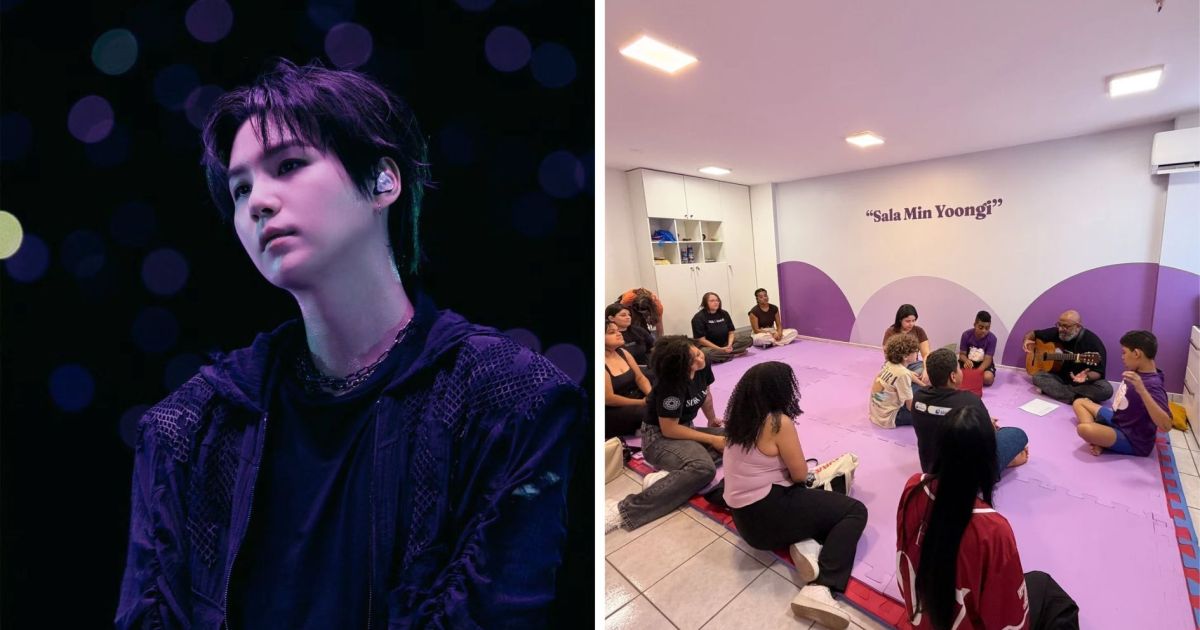
Fans of South Korean group BTS in Brazil have raised more than R$15,000 to renovate two music therapy rooms at Instituto Autismos in Brasília, an institute that supports autistic people. The rooms, which opened in October, were named Min Yoongi, the real name of BTS member Suga.
The fundraising was organised by the fanbases Min Yoongi Brazil and Min Yoongi Team BR, working with Projeto Amygdala, a group that runs a free psychological care network.
Suga's mental health advocacy
Suga is known for speaking openly about mental health, a subject still considered taboo in South Korea. In his song "The Last," the rapper addresses his experiences with depression, social anxiety and the pressure of fame, describing the track as one of the tools he used to cope with those struggles.
Suga has also taken his advocacy beyond music. In June 2025, he donated 5 billion South Korean won, equivalent to more than R$18 million, to Severance Hospital in Seoul. The donation helped fund a care centre for autistic children and adolescents.
That centre, called the Min Yoongi Center after the singer's real name, opened in September 2025. Suga took part in developing a program that uses music in the care of autistic children and adolescents, working directly with participants and helping to write a clinical manual for the program.
How the Brazilian tribute came together
Suga's work in South Korea is what inspired fans in Brazil. While preparing for BTS's arrival in the country, where the group performed in São Paulo on October 28, 30 and 31, the Min Yoongi Brazil fanbase decided to organise a tribute that went beyond the concerts.
Amanda Silva, a member of the fanbase, told CNN Brasil that the group wanted to leave a legacy, recalling that they discussed doing something outside the shows that would be meaningful enough to represent Yoongi.
That search led them to Instituto Autismos in Brasília, founded in 2015 by music therapist Carol Steinkopf out of an earlier project called Uma Sinfonia Diferente. The institute uses music to help autistic people develop skills such as communication, social interaction and independence. It currently serves about 200 families, with children, teenagers and adults taking part in music therapy sessions while their relatives receive group psychological support.
A timely donation for a nonprofit
Steinkopf told CNN she knew little about BTS before the partnership, saying she only later learned what the group was, what its fans did, the scale of their mobilisations, and what Min Yoongi had done in South Korea for autistic people through music.
The collaboration arrived at an important moment for the institute. As a nonprofit, it depends on donations and sponsorships to keep running, and resources are not always available to improve its facilities. Steinkopf described the dilemma she regularly faced, asking whether to prioritise paying a professional or decorating a room, and whether to buy curtains instead of paying another salary.
She said that when the fans proposed the idea, she told them they had arrived with a solution to a problem the institute had long struggled with: making its spaces more welcoming, more attractive and better organised.
With the more than R$15,000 raised, the institute renovated two music therapy rooms, adding curtains, new tatami mats, cabinets for instruments and decor in shades of lilac. Both rooms were named Min Yoongi in the rapper's honour.
How music therapy helps autistic people
Steinkopf explained that music therapy goes beyond learning to play an instrument or sing a song. The activities help develop skills that make a daily difference, such as expressing needs and communicating with others.
She said the Sinfonia program has seen several children arrive without speaking a single word, classified as non-verbal autistic, who then began developing communication and language through music, unlocking abilities that matter for their everyday functioning. According to Steinkopf, these skills can help children express everyday needs and wants, such as asking for water, saying they need the bathroom, communicating that they are tired, or simply saying "not now."
A personal cause for fans
For Amanda Silva of Min Yoongi Brazil, the cause carries personal meaning. She said she was deeply moved when she learned of Suga's donation to the South Korean hospital, in part because autism is part of the reality of people close to her, including friends and family members, and she understands how important music is for them.
Asked what she would say to Suga if given the chance to speak with him, Silva offered a message of thanks, saying she has changed a great deal as a person since becoming a fan and has learned so much from him, thanking him for being an inspiration not just musically but as a human being.
Test yourself
How much did BTS fans in Brazil raise for Instituto Autismos?
What did Suga donate to Severance Hospital in Seoul?
Who founded Instituto Autismos in Brasília?
Have your say
Do you think celebrity fan communities raising money for causes like autism care is an effective way to support nonprofits?
Where it happened
Brasília, Brazil