

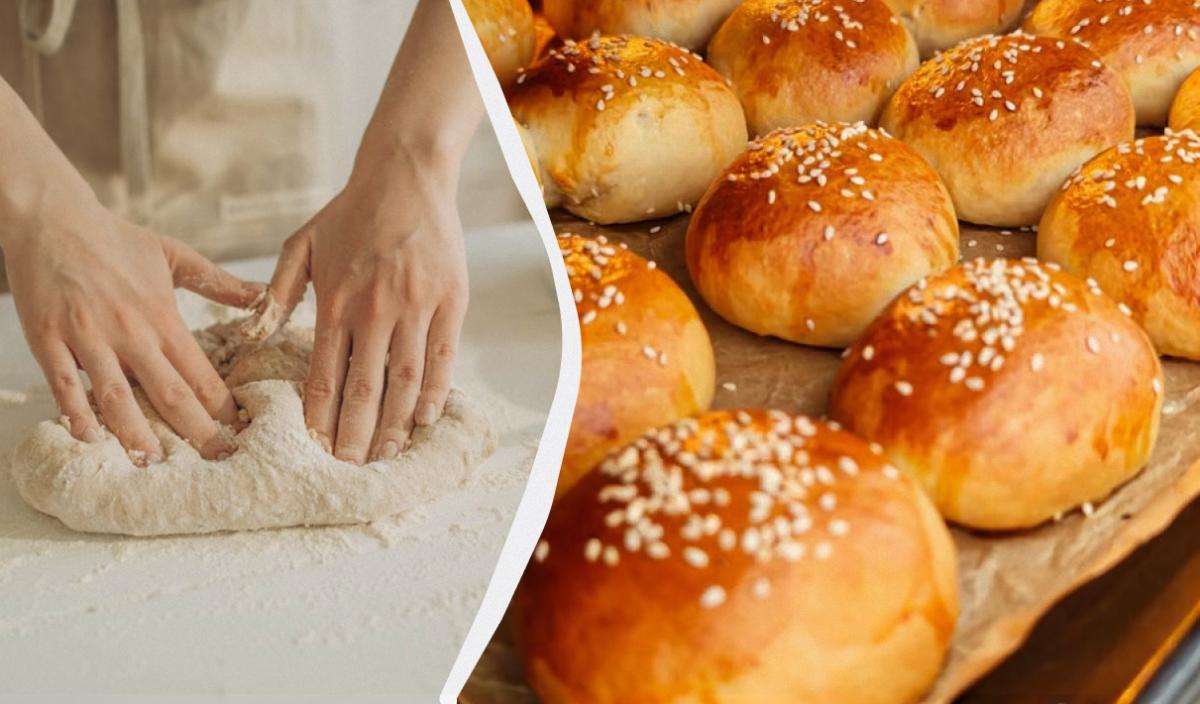
Adding carbonated water to yeast dough guarantees soft, light, and airy buns even when yeast fails to rise properly, according to experienced culinary experts.
Experienced cooks noted that preparing high quality yeast dough is a challenging task because outcome depends heavily on yeast performance. Even products tested over many years can occasionally fail, leaving baked goods dense or rubbery despite using correct water temperatures.
To prevent ruined baking, cooks advised replacing standard liquid with carbonated mineral water or a sweet carbonated beverage. The carbon dioxide gas trapped inside the sparkling liquid penetrates the dough and loosens its structure from within, creating a tender and fluffy texture regardless of yeast activity.
In traditional baking, yeast relies on fermenting simple sugars to produce carbon dioxide gas, which expands under oven heat to lift the dough. Yeast is a live organism that can easily become inactive if stored improperly or exposed to water that is too hot or too cold. Carbonated water provides a direct physical source of gas bubbles, ensuring aeration even if biological fermentation fails.
Universal Recipe and Proportions
Maintaining exact proportions is essential to improve the dough structure rather than spoiling it. Cooks provided a universal recipe designed to achieve reliable results for home bakers.
The standard mixture requires 500 grams of flour, 320 grams of carbonated water, 1.5 tablespoons of vegetable oil, 1.5 teaspoons of salt, 2 teaspoons of sugar, and 1.5 heaped tablespoons of dry yeast.
Preparation begins by pouring the dry yeast into a bowl, adding the sugar, and pouring 150 millilitres of the mineral water over the top. Bakers advised leaving this mixture undisturbed for 10 to 15 minutes to allow the yeast to activate.
In a separate bowl, cooks combine the flour, salt, vegetable oil, the activated yeast mixture, and the remaining carbonated water. The ingredients should be stirred gently with a spatula. When the mixture thickens and becomes difficult to stir with a spatula, the dough must be kneaded by hand.
Finally, the bowl containing the kneaded dough must be covered with plastic wrap and placed in a warm spot for one hour to allow it to rise properly before shaping and baking.
Citrus Soda and Sparkling Wine Variations
Bakers also shared practical advice for customising the flavour profile of the finished rolls. Replacing plain mineral water with sweet lemon or orange sodas, such as Sprite or 7UP, gives the baked goods an interesting citrus taste.
Some home cooks even choose to add sparkling wine to their dough mixture. Culinary sources noted that wine gives the finished pastry a delicate, refined aroma and a distinctive flavor.


