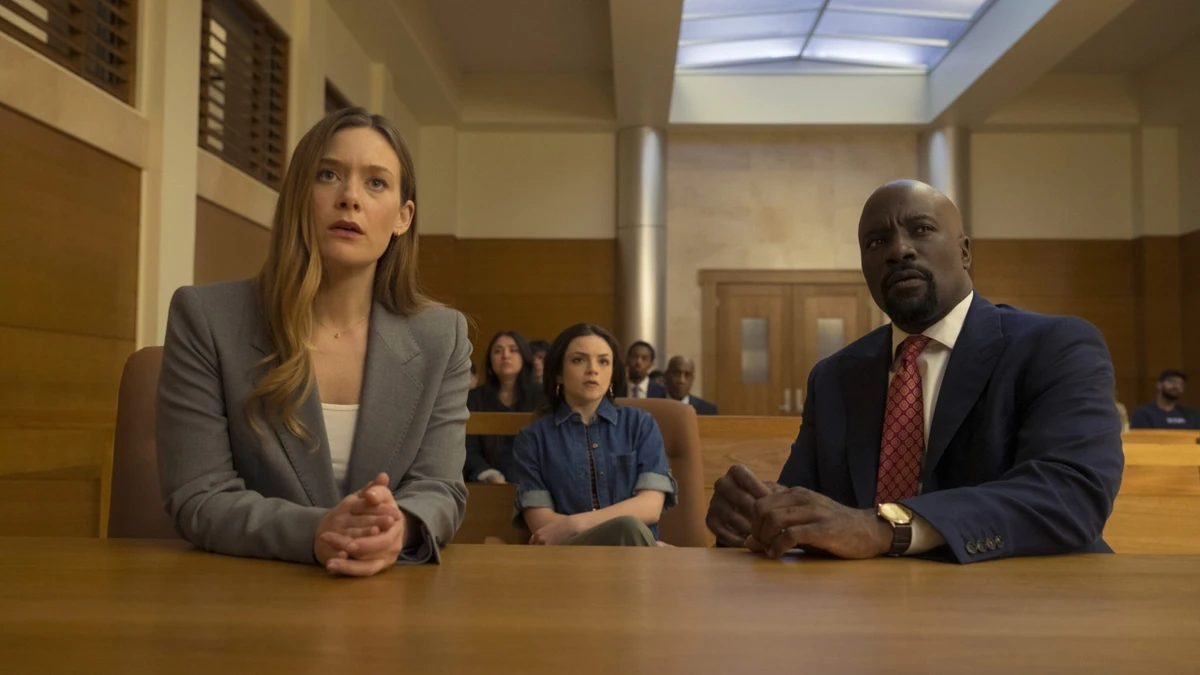
HBO Documentary Films has released "The Slightest Touch," a new documentary directed by Rachel Fleit that follows Emma Fogarty, a 40-year-old woman living with epidermolysis bullosa, as she completes the 2024 Dublin Marathon alongside actor Colin Farrell. The film is now streaming on HBO Max.
Epidermolysis bullosa, often called "butterfly skin," is an extremely rare and severe condition that causes the skin to blister and tear at the slightest contact. Fogarty was born with the disease and was once told she would not live past the age of 40.

Farrell says early in the film that he wants the experience to be "a shared dream" with Fogarty, who he has called a friend for more than 15 years. The documentary traces how that friendship built toward a single goal, both symbolic and literal, along the route of the Dublin Marathon.
For the race, Farrell ran the full 42.195 kilometres and, over the final four kilometres, pushed Fogarty's wheelchair to the finish line. Each kilometre of the course was meant to represent one decade of her life.
A family at the centre of the story
Fleit's direction keeps the focus almost entirely on Fogarty and her family rather than on Farrell's celebrity. Her parents, Pat and Malachy, appear visibly shaken by their daughter's candid remarks throughout the film.
Her mother says she still hopes for a cure and admits she is surprised Fogarty has made it this far. In one scene, on her 40th birthday, Fogarty closes her eyes and congratulates herself as a nurse helps her begin the day, as happens every morning.
The documentary also shows the months Farrell spent training for his part of the race, during which he repeated to himself, "It's for Emma." Using the actor's profile in this way is meant to push the film to an international audience and support the cause behind it.
Confronting the disease's harder years
The film later turns to a harder chapter, with Fogarty revealing that the relative normality of her early childhood gave way to the disease's harshest symptoms. Some reviews have noted that Farrell deliberately keeps a limited amount of screen time so as not to draw attention away from Fogarty or her condition.
There is still room, however, for scenes with Farrell's own children, Henry and James. James lives with Angelman syndrome, a neurogenetic disorder, and this part of the film broadens its scope to parents who care for children with serious illnesses, forming an emotional bridge between Farrell's own story and Fogarty's.

The two share a conversation, repeatedly interrupted by Farrell, set against an Irish landscape, in which they discuss how time feels different when you know what you are living through could be your last experience of it.
Hopelessness, resilience and what comes next
The documentary does not shy away from moments of despair and exhaustion. Fogarty cannot deny her dependence on the people around her, but each day she works through those doubts and continues campaigning for the wider cause through interviews.
Running alongside her story are Farrell's own reflections on how he turned his life around after a period of past excess. That exploration of difficult periods, paired with the film's music, brings strong emotion that the film does not let dictate how viewers should feel.
Those expecting a radically new take on disability documentaries may not find one here. What the film does show is Fogarty reaching her next goal, this time alongside a friend who has watched her fly despite her butterfly skin.
Test yourself
What rare condition does Emma Fogarty live with?
What did Colin Farrell do during the final four kilometres of the Dublin Marathon?
Which of Colin Farrell's children has Angelman syndrome, according to the documentary?
Have your say
Do you think celebrity involvement helps raise awareness for rare diseases like epidermolysis bullosa?
Where it happened
Dublin, Ireland