Spanish writer Víctor Lenore published a column arguing that progressive elites, from Spanish Prime Minister Pedro Sánchez to philanthropists George Soros and Bill Gates, have turned against the interests of their own countries in favour of a borderless, globalist agenda. Lenore pointed to Sánchez appearing at a four-way televised debate last Thursday wearing an Agenda 2030 pin, which he said symbolises a plan by global progressive elites to control the allocation of resources above individual nations.
Lenore noted that Sánchez's ally Ada Colau wore an LGBTIQ+ pin at the same debate, which he said signals placing individual causes above national ones. He also said progressive rallies in Spain tend to show few Spanish flags and many Palestinian ones, which he argued shows national loyalty is not always a priority for the country's progressive leaders.
Black Wednesday and the Soros fortune
Lenore traced the roots of what he calls elite betrayal to 16 September 1992, known as Black Wednesday, when George Soros and his Quantum Fund bet against the British pound and made more than a billion dollars by forcing the currency out of the European Exchange Rate Mechanism. The effort to defend the pound cost the British Treasury billions of pounds, and the currency tensions that autumn also put pressure on other pre-euro European currencies, including the Spanish peseta and the Italian lira.
According to Lenore, the Soros family now channels between $1.2 billion and $1.7 billion a year into what he called 'social' projects through its network of NGOs, the Open Society Foundations. He argued the real goal is to weaken national, family and cultural bonds in pursuit of a homogeneous, borderless world where capital can move freely with the help of paid local elites.
Meetings with Soros and Gates
Lenore recalled that on 27 June 2018, weeks after taking office following a no-confidence motion, Sánchez received George Soros at the Moncloa Palace complex. The meeting caused controversy because it was not on his public agenda; the government later described it, in a parliamentary response, as part of the 'institutional agenda' to discuss the global economic and financial situation.
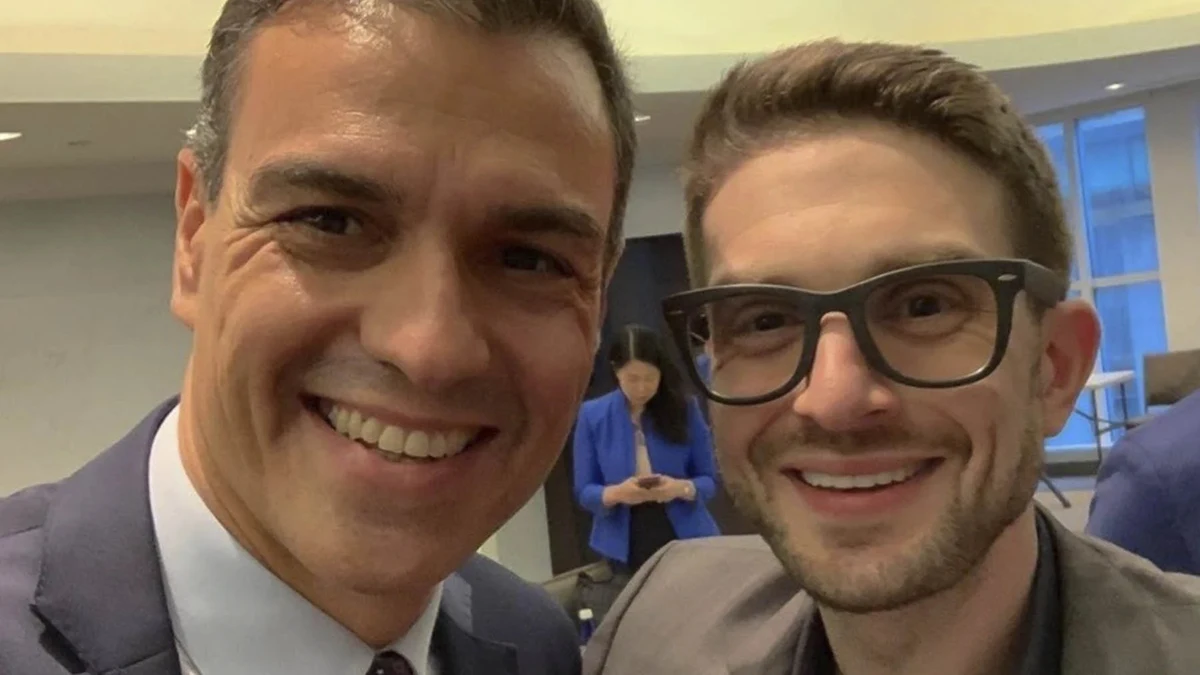
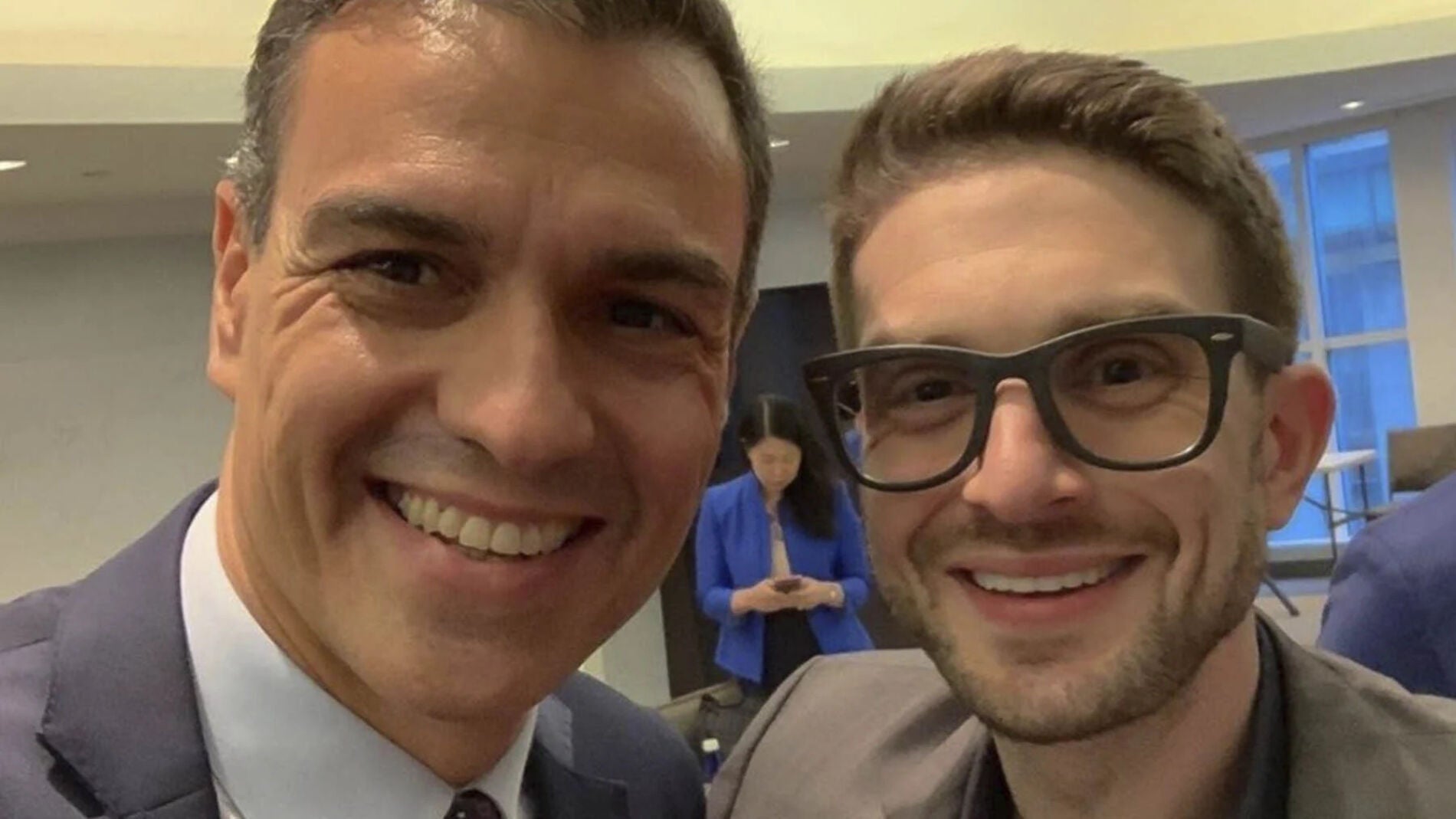
Lenore said that during 2026, George Soros's son Alexander Soros praised several of Sánchez's decisions on social media, including an article Sánchez wrote for The New York Times in February about Spain's extraordinary regularisation of immigrants, in which Alexander Soros said more leaders like him were needed, and Spain's stance on the Middle East conflict, which he highlighted in March.
Lenore also pointed to Sánchez's relationship with Bill Gates, who gave him the Global Goalkeeper award in 2025, and recalled that in September 2022 Sánchez committed 130 million euros from the Spanish budget to the Global Fund, an organisation linked to Gates.
Books revisiting the 'betrayal of elites'
Lenore cited historian and sociologist Christopher Lasch's 1995 book "The Revolt of the Elites and the Betrayal of Democracy," written as a response to Spanish philosopher José Ortega y Gasset's 1930 work "The Revolt of the Masses." Lasch, who earned his doctorate at Harvard magna cum laude, argued that the greatest threat to democracy comes not from ordinary people but from the rootlessness of new financial elites who feel no attachment to their nations or cultural traditions. Lasch wrote that American millionaires have more in common with Japanese millionaires, despite their different cultures, than with their own less fortunate fellow citizens.
Lenore also referenced a new book that reached Spanish bookshops this month, "La traición de las élites: soberanía, libertad e identidad" by Spanish historian Fernando Paz, published by La Esfera. Paz has argued for decades that major philanthropic foundations weave a supranational power network, and said no one has done more to fund rootlessness policies than the Soros family, through initiatives on abortion, euthanasia, trans rights, mass immigration and multiculturalism. Lenore wrote that seven of the groups that organised recent protests in France have proven links to the Open Society network and have been responsible for some of the attacks, fires and looting during the unrest.
Musk, Germany and Spain's foreign-owned economy
Paz said globalism as understood in the 20th and 21st centuries originates in the United States but should not be seen as a simple projection of American power, since in his view the United States is itself globalism's first victim, fighting to preserve its identity against cosmopolitans who deny any national, religious, sexual or cultural identity. He said the same pattern plays out in Germany, Britain and France, and that Germany has endured eight decades of 'denationalisation,' with mass immigration affecting a population taught to hate itself after a guilt process tied to the Third Reich, as though today's Germans had to answer for their grandparents.
Lenore wrote that Elon Musk broke the usual rules followed by globalist billionaires, including by campaigning for Germany's Alternative for Germany party. Paz said Soros sends millions of African immigrants, shapes European Union presidents and judges, fuels unrest around the world and even funds coups, yet an election in Romania was annulled over alleged interference by TikTok. Lenore argued Musk's real offence was buying Twitter to end progressive censorship and restore free expression on the platform, a blow to progressive hegemony that has made him a villain as a 'techno-oligarch,' in contrast to Soros's image as a philanthropist.

Turning to Spain, Lenore cited another new book, "La España de dos pisos" by essayist Esteban Hernández, also published by La Esfera, which notes that between 49% and 60% of Spain's Ibex stock index is held by foreign funds and companies. Hernández said Spanish elites have become mediators of foreign capital, whether as executives, investment scouts, deal facilitators, lobbyists or advisers, and that with barely a couple of exceptions Spain's big companies are not owned by Spaniards, leaving national elites little room for a project of their own beyond preserving that mediating role. He said this matters because, as often in history, the interests and ideas of elites shape a country.
Lenore concluded that Spain's millionaires have chosen easy money over a national project, and that the country's economy has been eaten away by globalist interests. He closed with another line from Lasch, who wrote that today's elites control the international flow of money and information, preside over philanthropic foundations and higher-education institutions, and manage the tools of cultural production, allowing them to set the terms of public debate, adding that these are the elites who have lost faith in Western values, or what remains of them.
Test yourself
What event does the column cite as the origin of Soros's global financial influence?
What did Sánchez wear at the four-way debate, according to the column?
What does Esteban Hernández's book say about Spain's Ibex stock index?
Where it happened
Madrid, Spain