Spanish broadcaster COSMO has released "My Girl," a short film about the normalization of gender violence among teenagers, timed to November 25, the International Day for the Elimination of Violence against Women. The channel has produced a short for the date every year since 2018.
The film looks past the most visible forms of gender violence, shouting, hitting, and femicide, to focus on subtler patterns. According to figures cited around the release, 56 women have been killed in gender violence cases in Spain so far this year, and 1,388 since official records began.
"My Girl" is directed by Tábata Cerezo and stars Iria del Valle and Guille Zani, with a supporting cast that includes Eva Llorach, Marta Belenguer, Tomás del Estal and Nerea Pérez de las Heras. Its title borrows from the 1964 song by The Temptations.
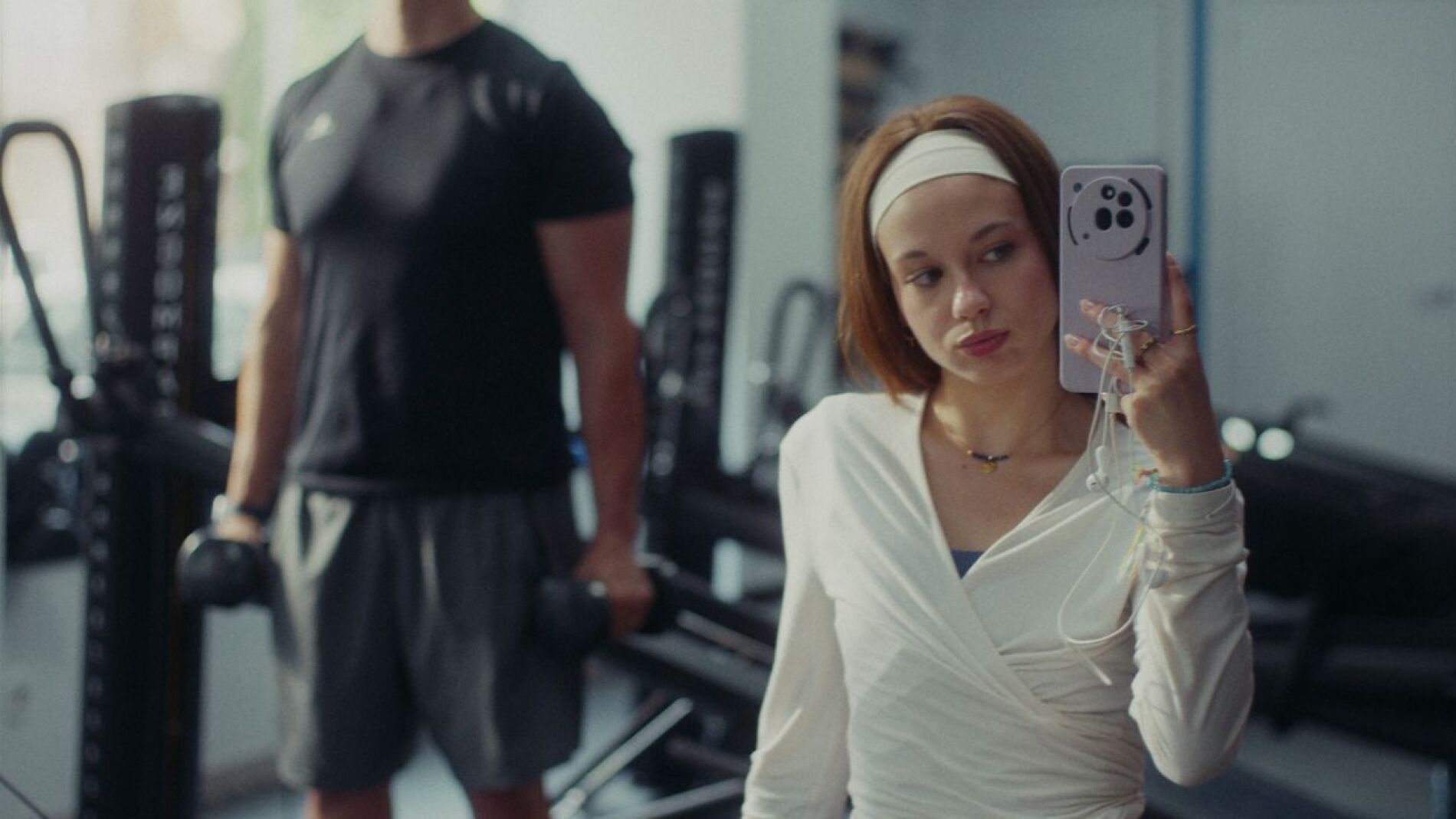
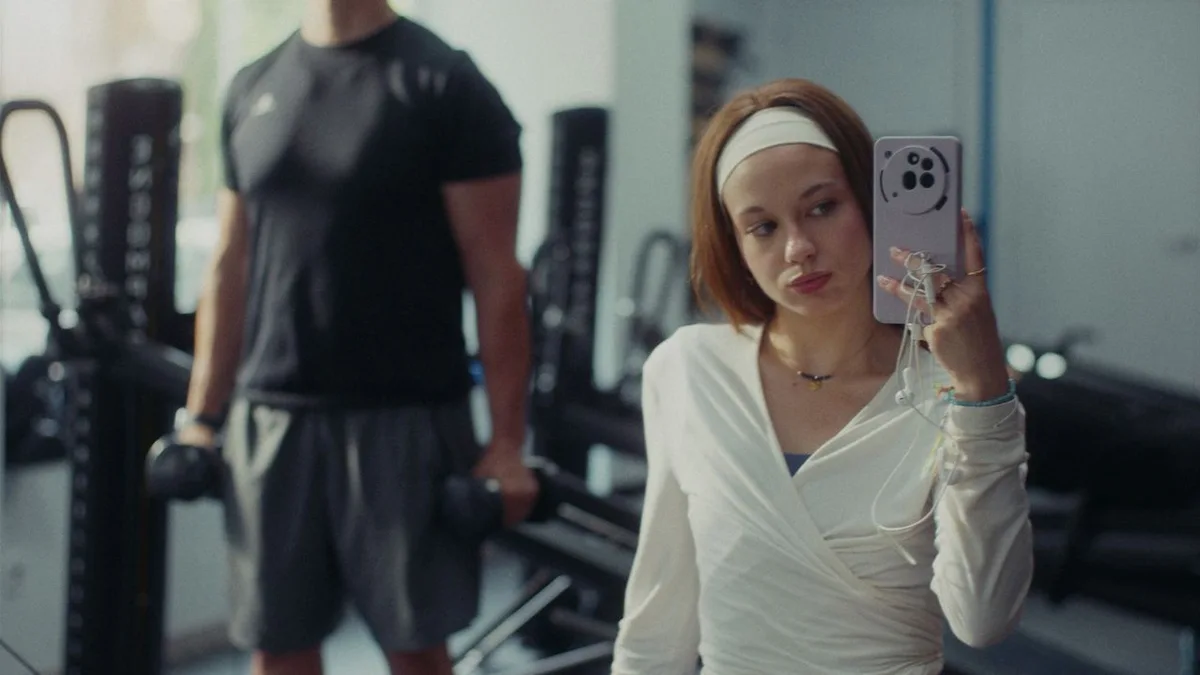
Del Valle plays Amaia, a 14-year-old girl, and Zani plays Mateo, her 17-year-old boyfriend, who on the surface looks like the ideal partner: well liked by Amaia's friends, from what is seen as a good family, and the kind of couple that would fit neatly into a TikTok post. Over the course of the day the short follows, that image unravels to reveal a relationship defined by a deep imbalance of power, in which Amaia is effectively erased without fully grasping it. She cannot name what is happening to her, but senses something is wrong. The director builds the story without heavy-handed cues, trusting the audience, and closes on a scene in which the two actors' body language, rather than dialogue, carries the weight.
Where the idea came from
Cerezo said part of the inspiration came from a podcast remark that today's teenage girls look like they have just walked out of an accounting office. She had already noticed the trend and began asking what these girls were watching on social media, which led her into the world of "tradwife" content. Within a short time, her own algorithm was filled with videos of young women waking at seven in the morning to meditate, do yoga and follow beauty routines.
Cerezo told La Razón that aesthetics is a powerful tool of fascism, arguing that these images are not harmless and that an ideology operates behind them in a very cunning way.
Family background and influence
The short also shows how Mateo's parents interact in one scene, hinting at where some of his attitudes come from. Cerezo places Amaia in the opposite position: she has grown up in a household with feminist, progressive values, yet still ends up in a relationship that bears little resemblance to what she was taught at home. Cerezo said family has an impact, but that society as a whole bears responsibility for the images it produces.
Age gap and other imbalances
The three years separating Amaia and Mateo mean little at 30, Cerezo noted, but can be an entire world at 14. She does not see the age gap itself as the central problem, but said it compounds other imbalances in the relationship, including a difference in social class and the shame Amaia feels about her own background.
Playing a boy convinced he is a good boyfriend
What makes Mateo difficult, and arguably the most interesting part of the role, is that he is convinced he is a good boyfriend. Zani said he had to play the character from inside that conviction, even while recognizing from the outside how abusive the behavior is. The actor said he was especially interested in how other young men of his generation might react to seeing the film and realizing they have more in common with Mateo than they would like to admit, hoping some might come away thinking they had done something similar without noticing.
Giving Amaia a voice through silence
Del Valle, who is 23, faced the challenge of playing 14 again without slipping into infantilizing the character, while conveying thoughts Amaia herself struggles to process. The actress said Amaia communicates more through what she does not say than through what she does, adding that without the silences, the short would not exist. The goal, she said, was for the character to need no extra dialogue for the audience to understand what she was going through.
A single-take scene
An intimate scene late in the short, which the filmmakers have avoided describing in detail to prevent spoilers, carries much of what Cerezo wanted the film to say. She shot it in one continuous take, without cuts, to prevent viewers from distancing themselves from what they were watching. She wanted to avoid the simplistic framing often applied to abuse, reduced to two questions: why didn't you say no, and why didn't you leave. By that point in the story, Cerezo said, Amaia has spent most of the film focused on her appearance, on how others see her and on pleasing Mateo, leaving her little room to ask what she actually wants. Cerezo said the scene is not about what happens in that specific moment, but about the context around it and how people learn to relate to others and to their own bodies.
Safety behind the camera
Cerezo, who has experience as an intimacy coordinator, said she knew she could not take on that role herself while directing the shoot, so she brought in colleague Lucía Delgado to work with the actors on the scene's choreography and personal limits. Zani and Del Valle also developed their own signals during filming; Del Valle gave the example of a pinch meaning she wanted to step away from the set. Both recalled being able to film tense scenes and then joke around moments after the director called "Cut."
Cerezo said she hopes "My Girl" reaches many girls like Amaia and helps them name behaviors they may have mistaken for love, but also hopes it reaches boys like Mateo. She acknowledged some viewers may dismiss the film as exaggerating, but said it would be one of the short's greatest successes if even one young man recognized himself in Mateo, felt uncomfortable with what he saw, and let that discomfort push him to question and change his own behavior.
Test yourself
Who directed the short film "My Girl"?
How old is Mateo, the boyfriend character played by Guille Zani?
What did director Tábata Cerezo say was part of the inspiration for the story?
Where it happened
Madrid, Spain