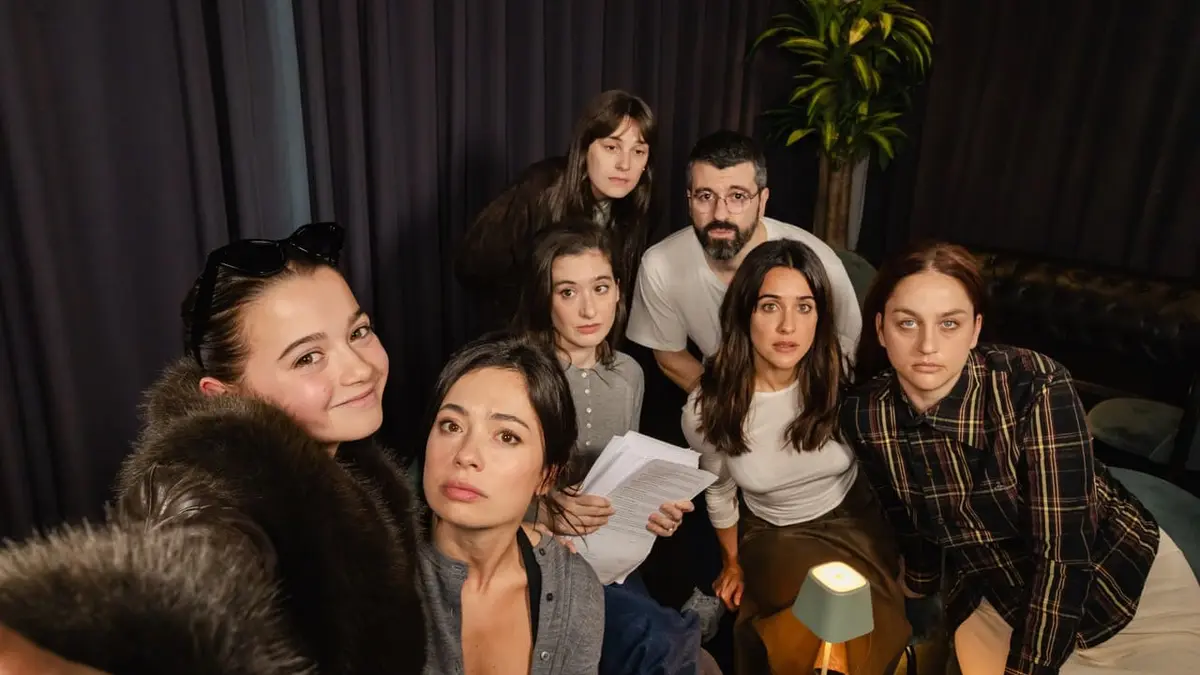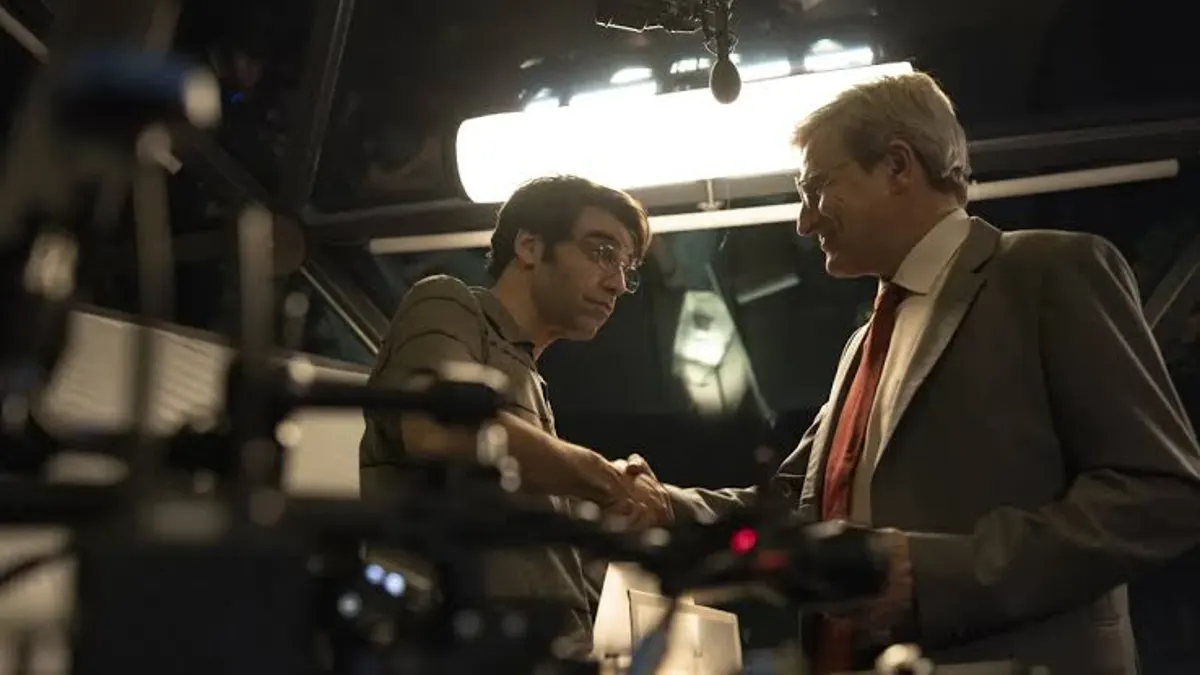
El director, a new Spanish thriller directed by Dani de la Orden, opened in Spanish cinemas this week after La Razón film critic Carmen López Lobo gave it three stars out of five. The film follows journalist David Jiménez's turbulent years as director of the newspaper El Mundo.
The screenplay was written by Michel Gaztambide and Alejandro Hernández, adapted from the book written by David Jiménez himself. The cast is led by David Verdaguer and Alberto San Juan, alongside Carmen Machi and Fernando Colomo. The film runs 115 minutes and was produced in Spain in 2026.
El Mundo is one of Spain's leading national newspapers, founded in 1989 and based in Madrid. Over more than three decades it has built a reputation for investigative reporting and has featured in numerous political controversies in Spain.
Verdaguer, who plays Jiménez, and San Juan, who co-stars, are both prolific presences in Spanish film and television drama. Colomo, who takes a supporting role, is himself a well-established Spanish film director as well as an actor, a background that López Lobo singled out for particular praise. De la Orden, for his part, has mostly been known for comedies and romantic dramas, making El director a shift into political thriller territory.
The Plot of El Director
The story centres on Jiménez, a journalist who spent more than twenty years as a foreign correspondent covering wars and conflicts before being appointed director of El Mundo. The action unfolds in 2015, a pivotal year in Spanish politics.
Spain's long-dominant two-party system, split between the Socialist Party and the Popular Party, was beginning to lose ground to newer forces such as Podemos and Ciudadanos at the time. The backdrop also includes a secret, off-the-books financial scandal, a type of undisclosed parallel accounting scheme that has surfaced in several Spanish corruption cases, and the emergence of the Panama Papers. The leak, first published in 2016 after documents from the Panama-based law firm Mossack Fonseca were obtained by the International Consortium of Investigative Journalists, implicated politicians, athletes, business leaders and celebrities around the world in offshore financial dealings.
Jiménez, on whose own memoir the film is based, is shown wanting to practise rigorous journalism, a goal that clashes with the commercial interests of the newspaper, which López Lobo writes are protected by its executive president, Cardenal.
A Nod to Citizen Kane
In her review, López Lobo draws a comparison with Orson Welles's 1941 film Citizen Kane, widely considered one of the greatest films ever made and loosely inspired by the American newspaper magnate William Randolph Hearst. She describes Kane as an obese, unpleasant and ambitious man who inherits a vast fortune from an obscure childhood and goes on to build a sprawling newspaper and media empire, later trying, and failing, to turn his lover into an opera star despite her inability to sing.
The comparison also plays on the famous ending of Citizen Kane, in which the word rosebud, uttered by the dying Kane, is revealed to refer to a childhood sled, a symbol of the innocence he lost in his pursuit of power and wealth. Kane, López Lobo writes, is determined to control politics, though the film ultimately shows that his power has limits, using his printing presses to tell voters what to think and who should govern. She notes that this dynamic now seems to run in reverse, with power increasingly tangled across different institutions.
López Lobo writes that El director does not reach for a comparable sentimental symbol, noting that the film is ultimately about power itself, and that a different ending would have made for a far more emotional epilogue.
Critic's Verdict
López Lobo praised the performances across the board, writing that every member of the cast was excellent, with particular praise reserved for Colomo. She was more critical of the film's reliance on Jiménez's own book as its source, noting that this leaves him portrayed as a hero standing alone against the world.
The review was written by Carmen López Lobo, who spent 11 years working at the newspaper ABC before joining La Razón, where she has worked since the paper's founding.
Test yourself
Who directed the film "El director"?
How many stars did La Razón critic Carmen López Lobo give the film?
Which newspaper does the film's protagonist come to lead?
Have your say
Do you think newspapers have too much influence over politics today?
Where it happened
Madrid, Spain