

Federico García Lorca has been remembered on the 90th anniversary of his execution near Alfacar, with music commentators highlighting how the Spanish poet's deep devotion to traditional folk music defined his life and enduring artistic legacy.
Lorca was shot at dawn on the road to Víznar, between Alfacar and the Fountain of Tears, in the opening weeks of the Spanish Civil War in August 1936. Historical records show he was executed by a group of men without a trial alongside a lame schoolteacher and two bullfighting assistants known as banderilleros.
The killing followed a list, a car, and a roadside ditch, leaving no tombstone or marked grave. Today, the execution site in the southern province of Granada is marked only by an olive tree and an open esplanade, representing a national tragedy that remains unresolved nine decades later.
Writing in Spanish newspaper La Razón on August 18, music columnist Gonzalo Alonso argued that celebrating Lorca's musical accomplishments offers the most meaningful way to prevent the crime from defining the poet entirely.
Early musical training in Granada
Born in the region of Andalusia, Lorca displayed exceptional musical talent as a young man. While studying at the Granada conservatory, his piano teachers viewed his fluency as almost a waste of talent because he preferred improvising on popular folk melodies rather than practicing assigned classical repertoire.
Renowned Spanish classical composer Manuel de Falla became Lorca's teacher, close friend, and musical conscience. Falla persuaded the young artist that his passion for music was not merely the salon piano hobby of a wealthy young man, but a serious artistic vocation equal to writing verse.
In 1922, Lorca and Falla co-organized the Concurso de Cante Jondo in Granada, a historic competition created to preserve deep Andalusian flamenco singing. Although contemporary critics dismissed the initiative as an eccentricity by two young men with excess free time, the festival elevated traditional song styles such as the seguiriya and petenera without turning them into rigid museum artifacts.
Folk song recordings with La Argentinita
During the early period of the Second Spanish Republic in 1931, Lorca sat at the piano to accompany singer and dancer Encarnación López, known as La Argentinita, in a series of historic gramophone recordings.
Lorca arranged traditional folk songs for the project, including Los cuatro muleros, Anda jaleo, and Zorongo gitano. He did not compose the original melodies, but instead rescued, refined, and adapted them for formal concert performance while preserving their popular roots.
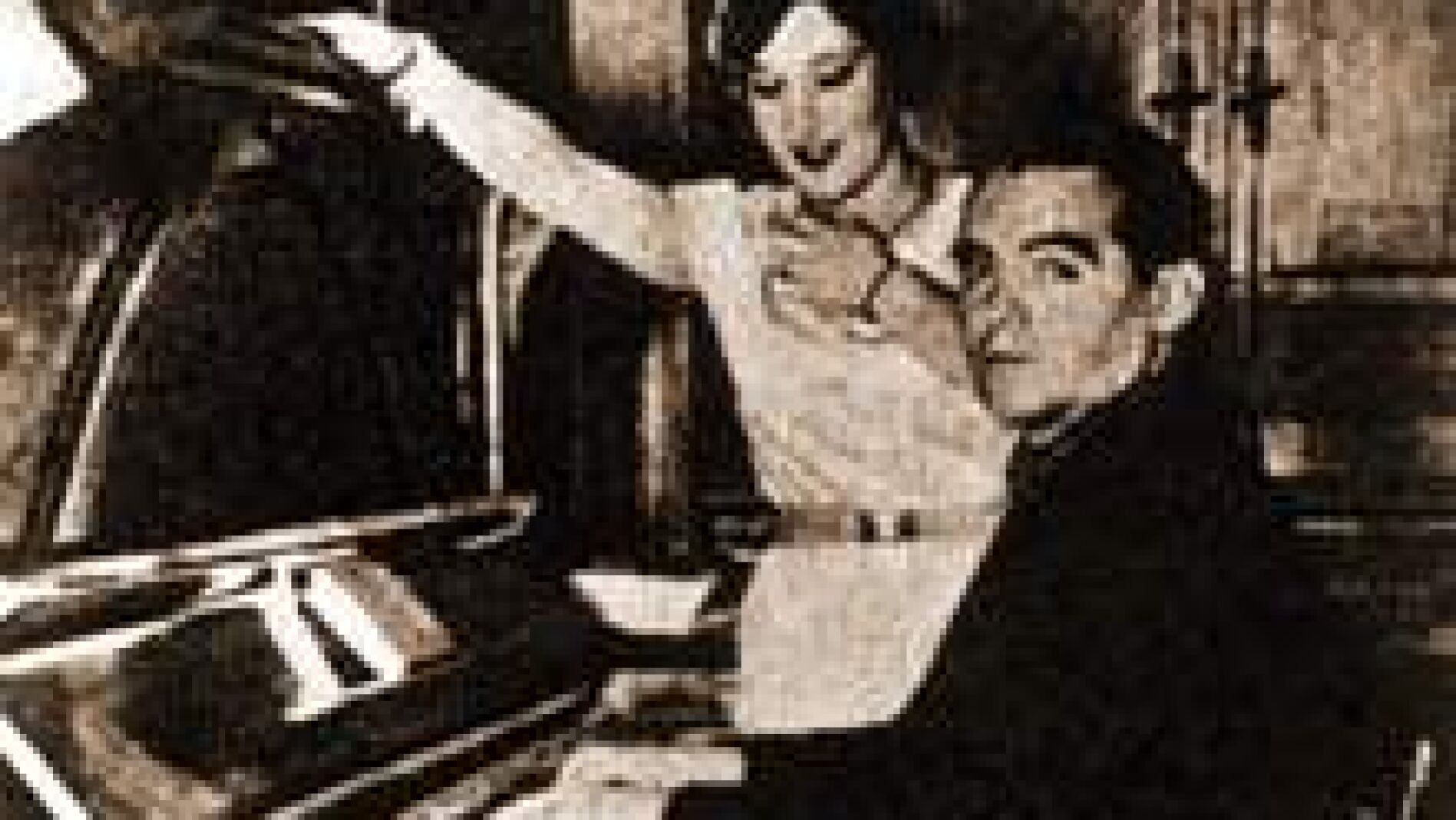
An iconic photograph from the sessions shows Lorca sitting comfortably at the piano while La Argentinita stands beside him with a slight smile, waiting for her cue to sing. Alonso noted that he had kept a copy of the photograph pinned up since his student days, adding that music arrived first in Lorca's life, creating a debt that his poetic writing later worked to repay.
Recorded on 78 rpm shellac discs, the tracks demonstrated that Lorca made no distinction between writing poetry and transcribing folk songs, as both disciplines sought to capture the collective soul of a singing public.
Influence on modern composers and flamenco
Following Lorca's execution, subsequent generations of musicians took up his work as if compelled to complete the artistic phrases cut short by his death.
In 1970, American avant-garde composer George Crumb constructed his piece Ancient Voices of Children using Lorca's poetry. The composition featured a soprano singer vocalizing inside a prepared piano to produce unusual acoustic timbres that felt tailored to Lorca's writing.
Flamenco artists also drew heavily on the poet's work. In 1979, singer Camarón de la Isla released the landmark album La leyenda del tiempo, setting Lorca's verses over groundbreaking modern arrangements. The album featured lines describing time moving forward without staying, except as an ageless moment, creating the feeling that the executed poet continued composing decades after his death through another artist's voice.
Spanish flamenco singer Enrique Morente, whom Alonso recalled hearing live, devoted much of his career to demonstrating that traditional cante jondo and popular music could converse as equals. On his 1996 album Omega, recorded with electric rock band Lagartija Nick, Morente set Lorca's poetry alongside the songs of Canadian songwriter Leonard Cohen.
Defying political violence through music
Reflecting on the historical context, Alonso wrote that the Spanish fascism of 1936 understood only lists and roadside ditches, lacking any comprehension of musical counterpoint or flamenco rhythm. He noted that the opposing political side also failed to grasp Lorca's artistic vision.
Alonso observed that music has continued its course like water flowing past an obstacle in a stream. He asserted that performing and listening to Lorca's work in unexpected modern formats is the strongest condemnation of those who attempted to silence him 90 years ago.
Instead of observing a minute of silence for the anniversary, Alonso urged readers to play the 1931 recording of Anda jaleo performed by La Argentinita with Lorca on piano at high volume, describing active listening as the most fitting memorial for a poet who hated silence.