

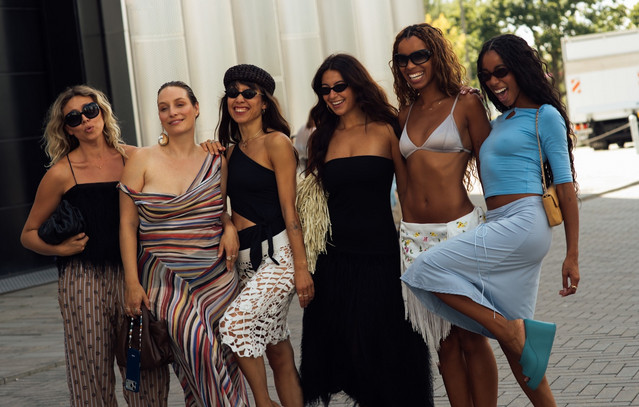
Women with full busts can achieve balanced silhouettes through strategic neckline cuts, waist definitions, and heavier fabrics rather than trying to hide their chest, fashion styling guidelines state.
The guidance emphasizes that fashion lacks a single ideal body shape, meaning proper garment proportions, clean lines, and tailored construction should work in favor of a woman's natural silhouette without squeezing or compressing the body.
According to the recommendations, the primary goal of dressing a full bust is establishing visual harmony across the upper and lower body.
V-neck cuts and iconic wrap dresses
The V-neckline remains a prominent choice in designer collections because its vertical orientation visually elongates the neck to create an elegant silhouette. The guidelines note that a V-neck does not need to be deeply cut, as a subtle V-shape combined with a proper fit under the bust achieves the same elongating effect.
Wrap dresses with V-necklines are highlighted as an effective option because they accentuate natural body curves without adding unwanted volume. The style features a tie waist that creates diagonal lines across the torso, naturally guiding the eye from the neckline down to the midsection.
Fashion designer Diane von Furstenberg popularized the wrap dress during the 1970s, turning the waist-tying garment into a permanent fixture of modern womenswear. To maximize the dress's flattering effect on a full bust, fashion advisors recommend selecting fabrics with natural movement that are substantial enough not to cling tightly to the body.
Square necklines and shoulder structure
Square necklines have resurfaced as a distinct alternative to traditional V-necks, offering a clean horizontal line across the upper chest. The cut provides a modern, fashion-forward aesthetic for both dresses and structured tops without relying on a low-cut neckline.
To balance proportions across the entire body, the guidelines recommend tops and jackets with slightly structured shoulders. Rather than using dramatic oversized padding, a defined shoulder line creates shape and balances the bust against the hips and lower body.
Stylists suggest pairing structured tops with high-waisted trousers or straight midi skirts to maintain a sleek, proportional silhouette from top to bottom.
Fabric selection and button-down shirts
Fabric weight plays a critical role in how garments drape over a full bust. Ultra-thin, highly elastic fabrics tend to cling to the body and create unwanted lines, whereas structured textiles with moderate weight fall far more smoothly.
Recommended materials include poplin, structured cotton, crepe, and high-quality jersey. Poplin is a durable plain-weave cotton fabric, while crepe offers a subtle textured drape that holds shape without clinging.
When selecting button-down shirts, fashion advisors caution against sizing up simply to ensure the buttons close. Buying an oversized shirt destroys the natural lines of the body, whereas choosing a garment that fits correctly at the shoulders with adequate room in the chest provides a far more polished appearance.
Foundation garments and personal style
Proper foundation garments are described as essential to ensuring clothes fit as intended. A correctly fitted bra supports the bust, places it at the ideal height, and allows tops and dresses to drape properly.
Stylists recommend specific bra styles for different outfits, including plunge bras for deep V-necks, specialized cuts for square or strapless tops, and smooth, seamless bras for simple T-shirts.
The guidelines conclude that necklines, wrap dresses, structured shoulders, and fabric choices are ultimately tools, noting that authentic personal style begins when women focus on highlighting their features rather than hiding them.


