


Homeowners are replacing trailing extension cords by building hidden electrical outlets into floors, furniture and walls during apartment renovations, Hungarian news outlet Blikk reported.
The interior design trend shifts focus from adapting living spaces around fixed power points to fitting sockets around daily living habits. Electricians and interior planners are embedding power points into drawers, bed frames and worktops at the initial floor plan stage.
In living areas, floor-mounted sockets are increasingly installed directly beneath desks or sofas located away from perimeter walls. This placement allows residents to plug in reading lamps, phone chargers and appliances without stretching cords across room walkways. Outlets can also be concealed within or behind cabinets to keep wiring hidden from view.
Integrated bedside charging ports
Bedrooms are also moving away from standard wall plugs in favour of integrated USB-A and USB-C charging ports built directly into nightstands and headboards. The built-in ports allow mobile phones to charge without bulky wall adapters. Modern furniture pieces frequently feature dedicated internal channels to keep power cords neatly contained.
USB-A has served as the standard rectangular connector for consumer electronics for decades, whereas USB-C is a newer, reversible format capable of delivering higher power and faster data transfers across modern devices. Combining both port styles inside bed frames ensures compatibility with older charging cables and newer smartphones alike.
Home office layouts follow a similar approach to reduce desktop clutter. Instead of running extension leads to wall outlets behind desks, modern workstations feature integrated power modules set directly into desk surfaces or mounted beneath table tops. Planners map out specific socket counts for computers, external monitors and task lamps before renovation work begins.
Pop-up kitchen counters and safety risks
Kitchen designs feature retractable pop-up sockets built flush into countertops that rise above the work surface at the press of a button. When not in use, the flush units preserve workspace and maintain a clean kitchen appearance. However, these specialized units carry higher equipment costs than traditional wall sockets and require detailed pre-renovation planning. Kitchen island pop-up units often incorporate water-resistant seals to guard against liquid spills.
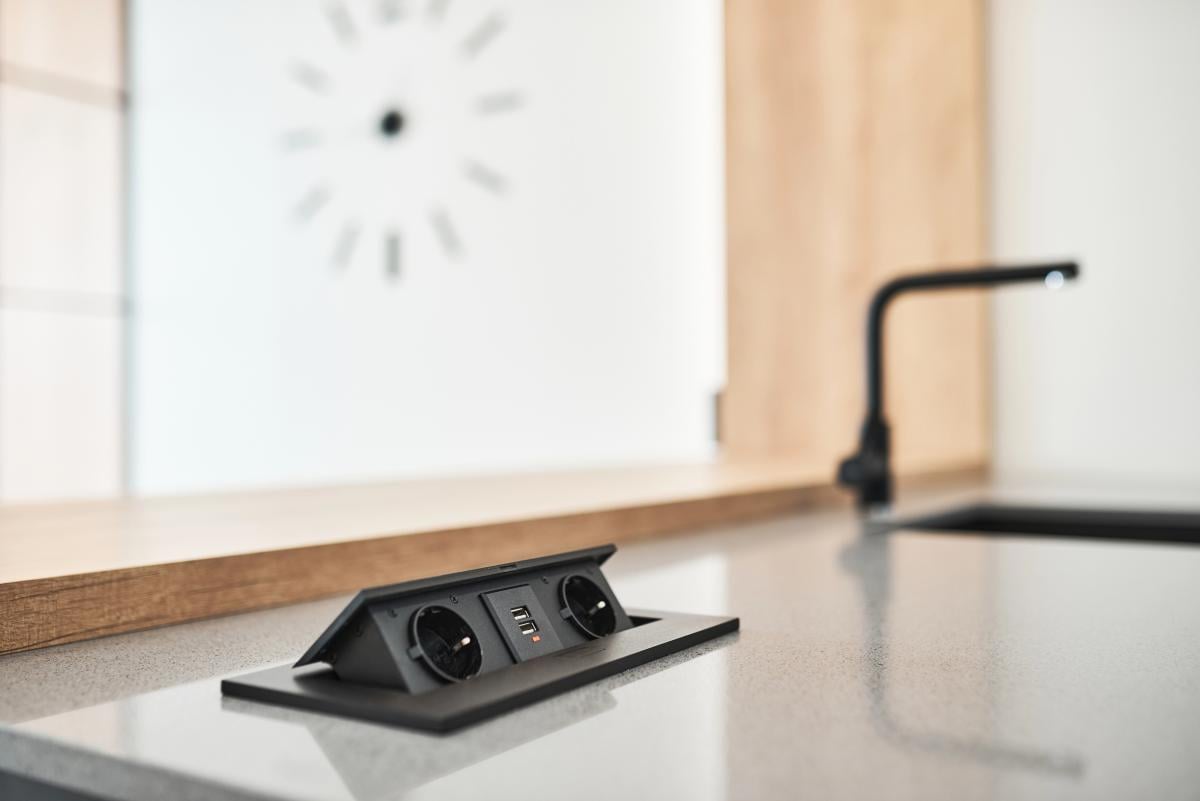
Blikk, a major daily newspaper and news website based in Budapest, reports that integrated installations reflect a broader shift toward hidden household infrastructure. Despite the rising popularity of built-in power solutions, conventional extension leads and multi-socket adapters will remain essential when rearranging furniture or plugging in temporary appliances.
Electrical safety experts warn that many householders severely underestimate power grid loads when using traditional extension leads. Plugging several high-wattage appliances into a single extension strip simultaneously creates serious electrical overload hazards and increases the risk of residential fires. Standard household extension cords are rated for specific current limits, making multi-appliance overload a frequent cause of dangerous electrical overheating.


