

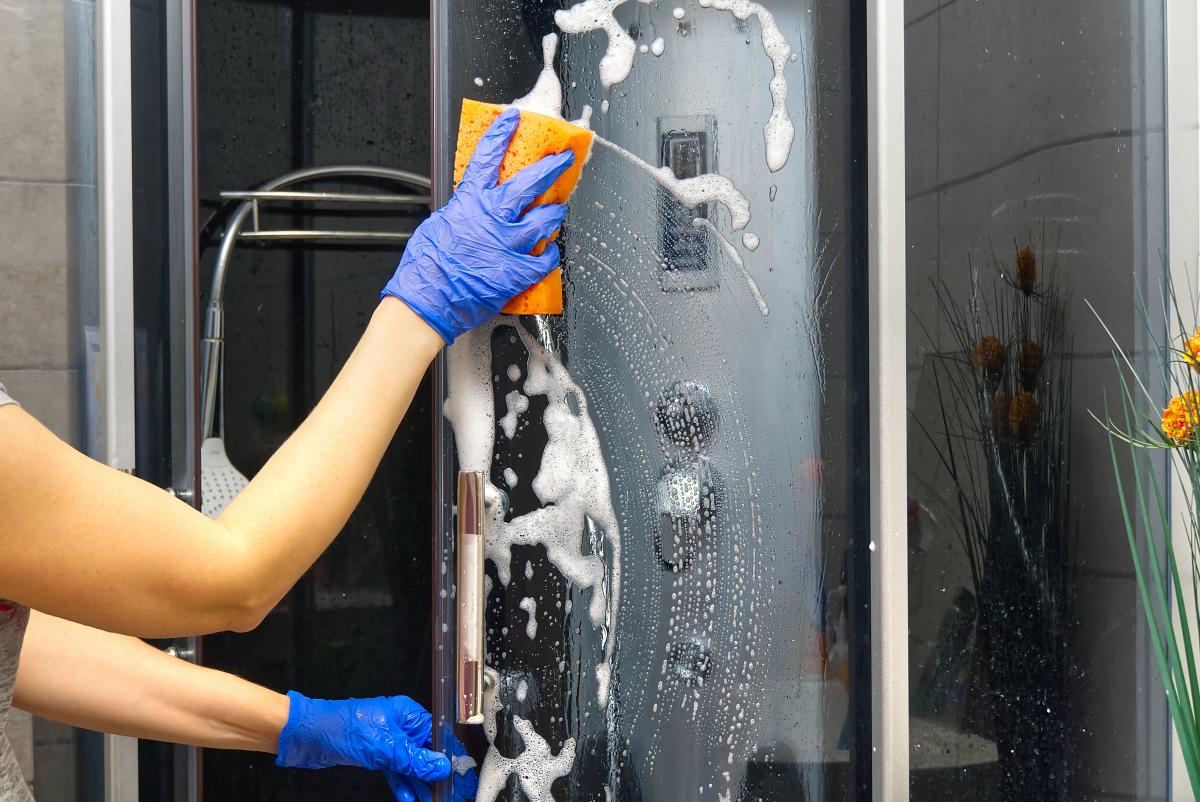
Mold easily accumulates in showers due to high humidity and poor ventilation, but small amounts can be cleared using simple household methods.
Small black spots should never be ignored, as constant inhalation of spores can lead to respiratory illnesses and allergic reactions, according to Southern Living.
Several types of mold grow in bathrooms, including Cladosporium, Penicillium, Aspergillus and black mold, also known as Stachybotrys.
These can cause symptoms ranging from sneezing to severe breathing problems over time, and the fungi will spread further the longer they are left untreated.
Safety and preparation
When cleaning mold, it is important to use protective equipment, specifically gloves and a mask.
The room must also be well ventilated by opening doors or windows and turning on an extractor fan.
To clean a shower, you will need hydrogen peroxide, white vinegar, a cleaning brush and a spray bottle.
Using hydrogen peroxide
Hydrogen peroxide destroys mold through a process of oxidation.
To use this method, mix equal parts of warm water and hydrogen peroxide in a spray bottle.
Spray the solution onto the affected areas and leave it to work for between 20 minutes and an hour.
Afterwards, scrub the surfaces with a brush to remove the mold, rinse the area with warm water and wipe it dry using a clean microfiber towel.
Cleaning with white vinegar
The acidity of white vinegar breaks down the cellular structure of mold and helps to stop it growing back.
Combine equal parts of warm water and white vinegar in a spray bottle and apply it to the moldy areas, leaving it for 20 minutes to an hour.
Scrub the surfaces with a brush and rinse with water.
To prevent the mold from returning, spray the solution onto the area again and allow it to dry naturally.
Removing mold from a showerhead
Showerheads are particularly prone to mold because of constant moisture and mineral deposits from the water.
To clean a showerhead, take a plastic bag large enough to cover the fixture completely.
Fill the bag with equal parts of warm water and white vinegar, place it over the showerhead and secure it with rubber bands.
Leave the bag in place for an hour before removing it, rinsing the fixture with warm water and drying it thoroughly with a clean microfiber towel.
Banishing musty smells
A musty or earthy odor in a shower can indicate the presence of mold.
To prevent this smell, the shower area must be cleaned and dried regularly, and homemade vinegar sprays can be used.
Proper ventilation is essential while taking a shower. Leaving the bathroom door open or running a fan helps reduce the moisture levels that encourage mold to grow.
Preventing mold growth
Stopping mold from appearing is easier than scrubbing it away, so regular inspection and cleaning of the shower area and showerhead is important.
Humidity in the bathroom should be kept below 50 percent. If an extractor fan is not sufficient, a dehumidifier will help reduce moisture levels significantly.
Previously, experts have highlighted a simple test using aluminum foil to determine if damp walls are caused by condensation or a deeper plumbing leak. Methods have also been shared for removing bathroom mold safely without needing to replace grout or use harsh chemicals.


