


Kylie Jenner became the face of an advertising campaign for smart glasses made by Mark Zuckerberg's company Meta in late June 2026, and has since faced a wave of criticism after reports that men are using the same glasses to secretly film women in public and during sex, then posting the footage online.
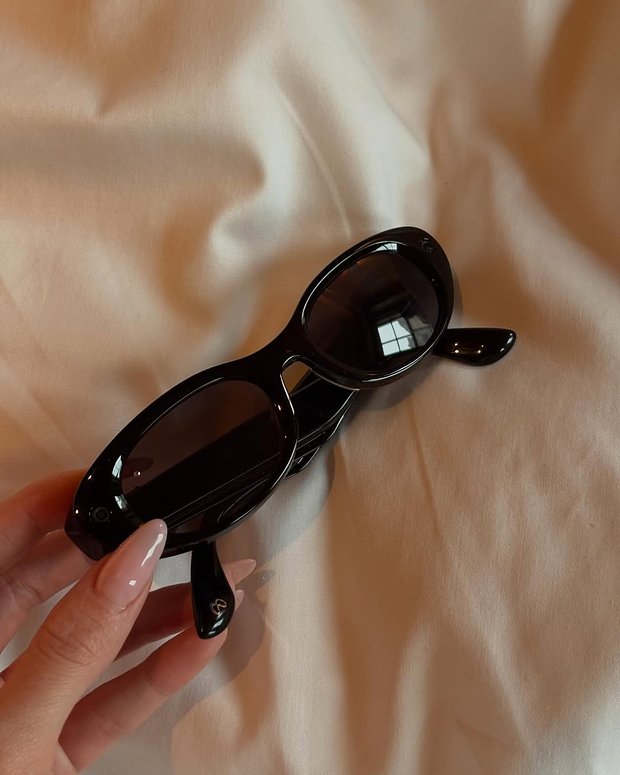
The glasses look like an ordinary pair of fashion sunglasses, with a frame similar to Ray-Ban's classic styles, but contain a built-in camera, a voice assistant and artificial intelligence support. In the collection Jenner helped create, the AI voice assistant speaks in her own voice.
How the smart glasses work
The Meta glasses can record video up to three minutes long in a single clip. The default recording limit is 30 seconds, but users can extend it to one minute or the full three minutes. The voice assistant works hands-free, letting a wearer dictate a message, take a photo or start recording video without touching a phone.
The Jenner collection of Meta glasses sells for $399. Ray-Ban Meta glasses, which also use Zuckerberg's company's technology, cost up to $499. Cheaper alternatives with similar features but without a well-known brand name are sold on Russian marketplaces for the equivalent of a few thousand rubles.



Privacy concerns and Meta's response
Because the glasses resemble ordinary sunglasses, anyone can start recording video or take a photo without the people around them realizing it. Meta has said it built in a privacy safeguard: a small LED light switches on automatically whenever the glasses are recording. In practice, many people do not notice the light or realize they are being filmed.
Meta's own safety guidelines state that the glasses should not be used for harassment, violating someone's privacy, or obtaining confidential information. Those guidelines have not stopped abuse of the technology.
Secretly filmed during sex
Hundreds of cases of the glasses being misused are now known, most involving women filmed without their consent. One case involved a British woman using the name Alice, who discovered by chance that she had been filmed. A man wearing the glasses approached her in a shopping mall in London and tried to strike up a conversation; she did not immediately realize she was being recorded because she did not recognize the device.
The man secretly filmed his attempt to pick her up and posted it to TikTok. Alice's friend found the video and sent her the link. By the time Alice discovered it, the clip had around 40,000 views. She contacted the account's owner and asked for it to be removed, but was refused and instead offered removal in exchange for an unspecified payment.
Alice said the situation made her feel exploited and powerless. She refused to pay and went to the police instead, but officers opened an investigation and then had to drop it for lack of a criminal offense. The video was eventually taken down, but only after TikTok removed it for violating its own rules, and it later resurfaced on other platforms.

In Britain, the law allows filming people in public places, meaning even secret recordings can be legal. But smart glasses are increasingly turning up in cases that are harder to justify. American Artis Landon used the glasses to record moments of sexual intimacy with his former girlfriend. The couple broke up in 2025, and the woman learned of the recordings almost eight months later.
After the breakup, Landon sent her the intimate videos, captioning them with messages such as telling her she could be angry but that he had needed to rewatch them, and insisting their faces were not visible in the footage. Prosecutors say Landon repeatedly recorded sex with his former girlfriend without her consent, conduct they say amounts to a violation of privacy. Landon has pleaded not guilty, saying the recordings happened by accident because he did not understand how the glasses worked at the time. The case has not yet reached a verdict.
Backlash against Jenner
Criticism of Jenner centers on her decision to promote a product users see as potentially dangerous, with many fearing her image as a successful influencer could soften the glasses' reputation and make them seem harmless, particularly to women, who are most affected by the misuse. One commenter on Jenner's post said the Meta glasses seem built around a male experience rather than women's safety and privacy, adding that the technology does not strengthen anyone's rights but instead risks undermining a right to privacy that should be guaranteed to everyone, and that technology should make people feel safer rather than easier to watch.
Other widely shared comments on Jenner's post said the promotion had gone too far, called her out of touch with reality, questioned whether she remembered complaining about her own privacy at age 16, and argued that privacy should not be a luxury.
The American outlet Salon suggested a reason Zuckerberg may have chosen Jenner for the campaign: she comes from a family for whom public attention functions as currency, making concern over personal privacy something of a liability to her earning power. Experts describe this dynamic as a Kardashian-style economy, in which being scandalous and unguarded is itself a path to success, with bigger controversies bringing more attention, influence and money.
Jenner's boyfriend, actor Timothée Chalamet, attended the smart glasses launch event but was careful to avoid cameras throughout.
Jenner's own paparazzi complaints
Jenner has repeatedly complained about intrusive attention from paparazzi. In a recent podcast appearance, she said street photographers constantly violated her personal boundaries, particularly when she was a teenager, describing reporters who called her degrading names, blocked her car, tried to photograph up her skirt and frightened her during solo walks.

Other celebrities promoting the glasses
Jenner is not the only major star endorsing the product. Blackpink member Jennie serves as a global ambassador for Ray-Ban Meta, while actors Chris Hemsworth and Chris Pratt appear in the brand's advertising campaigns.
Sales and future plans
The advertising appears to be working. In 2025, Meta sold about seven million AI-powered glasses, more than in 2024 and 2023 combined. Figures for 2026 are not yet available.
Meta is not planning to limit the technology further. Insiders say a facial recognition feature is coming to the glasses that would help identify people and pull information about them using AI. Facebook, which Meta owns, disabled facial recognition for tagging people in photos five years ago specifically over privacy concerns.