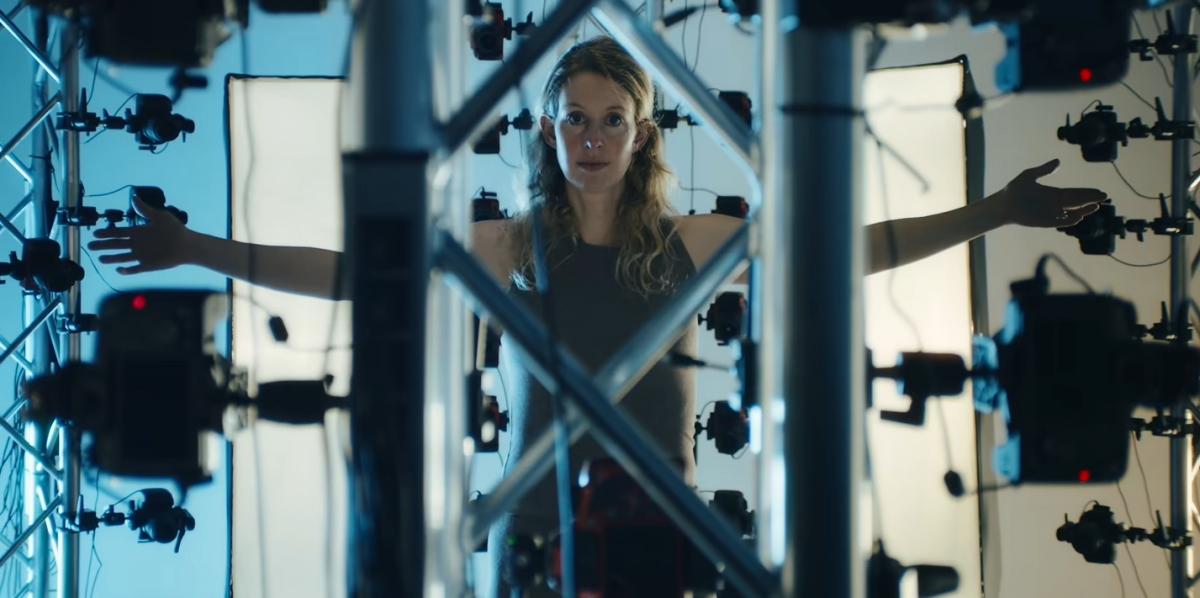
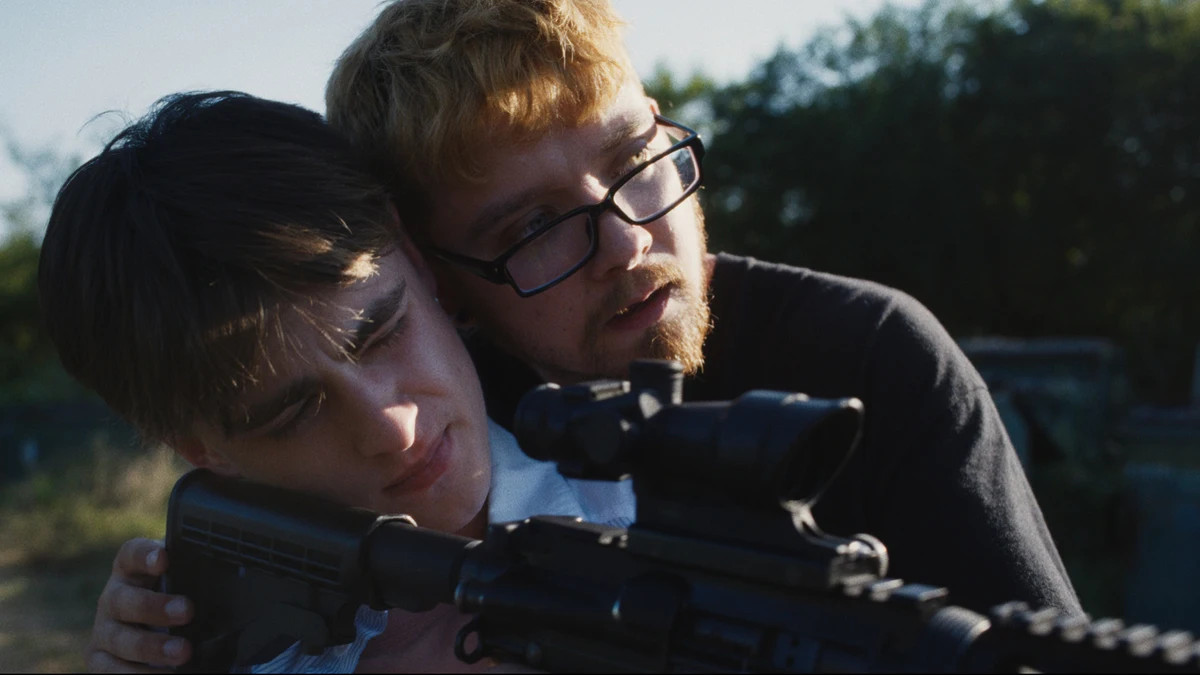
A new Russian film called "Lilya" has hit cinemas, offering a dramatized account of poet Vladimir Mayakovsky's relationship with his muse Lilya Brik and her husband Osip Brik. Directed by Vera Storozheva, the film is not a conventional biopic but an original, largely black-and-white artistic interpretation of the trio at the center of one of Russian literature's most scandalous love stories.
The film opens with a staged funeral scene that never actually took place, with Lilya's ashes scattered over an open field. The imagined ending suggests this was done so that no one could visit her grave to spit on it, a nod to the controversy that still surrounds her reputation.
How the story begins
The narrative starts in 1915, when Lilya's sister Elya introduces her to a young, little-known poet named Vladimir. Mayakovsky reportedly abandoned Elya immediately after meeting Lilya and began waiting for her outside her building. The film treats Elya's subsequent suicide attempt, in which she jumped from a window, as an early sign of the devastation that would follow throughout the story, which includes two suicides in total.
Osip Brik as the driving force
According to the film, Mayakovsky's rise, and later his downfall, would not have happened without Lilya's husband, Osip Brik, played by Evgeny Stychkin in what the review called a standout performance. Osip emerges as the true central figure of the story rather than a passive husband who overlooked his wife's affairs. He is portrayed as an intellectual who recognized Mayakovsky's talent early and effectively became his producer, publishing the poem "A Cloud in Trousers," organizing his public readings, and enforcing discipline on him, at times by dousing him in cold water.
Osip is shown openly telling Lilya that Mayakovsky should become their shared plaything. The arrangement proved lasting: Mayakovsky dedicated most of his poems to Lilya, who the film describes as having become "the curse of his life."
The question of a love triangle
The film revisits the decades-old question of whether a love triangle existed inside the Briks' shared bohemian apartment, a subject that reportedly shocked contemporaries and still unsettles audiences today. The memoirs of Lilya and Osip themselves suggest their marriage had effectively ended before Mayakovsky entered their lives. The film takes a different approach, depicting a low-key but ongoing relationship between Lilya and Osip that persists through Mayakovsky's involvement, his departure, and Osip's own later departure and return.
Casting Lilya and Mayakovsky
Finding an actress to play Lilya reportedly took a long and difficult search before Storozheva settled on Maria Smolnikova, 40, a two-time winner of Russia's Golden Mask theatre award. Smolnikova is credited with capturing her character's passion, impulsiveness and unpredictable femininity, though her performance is sometimes seen as overly theatrical and exaggerated, particularly in scenes involving nudity. Contemporary accounts suggest the real Lilya behaved with more restraint, even aristocratic composure. The review praised Smolnikova for creating a living, contradictory character rather than reducing her to either a "fatal muse" or a "sex monster," conveying exaltation and inner strength through expression and voice.
Mayakovsky is played by Andrei Maksimov, who portrays the poet as a large, infantile, not especially clever figure who nonetheless believes fiercely in his own talent and excels at reciting his verse on screen. The performance was described as somewhat cartoonish and surface-level, missing the enigmatic charisma that reportedly drew large numbers of female admirers to the real poet. The film skips his famous yellow blouse and the foreign car he gave Lilya as a gift, instead adding a scene in which he confesses shame over the poems he dedicated to her. The shift from infantile figure to genius happens abruptly, without any depiction of inner development.
A supporting tragedy
Angelina Strechina, an actress with Moscow's Theatre of Satire, plays Elza, Lilya's sister, in a performance described as natural and fitting. Her character's real-life heartbreak, having been with the poet for more than a year before losing him to her sister, adds a tragic undertone to the wider story.
What the film is really about
The review argues the film is not simply a glimpse through the keyhole of a famous apartment, nor only the story of a love triangle, even though that element remains present. Instead, it suggests that talent requires more than inspiration alone: it needs support, structure, discipline and love, delivered in forms that are sometimes painful and destructive, especially when belief is absent, a condition the review says applies to every character in the story.
The film never resolves whether Lilya was a muse or a destroyer, instead presenting her as a contradictory, fully realized figure who resists simple moral categories while remaining useful to state authorities, a theme the review notes is never fully developed. Storozheva is said to portray her chiefly as a skilled manipulator whose main weapon was an aggressive femininity that, despite her several marriages, appears not to have brought her much happiness.
Another central theme concerns legacy: Lilya Brik worries throughout that she will be forgotten, while Osip Brik predicts, with foresight, that Mayakovsky will write poems that secure her place in history. His far-sightedness, the review says, gives the entire unusual arrangement its underlying motivation.
Visual style and setting
Cinematographer Sergei Machilsky's work is praised as brilliant, built on long takes and striking angles. Many scenes borrow the visual style of photographer Alexander Rodchenko, though the review found this occasionally overdone, with streets lined by constructivist buildings looking artificial and populated by extras who resemble mannequins rather than living people. The atmosphere of Russia's Silver Age, with its freedom, provocation and creative ferment, comes across more vividly in scenes set in literary cabarets, where even writer Maxim Gorky appears. Petrograd and Moscow, however, are said to look indistinguishable on screen, which the review suggests is part of why the closing documentary footage of Mayakovsky's actual funeral lands with such force.
A compromise ahead of the series
The review concludes that the real Briks were likely deeper and more significant figures in the literary life of their era than the film suggests, and that Lilya was probably less flamboyant in real life than running naked through the streets or sunbathing topless on a rooftop. Even so, it calls the film a first large-scale attempt to artistically reckon with a complicated myth, a project reportedly initiated by television executive Konstantin Ernst, carrying inevitable compromises in depth and historical accuracy. "Lilya" was edited down from a television series due to air soon, which the review says explains its slow, theatrical and somewhat fragmented style, with much material apparently left out. The review recommends waiting for the full series, suggesting the story may gain greater depth and power there.
What happens next
A full television series version of 'Lilya' is due to air soon, and the review suggests it may carry more depth than the film.
Test yourself
Who directed the film 'Lilya'?
Which actor plays Osip Brik in the film?
What theatre award has Maria Smolnikova won twice?
Where it happened
Moscow, Russia