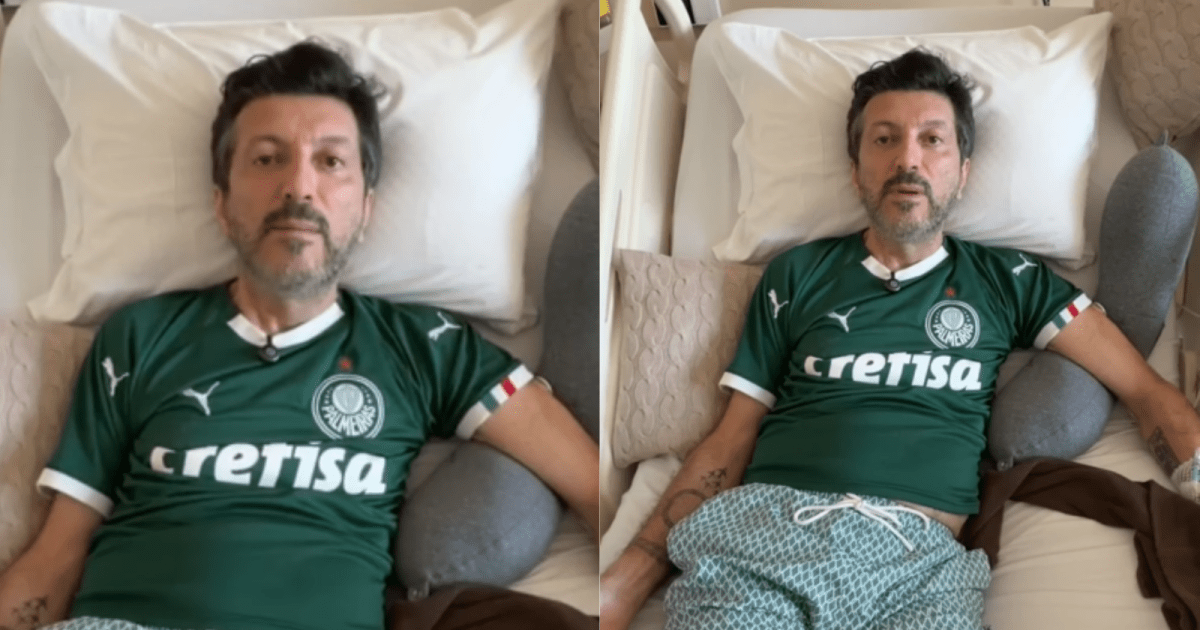
Lito Sousa, the 59-year-old Brazilian influencer and pilot, appeared publicly for the first time on Sunday, August 23, since his family announced he had been diagnosed with Creutzfeldt-Jakob disease. In a video posted to Instagram, Sousa spoke in English and appealed for help securing a place in an experimental study for the rare neurodegenerative disease.
"Hi, my name is Lito Sousa and I have an urgent appeal for you. Please listen carefully to the following message. This is an urgent appeal to Ionis Pharmaceuticals, the Broad Institute, Harvard and the Mayo Clinic," Sousa said in the video.
Storyteller explains the case
After Sousa's appeal, storyteller and communicator Ewandro Magalhães appears in the same video, also speaking in English, to lay out the details of the case for viewers.
"The Brazilian influencer Lito Sousa is fighting Creutzfeldt-Jakob disease, a rapidly progressing and largely fatal disease for which there is still no standard treatment protocol," Magalhães said.
He continued with the appeal: "His family is racing to get him into an experimental trial. Two studies could help, the details are on screen. Lito has millions of followers whose lives he has touched in many ways. Including him in these studies will give him a fighting chance, while also bringing global attention to the research. Please review his case urgently."
Family's search for a trial
Since Friday, August 21, Sousa's relatives, friends, followers and fans have been mobilizing to contact universities and researchers running scientific studies into the disease. So far, there are no open slots for new investigations into his diagnosis.
Sousa's wife has also made a separate public appeal on his behalf, saying she wanted to save the love of her life, according to related reporting. Sousa, who has experienced partial loss of vision, was recently cleared for home care.
What is Creutzfeldt-Jakob disease
Creutzfeldt-Jakob disease is a rare, fatal brain disorder caused by an infectious agent known as a prion, an abnormal and highly resistant protein particle that damages the brain's structure and gives the organ a sponge-like appearance.
Its main symptoms include a rapid cognitive and psychomotor decline. Patients can initially experience loss of motor coordination, known as ataxia, along with tremors, involuntary muscle spasms called myoclonus, and paralysis. Memory loss, mental confusion and dementia often follow, along with disturbances in language and vision, fatigue and changes in sleep.
There is currently no treatment that can reverse the progression of Creutzfeldt-Jakob disease. Medical care focuses on palliative and multidisciplinary support aimed at easing pain and managing neurological symptoms.