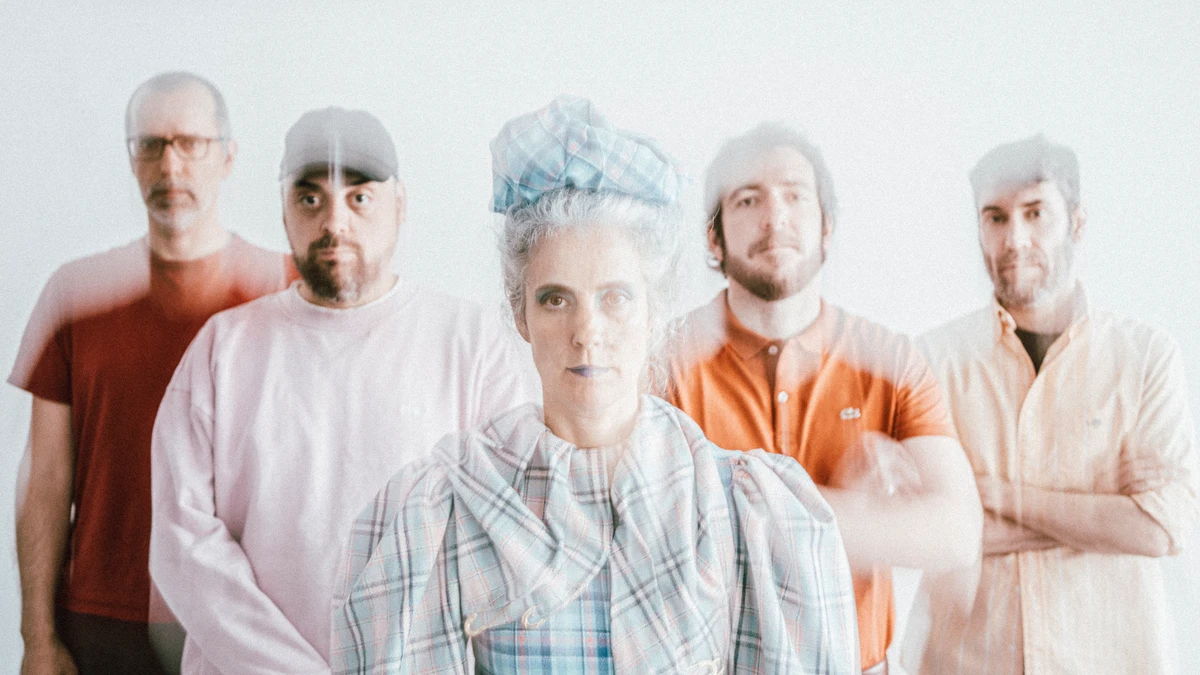
Los Punsetes, the Madrid five-piece known for cutting through the empty grandeur of Spanish pop, have released "Un río de angustia desbocada" ("A River of Unbridled Anguish"), their eighth studio album and, by their own account, the bleakest and driest record they have made, offering listeners almost no relief from its portraits of defeat and exhaustion.

Jorge García, the band's guitarist and composer, said everyone who had heard the record told him it was dark, though he believes there is still a light at the end of the songs. Pressed on whether that light is a small one, he agreed there was no point denying it, adding that this time the band had left out the more playful or lighthearted touches found on earlier albums, calling the new record clearly drier than anything they had done before.
Listeners should not expect a sharp chorus, an acid joke or a chantable slogan against dominant stupidity, the band says. What the record offers instead is bitterness and disappointment, delivered by a group that has long felt someone needed to say a few uncomfortable things in an industry full of epic bands and empty lyrics.
A record without mercy
García was careful to draw a line between bleakness and despair. He said he does not think of it as a depression record, arguing instead that there is a kind of resistance in naming life's hardships as an intimate way of recognising them and, in a sense, scaring them off.
Los Punsetes do not usually make concept albums, but García said this is the closest thing to one the band has produced, and that the title sums it up well. He said they kept the phrase because it struck them as so exaggerated it made them laugh, and that it is essentially a summary of the whole record.
The songs are populated by defeated, furious, weary characters incapable of happiness, living out a wild existentialism sadder than anything imagined by the Portuguese writer Fernando Pessoa, long associated with melancholic introspection. Some of these figures wake up wanting to throw themselves out of a window but dislike drama and exaggeration, so instead they carry on, give up on dying and accept their condition, living out grey days of waiting. Others reduce their whole existence to a tax return, surrendering without a fight.
García singled out one such track, describing it as a form filled out on both sides, a margin of a notebook that he said captures the depersonalisation everyone experiences today. The song's lyrics describe a narrator who no longer remembers their own desires, whose heart is dead, who is made of the money declared on a tax form, and who asks how much there is left to pay. García said every track lands like a punch to the gut, opening into the mind of a loser, characters who give up on and turn against themselves, unable to recognise what they once expected to become.
Playing the "necroloto"
Asked whether the band had tried to psychoanalyse the reasons behind the album's rawness, García said he thought it came from a mix of personal circumstances and a social climate that does not exactly invite cheerfulness. He said there is little hope for the future and that reality seems to be getting worse, though he qualified that view, noting that society has improved greatly in areas such as social progress and tolerance. Still, he said, that is the mood right now, pointing to the threat of climate change as something that is present every day while nobody seems to do anything about it. He guessed it was partly a European perspective, which tends to run more anguished, before laughing and adding that getting older plays a part too.
Age itself comes up directly on the track "Hielo derretido" ("Melted Ice"), which warns against caring about staying cool in old age. García said he argued over the song with Manuel Sánchez, who performs as "Antonna" and is the band's second songwriter, because García feels that particular struggle is already settled: it makes no difference whether someone is cool or not, old or young. What matters, he said, is staying conscious and doing decent things with your life regardless of age, since being 25 guarantees nothing and a person can still turn out to be a disaster.
One fact, García suggested, is not up for debate: every day that passes adds another ticket to what he called the "necroloto," the lottery of the scythe, or death. That fear surfaces on the tracks "El año del caballo" ("The Year of the Horse") and "Están las tumbas llenas" ("The Graves Are Full"). García said the band has begun having close experiences with death, as is natural, and that earlier albums already included several songs on the subject. He said it is not a topic that causes him anguish but one he keeps very present, in a positive sense, because he believes it is better to talk about death in order to stay aware rather than be caught off guard, and above all to live better by remembering that one's days are finite.
Keeping a day job
Every member of Los Punsetes holds a job outside the band, which García described as both a guarantee of creative freedom and a source of frustration. He said having outside income removes the pressure of making music against their own understanding of art purely to earn a living, but that once they see how earnings are split after a show, it is not enough for five people to live on in Madrid. He called it exhausting, but said the band remains very aware of the people who come to see them play, adding that they would like things to be different but that this is simply the situation as it stands.
Test yourself
What is the title of the new Los Punsetes album?
According to guitarist Jorge García, what sets this album apart from previous ones?
Why does Jorge García say he keeps writing about death?
Where it happened
Madrid, Spain