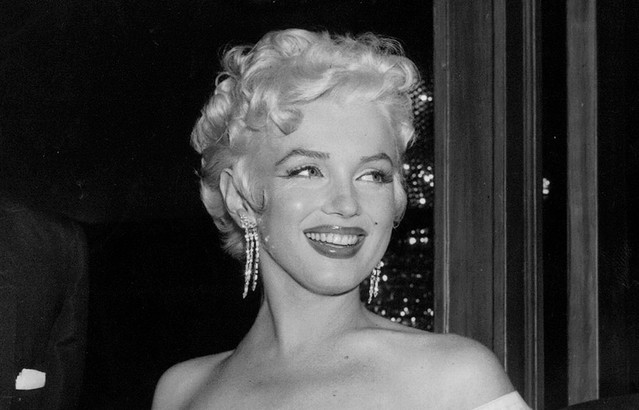
More than six decades after Marilyn Monroe's death, her former home in the Brentwood neighborhood of Los Angeles remains a flashpoint in the star's legacy, now caught in a legal fight between its current owners and the city over efforts to demolish it.
The actress was found dead in her bedroom at the Spanish-style house on 12305 Fifth Helena Drive in 1962, less than a year after she moved in. It was the only property she ever bought on her own, purchased shortly after her marriage to playwright Arthur Miller ended.
The only house she ever bought
Monroe bought the house in early 1962 for 77,500 dollars. The roughly 244-square-meter property was built in 1929 and had four bedrooms, three bathrooms, wood-beamed ceilings, terracotta floors, a tiled fireplace and distinctive windows.
The yard held a swimming pool, citrus trees and a small apartment beside the garage that Monroe wanted to use to house friends going through hard times. She told Life magazine shortly before her death that she wanted the home to be a place for friends who might have some kind of problem, so they could stay there until they were back on their feet.
A house she chose herself
Monroe took a personal hand in furnishing the home, traveling to Mexico to pick out furniture and decorative pieces from outdoor stalls and workshops. She said at the time that she was sure she would get along well with anyone who loved her house.
Unlike a showpiece mansion in Beverly Hills, the property was a quieter, more personal retreat at the end of a cul-de-sac, away from the pressures of fame.
Monroe's final night
Just months after buying the house, Monroe died in her bedroom there. In the early hours of August 5, 1962, her housekeeper, Eunice Murray, grew concerned after seeing a light on in the actress's room and getting no response to her calls.
Murray then contacted Monroe's psychiatrist, Dr. Ralph Greenson, who entered the room through a window. The actress was found naked, lying face down on her bed, with a telephone in one hand and empty pill bottles nearby.
A toxicology examination recorded the official cause of death as acute barbiturate poisoning. Her death was classified as an overdose and a probable suicide, though conspiracy theories about the case persist to this day.
What happened to the house afterward
The property changed hands several times after Monroe's death. Although some renovations were made, including to the kitchen, much of the home's original character and aesthetic survived.
One of the most personal touches still in place is a crest above the front door bearing the Latin inscription "Cursum Perficio," meaning "here ends my journey."
Lisa Optican, the real estate agent who sold the house in 2017, told Vanity Fair that despite changes made by previous owners, the feeling that drew Monroe to the property remains. She described the house as warm, romantic and intimate, saying it showed why the actress chose it: she wanted a home, not just a large residence.
The 2023 sale and demolition plan
The property sold again in 2023 for 8.35 million dollars to Roy Bank and Brinah Milstein. The new owners sought to demolish the house, filing applications for demolition and excavation permits.
The move triggered a strong backlash in Los Angeles. Days later, the Los Angeles City Council voted unanimously to temporarily halt the demolition.
In January 2024, the Los Angeles Cultural Heritage Commission voted to recommend designating the property a historic-cultural monument. The decision did not guarantee the house could never be torn down, but it delayed any such action for 180 days so that preservation alternatives could be studied.
The owners' legal fight
In May 2024, the owners sued the city in an effort to block the historic monument designation, alleging illegal and unconstitutional conduct and an abuse of power by the city of Los Angeles.
The following month, the City Council formally approved the historic designation. In January 2026, Bank and Milstein filed a new lawsuit against the city and Mayor Karen Bass, arguing that the designation amounted to an unconstitutional taking of their private home.
According to the lawsuit, the city effectively stripped the owners of control over their property without a public purpose and without compensation, through the historic monument status.
"Not a trace of Monroe left"
The owners also argued there should be no historic interest in the property, since Monroe lived there only briefly and, in their view, no trace of her presence remains in the house.
They further claimed that the historic designation had turned their home into a tourist attraction, drawing frequent traffic and incidents of trespassing on the property.
In May 2026, a federal judge dismissed the owners' lawsuit. Bank and Milstein subsequently filed an amended complaint.
The house where Marilyn Monroe spent her final moments remains standing, but it is still at the center of an ongoing clash between private property rights, historical memory and the public interest in preserving a symbol of Hollywood.