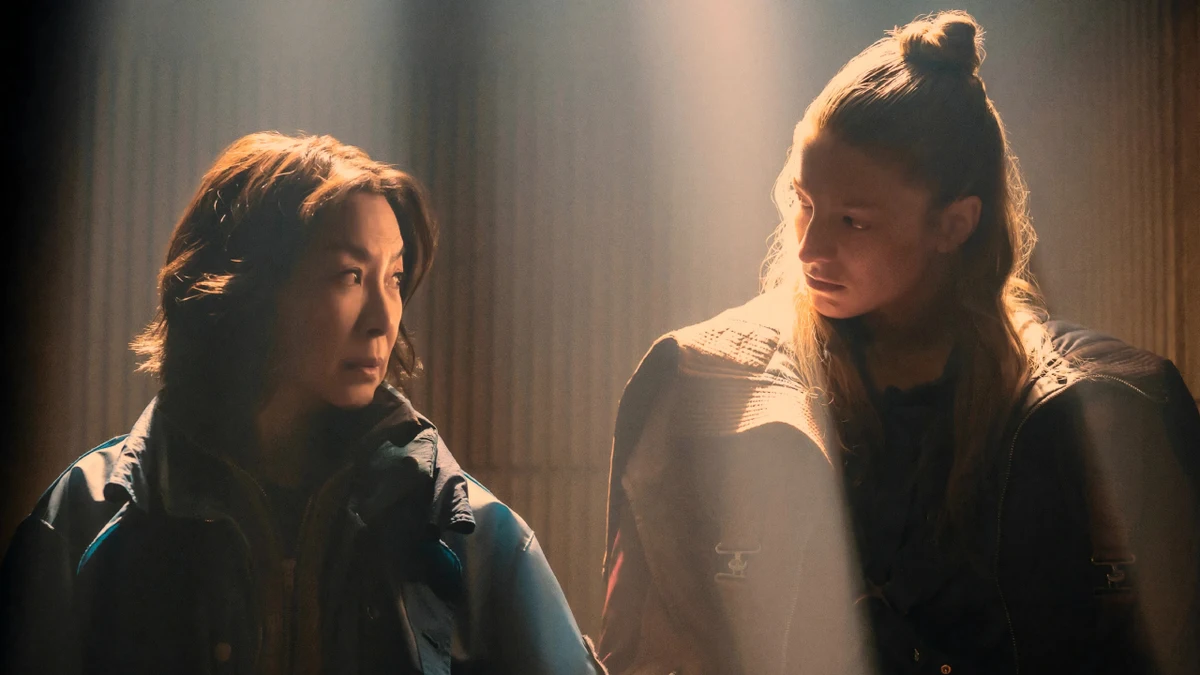
Russia's MIR television channel broadcast Eldar Ryazanov's 1984 film "A Cruel Romance" on November 27 at 07:40 and 10:10, and ahead of the airing, producer and PR specialist Tamara Korytina spoke to MIR24.TV about how the film's makers recreated 19th-century Russia so convincingly.
The film is based on Alexander Ostrovsky's play and is scored with gypsy romance songs. It follows Larisa Ogudalova, a young and naive woman who dreams of love and a luxurious life, only for her fate to fall into the hands of the cynical Paratov, who toys with her feelings. In a world where everything is bought and sold, she tries to hold on to her dignity.
Korytina said that when she rewatches the film as a producer, she is always struck by the same thing: it does not just tell Larisa Ogudalova's story, it makes the viewer physically feel it, from the weight of a corset to the creak of floorboards in a merchant's house to the damp fog over the Volga. She said the atmosphere was built from thousands of small decisions that earned the viewer's trust long before "authenticity" became a buzzword in film and advertising. She added that, as someone who works in integrations and public relations, what she values most is that this authenticity was built not with budget but with inventiveness.
Costumes: the corset an actress called a hindrance
Costumes were designed by Natalya Ivanova, who later worked on "Burnt by the Sun" and "The Barber of Siberia." According to Ivanova, on the second day of filming, actress Larisa Guzeyeva complained to Ryazanov that she could not act because the corset was too restrictive, telling him she was already thin. Ivanova said the issue was not thinness at all: the corset shaped the historical figure, controlling a 19th-century woman's posture and preventing her from relaxing her back. Guzeyeva ended up playing that stiffness as part of her character, and audiences believed it.
Fabric was scarce. Ivanova recalled that Mosfilm's warehouses held only broadcloth and undyed "school fabric," which she called "tears," yet outfits worthy of the French couturier Charles Worth had to be made from it. The fabric was embroidered, pleated and dyed in delicate shades by two dyers at Mosfilm doing what would now be called handcraft work. Korytina said the white hat worn by Paratov, played by Nikita Mikhalkov, was sewn from fur caps and then shaved with a razor so it would look like felt.
Color was used deliberately too. All three of Larisa's main dresses are blue, in different shades, conveying an ethereal, otherworldly quality and an inability for the pragmatic cunning possessed by her mother, Harita Ignatyevna, played by Alisa Freindlich. Korytina said the costume works like a PR tool, transmitting character without words, in the same way brands build a visual code that an audience reads before they even start to think.
Interiors: a merchant's house as social pressure
Production designer Alexander Borisov, a regular collaborator of Ryazanov's, built interiors that critics later called remarkably authentic. Merchant mansions, steamship cabins and 19th-century restaurants were not just backdrops but an environment that explains why Larisa is doomed. The Ogudalov family home is impoverished yet still claims elegance. The cabin on Paratov's steamship is an enclosed space with no way out. The restaurant where cruel romances are sung is where men decide a woman's fate over dinner.
Borisov built the spaces so cinematographer Vadim Alisov's camera could treat them like a psychological portrait, using cramped rooms, heavy curtains, dark wood and soft light to create a sense of hopelessness that reviewers later called ahead of its time. Korytina said a brand's environment, whether a flagship store, an office or a landing page, always tells a story louder than a slogan, and that the film's interiors do not try to please. They create pressure, and that is why they are memorable.
The Volga: an uncredited lead
Ryazanov once said the film's main characters were the Volga River and the last Volga steamships, and Korytina said this was not a metaphor: without the Volga, the film would fall apart into costumes and dialogue. Filming took place mainly in Kostroma, with additional scenes shot in Yaroslavl and Plyos.
The embankment seen in the opening credits is in Yaroslavl, showing the Ilyinskaya Church and the Arsenal Tower, filmed from the opposite bank so the view would carry the viewer a hundred years back. Ostrovsky's gazebo in Kostroma became the setting for key scenes, including the moment Karandyshev tells Larisa that Paratov has left, and the scene where she waits. The fog over the Volga in the film's final scenes was not a special effect but a gift from nature, with Kostroma providing what Ivanova called a luxurious fog.
Korytina said the Volga in the film is not just a location but a space of freedom that becomes a trap: the steamship Lastochka carries Paratov away, leaving Larisa on the shore, with the river flowing while life stands still. She said that, as someone who often searches for a powerful location for a shoot or event, she understands why Ryazanov chose these riverbanks, since the natural setting gave the film a scale and breadth no artist could have painted.
From flop to classic
"A Cruel Romance" was released in 1984 and was panned by critics, who called it vulgar and described Guzeyeva's performance as helpless. Audiences disagreed: readers of the magazine Soviet Screen voted it the best film of the year. Forty years on, it is regarded as a classic.
Korytina said the case shows that atmosphere is not created by budget or special effects but by respect for detail and a willingness to go against the current. The corset that got in the way, the hat shaved with a razor, and the fog that simply came off the river all worked toward the same goal: trust. She said audiences believed in the 19th century because the artists did not try to improve it, they tried to understand it. In modern PR and brand integrations, she added, that honesty is probably the most underrated resource, since people often chase making something look beautiful while forgetting that beauty is about the honesty of the material, not gloss.
Test yourself
What did costume designer Natalya Ivanova say the restrictive corset was really for?
Where was most of 'A Cruel Romance' filmed?
What happened to 'A Cruel Romance' after its 1984 release?
Have your say
What do you think makes a period film's atmosphere feel most authentic?
Where it happened
Kostroma, Russia