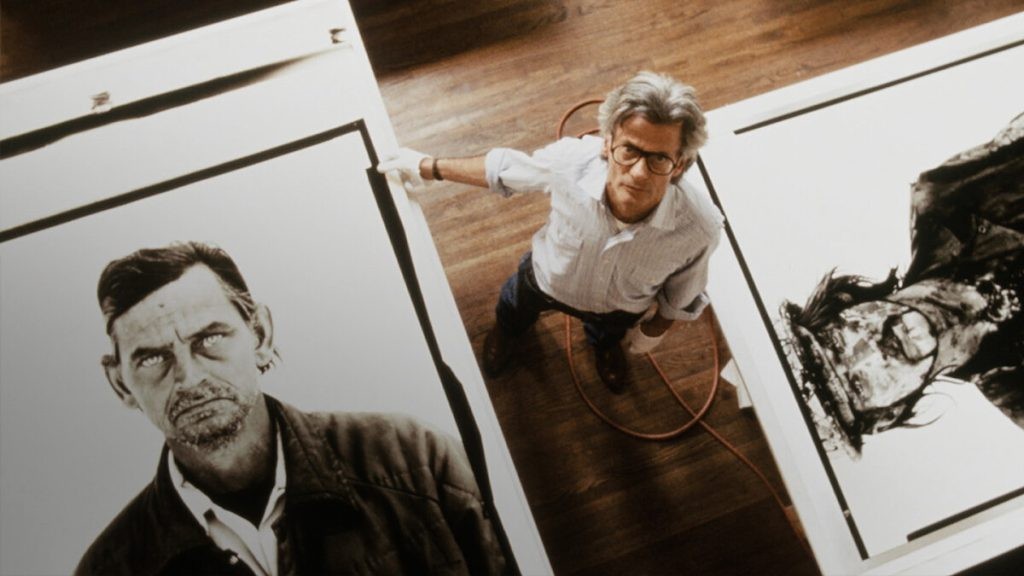
A new documentary about fashion photographer Richard Avedon, directed by Oscar winner Ron Howard, premiered on Netflix on Wednesday, November 11, drawing on Avedon's private archive and interviews with people who knew him, including Isabella Rossellini, Twiggy and his son, John Avedon.
Titled simply Avedon, the film first premiered at the Cannes Film Festival in May. It was produced by Imagine Documentaries and Fifth Season in collaboration with the Richard Avedon Foundation, which granted the filmmakers access to his private collection.
The documentary includes previously unseen photographs, behind-the-scenes footage and interviews with figures who worked with Avedon, among them Twiggy, Isabella Rossellini, Lauren Hutton and Calvin Klein. His son John Avedon also appears, offering a more intimate look at the photographer's life. With access to hundreds of thousands of photographs and hours of archival interviews, Howard later said one of his biggest challenges was deciding what to leave out.
Who was Richard Avedon?
Born in New York in 1923, Richard Avedon spent World War II taking identification photographs of sailors. He later recalled photographing around 100,000 faces before realizing he was becoming a photographer.
He began working for Harper's Bazaar at just 22 and quickly developed a style that would change the direction of fashion photography. At a time when models were typically shot in static, carefully rehearsed poses, Avedon took them out of the studio and into the streets of Paris, to cafes, nightclubs and circuses, encouraging them to run, jump, dance and laugh.
His most famous fashion photograph, Dovima with Elephants, taken in 1955, shows how different his approach was. In it, model Dovima poses among elephants at the Cirque d'Hiver in Paris, wearing an elegant evening gown by Dior. Originally published in Harper's Bazaar, the image became one of the most recognizable in fashion history.
In 1966, Avedon joined American Vogue, where he worked with the legendary editor Diana Vreeland and photographed women who would help define the decades that followed, including Twiggy, Penelope Tree, Lauren Hutton, Veruschka and Brooke Shields.
Beyond fashion
Avedon's work went far beyond fashion. Audrey Hepburn, Andy Warhol, Bob Dylan, Charlie Chaplin, the Beatles and many other 20th-century icons posed for him, but he felt the same pull toward photographing people the public had never heard of.
Photography was also a way for Avedon to examine the society he lived in, something that came into focus in 1964 when he published Nothing Personal with writer James Baldwin, a friend since high school. Through portraits and essays, the two examined American society, racism and social inequality, showing how much photography could reveal about the world beyond fashion magazines.
Avedon pursued a similar idea in the 1980s with In the American West, a project that took him across the region to photograph miners, laborers, waitresses and other local residents. He shot them against a plain white background, using the same approach he brought to celebrities.
Behind the lens
Throughout his career, Richard Avedon revealed unexpected sides of some of the most famous people in the world, yet he himself remained something of an enigma. Ron Howard's documentary sets out to explore what Avedon's life was like when the studio lights went off, delving into his creative obsessions, his need for control and his constant drive to push past his own limits. Archival interviews with the photographer, along with accounts from close collaborators and family members, reveal a more private side of Avedon, away from lavish fashion shoots and famous faces.
In a trailer for the film, Avedon said he could not separate fashion from the way people live. The remark makes more sense when set against everything he photographed, from Dior gowns and Hollywood stars to civil rights demonstrations and portraits of ordinary Americans. His photographs are now seen as works of art, but they also stand as records of the times in which they were made. According to Howard, the documentary set out to examine how Avedon saw the world and what drove him to keep searching for something new.
His legacy
One of Avedon's most celebrated photographs, taken in 1957, shows Marilyn Monroe lost in thought, looking tired and markedly different from her usual public image, as though she had briefly forgotten she was in front of a camera. The picture was taken after Monroe spent hours singing, dancing and posing in Avedon's New York studio.
Avedon later recalled that for hours she danced, sang and flirted, doing what she did best, being Marilyn Monroe, before the inevitable letdown set in. He said that once the evening ended, once there was no more white wine or dancing, she sat in a corner like a child, as if everything had disappeared. Avedon noticed the moment and captured what became one of her best-known portraits.
Richard Avedon died in 2004, leaving behind more than half a century of fashion, art and social history recorded in photographs. More than two decades later, his work continues to inspire new generations of photographers, artists and fashion editors. Howard's documentary offers a chance to better understand the man who, for all those years, stood on the other side of the camera.