The grand summer homes featured in HBO's period drama The Gilded Age are not just sets. Many of the mansions are real houses still standing in Newport, Rhode Island, and several are open to visitors today through The Preservation Society of Newport County, an organization dedicated to protecting the city's architectural heritage.
In the late 19th century, New York's wealthiest families had a very particular idea of a summer holiday. When temperatures rose in Manhattan, the Vanderbilts, the Astors and other great fortunes packed up and moved to Newport, a coastal town in Rhode Island that had become one of American high society's favorite destinations.
Their summer houses had little in common with what people today think of as a second home. They called them cottages, even though some had as many as 70 rooms, enormous ballrooms, monumental gardens and dozens of staff dedicated to their owners' needs. Families competed to throw the most extravagant parties, decorate their homes with materials imported from Europe, and host the most influential guests, with celebrations ranging from balls inspired by children's stories to dinners where dogs wore diamond collars.
That world of excess has returned to the spotlight through The Gilded Age, the HBO series created by Julian Fellowes, who also created Downton Abbey.
The Elms: the Russells' summer home
A good place to start a tour is The Elms, one of the most recognizable mansions for fans of the show. In the series, the house represents the Russell family's summer home in Newport, where Bertha Russell continues her efforts to win over high society.
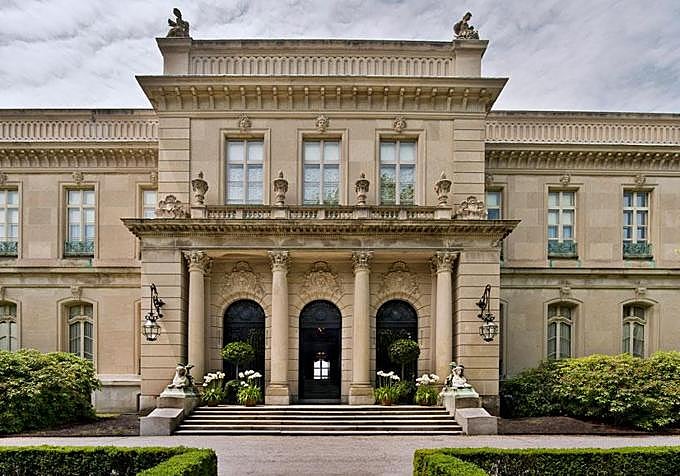
The mansion was built between 1898 and 1901 for Edward Julius Berwind, a businessman who had made an immense fortune in the coal industry. Designed by architect Horace Trumbauer and inspired by an 18th-century French palace, it is known for its elegant rooms and its gardens, with sculptures, fountains and carefully kept terraces.
Behind that seemingly perfect life lay a large domestic operation. The house once employed around 40 staff responsible for maintaining the property and attending to its owners during the summer season.
Rosecliff: the mansion of legendary parties
Further along Bellevue Avenue stands Rosecliff, one of Newport's most elegant mansions and a particularly interesting stop for seeing how the millionaires of that era entertained themselves.
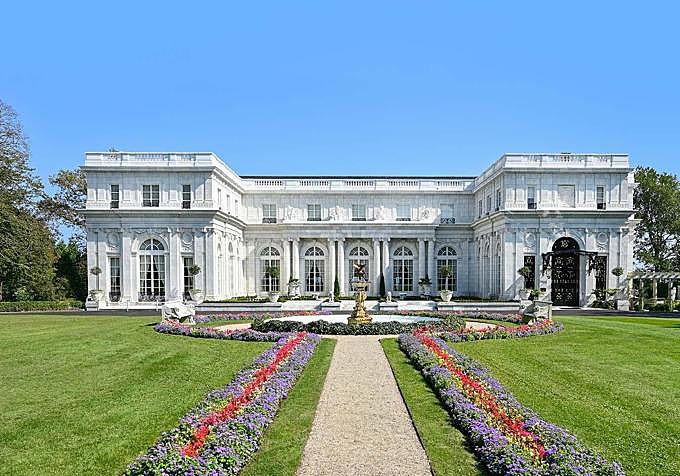
The house was built in the early 20th century for Theresa Fair Oelrichs, heiress to a fortune made in silver mining. Inspired by the Grand Trianon at Versailles and designed by architect Stanford White, it features a monumental staircase and what was once the largest private ballroom in Newport.
Rosecliff also has close ties to film. Its interiors appeared in the 1974 adaptation of The Great Gatsby, while in The Gilded Age its imposing white facade stands in for the New York residence of Mrs. Chamberlain.
Marble House: a birthday gift inspired by Versailles
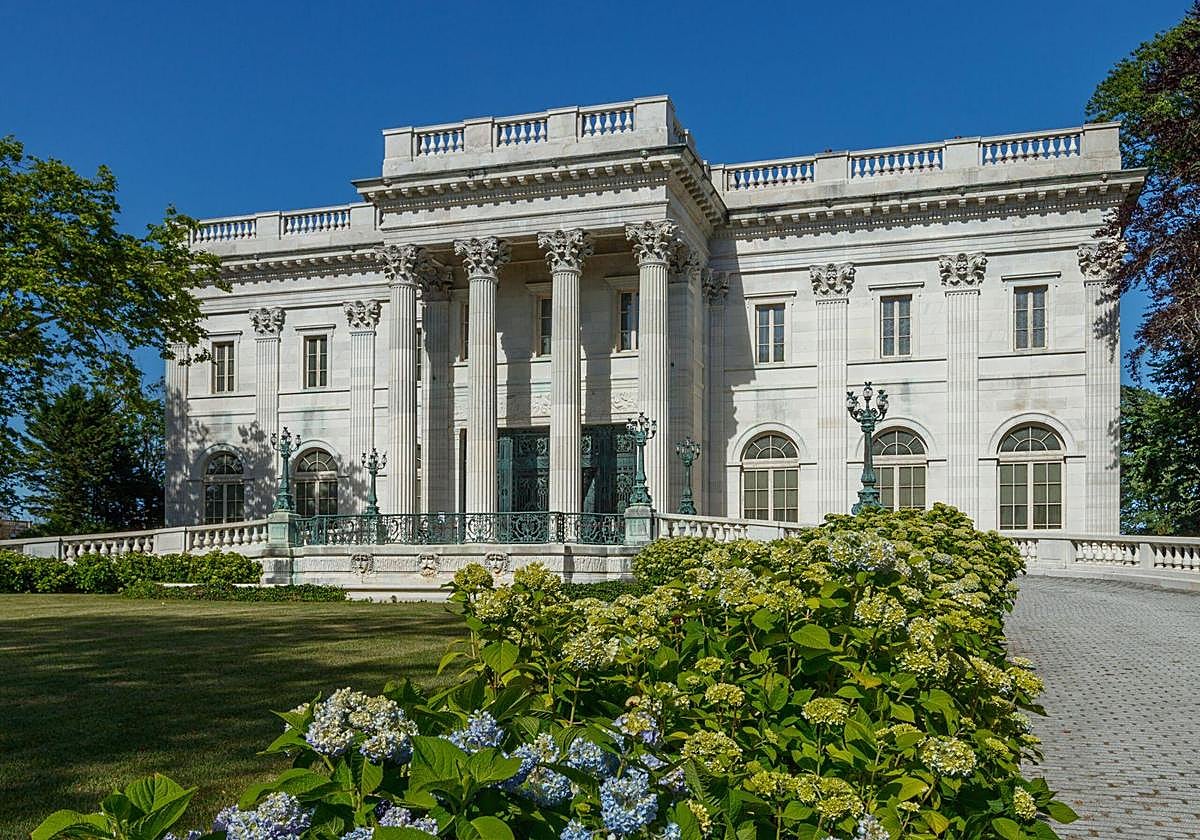
A short distance away sits Marble House, one of Newport's mansions with the most surprising history. William Kissam Vanderbilt had it built as a gift for his wife Alva Vanderbilt's 39th birthday. Alva was one of the most influential women in New York society.
Completed in 1892, the mansion was inspired by the Petit Trianon at Versailles and cost around 11 million dollars at the time. Much of that fortune went into the marble covering its spectacular rooms, designed to impress guests.
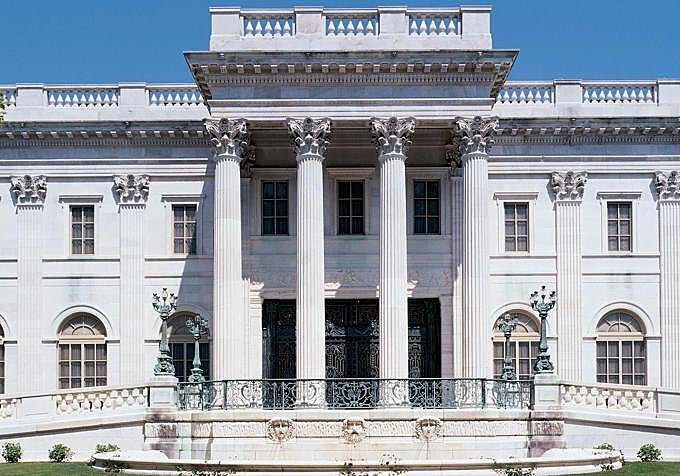
The marriage ended in divorce just three years later. Over time, Alva became a prominent advocate for women's suffrage and used the property's gardens to hold gatherings related to that cause. She also built a distinctive Chinese-inspired tea house on the grounds.
Fans of The Gilded Age will recognize Marble House's dining room, used in the second season to recreate the dinner that Bertha Russell holds in honor of the Duke of Buckingham.
The Breakers: the Vanderbilts' 70-room palace
The route can end at The Breakers, probably Newport's most impressive residence and one of the finest examples of the opulence that defined the American Gilded Age.
Cornelius Vanderbilt II and his wife, Alice, commissioned architect Richard Morris Hunt to design the house, an Italian Renaissance-inspired palace facing the Atlantic Ocean.
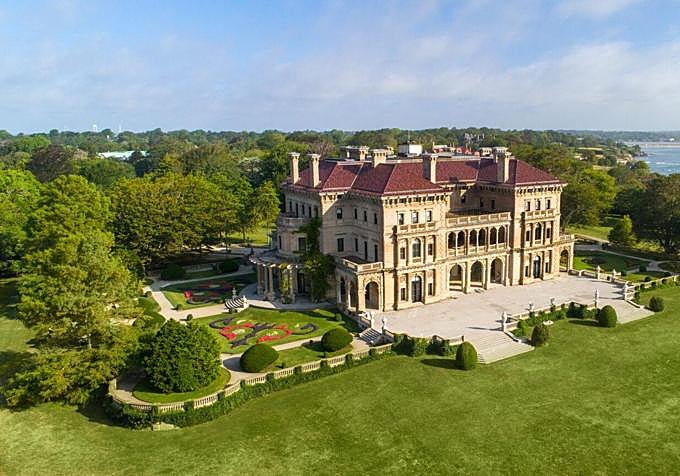
Completed in 1895, the house has about 70 rooms, including 48 bedrooms for the family, their guests and staff. Its interiors feature marble, crystal chandeliers, fine woods and gilded details throughout its grand rooms.
In The Gilded Age, the music room at The Breakers served as the setting for the grand ball that closes the first season, while its billiard room also appears as part of the Russell family's New York mansion.
Today, The Breakers is one of Newport's major historic attractions, offering visitors a glimpse into daily life inside one of the most powerful families in the United States.
Test yourself
Who originally commissioned The Elms mansion?
What building inspired Marble House's design?
About how many rooms does The Breakers have?
Have your say
Would you be interested in visiting one of Newport's Gilded Age mansions?
Where it happened
Newport, Rhode Island, United States