


The Canadian documentary Nuclear Weapons: Planet and Blood has premiered on Movistar Plus, detailing atomic test impacts across the United States, Australia, and the Pacific.
Directed by Daniel Everitt-Lock, the film gathers testimonies from more than 50 victims exposed to radiation during detonations, giving voice to populations who suffered severe health issues and fought for government recognition.
Movistar Plus, a subscription television service operated by Spanish telecommunications company Telefónica, added the release to its broadcast catalog as an investigation into the human toll of nuclear development.
Health Consequences and Downwind Fallout
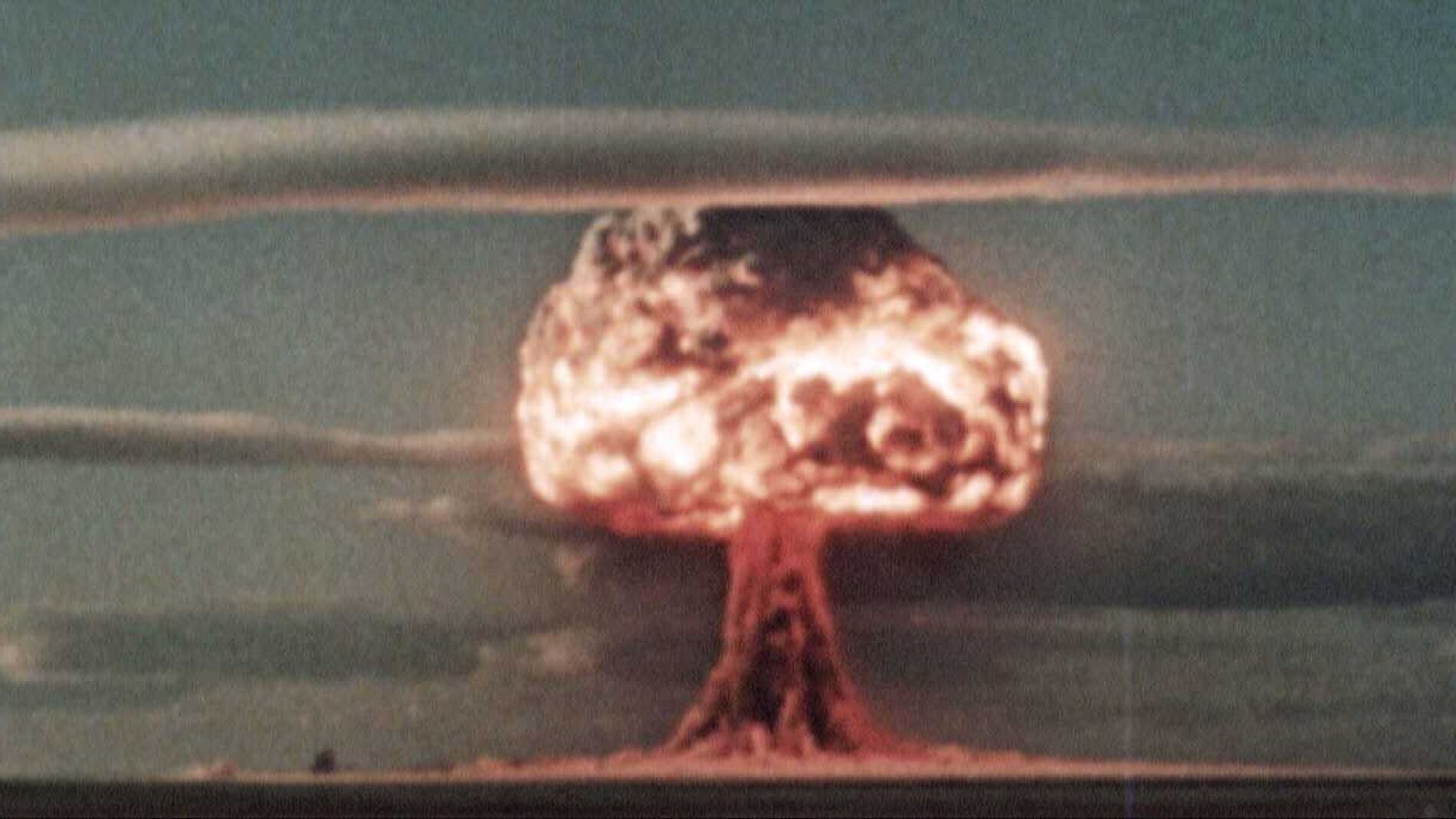
More than 2,000 nuclear tests have been conducted worldwide since 1945. Experts estimate that radioactive fallout from atmospheric and underground trials could be responsible for approximately 2.4 million cancer deaths globally.
For populations residing near testing grounds, oncological illnesses, thyroid conditions, heart problems, and birth defects became recurring health crises. Communities also endured subsequent abandonment by governments that authorized the detonations.
In the United States, officials created the term downwinders to describe residents living downwind of test sites who absorbed radioactive fallout carried by wind currents.
Despite living thousands of kilometers apart, survivors across different regions report identical medical conditions, including high rates of infertility, spontaneous abortions, and physical malformations. These health issues continue to affect children and grandchildren of direct witnesses, creating an intergenerational radioactive inheritance.
Displacement in Australia and the Pacific
The documentary details the experience of the Maralinga Tjarutja, an Indigenous Australian population in South Australia whose traditional territories were used by the United Kingdom for nuclear tests during the 1950s.
Forced to displace without explanation, many Maralinga Tjarutja members later returned to contaminated lands. Families established camps inside explosion craters, breathing radioactive dust and consuming contaminated food for years without receiving health warnings.
A similar crisis occurred in the Marshall Islands, a Pacific island nation where the United States conducted 67 nuclear detonations between 1946 and 1958.
Residents of Bikini Atoll were evacuated before testing commenced. However, on Rongelap Atoll, no pre-test evacuation took place, leaving radioactive fallout to descend on the islands like snow while local children played in the toxic material.
Government Compensation and Recognition Delays
Official recognition and financial compensation from testing nations arrived decades late, remained incomplete, or were denied entirely.
The United States government did not acknowledge or financially compensate affected downwinders until 1990, decades after atmospheric testing concluded.
In the United Kingdom, military veterans exposed to nuclear tests waited more than 70 years after initial detonations to receive symbolic recognition through a commemorative medal.
The British Ministry of Defence continues to reject general financial compensation for affected personnel. Former service members seeking disability pensions must individually prove a direct legal link between their diagnosed illness and their radiation exposure during military service.
Atomic Weapons in Popular Culture
The physical destruction and anxiety caused by atomic detonations have influenced global fiction for over 80 years, following the atomic bombings of Hiroshima and Nagasaki in August 1945.
In Japan, nuclear trauma established the kaiju monster genre, exemplified by the 1954 film Godzilla. The character was created following nuclear anxieties and the incident involving the Daigo Fukuryu Maru, a Japanese fishing boat contaminated by US nuclear tests at Bikini Atoll.
Western pop culture processed nuclear fears through distinct cinematic styles. Director Stanley Kubrick portrayed mutual assured destruction through dark comedy in Dr. Strangelove, while the 1984 British film Threads presented nuclear devastation through docudrama horror.
More recently, media franchises such as Fallout converted radioactive post-apocalyptic landscapes into settings for video game adventure, dark humor, and popular culture.
Focusing on the Victims of Nuclear History
The release of Nuclear Weapons: Planet and Blood follows a renewed interest in atomic history sparked by director Christopher Nolan's 2023 biographical film Oppenheimer.
While Nolan's film centered on theoretical physicist J. Robert Oppenheimer and the development of the atomic bomb at Los Alamos, Everitt-Lock examines what was omitted from the screen, focusing on civilians and veterans who lived with the consequences of nuclear detonations.
The documentary prioritizes historical denunciation and public service over cinematic editing pace, functioning as an essential record of survivor testimony from the nuclear era.