

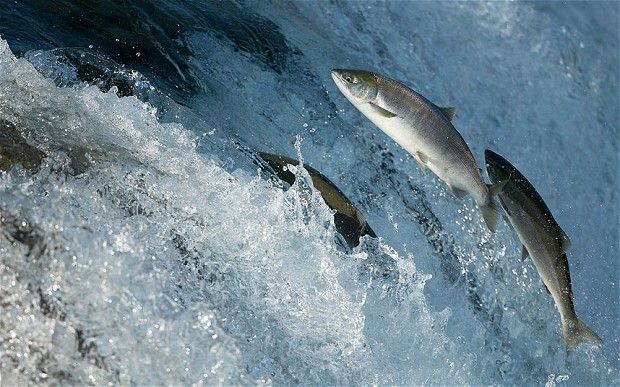
Salmon in the United States have returned to spawn in their home river in Oregon after overcoming obstacles from a hydroelectric power station. According to Ecoportal, fish were released into the Deschutes River two years ago.
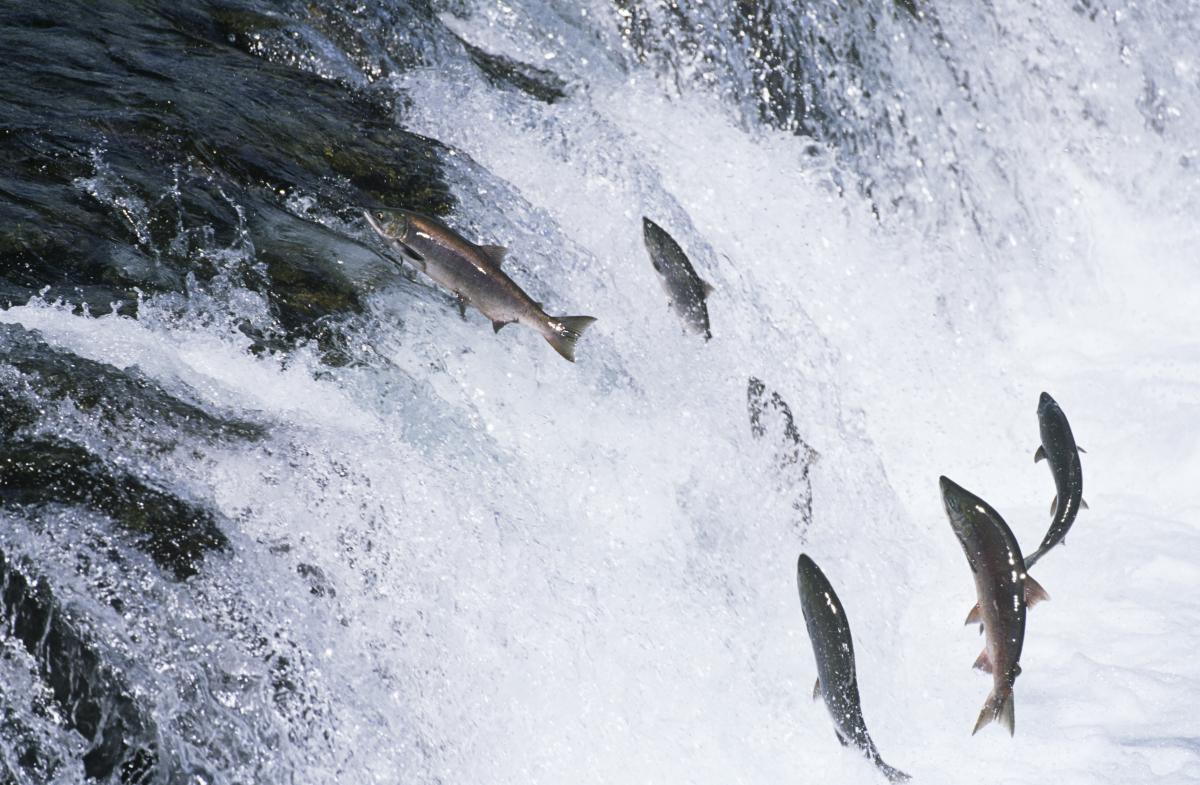
To reach the ocean, the salmon passed through special chutes built into dams and hydroelectric facilities. Out of 950 fish released, at least 600 returned when the time came to lay eggs.
This movement restored an ancient migration route despite regulated river currents. Specialists state that dams blocking river flows, which first appeared 50 years ago, became the primary cause of declining salmon populations.
Salmon navigation and fish passage systems
To facilitate fish migration and restore ecosystems, access points must be created along the migration route. Engineers designed a water diversion system near Lake Billy Chinook, which young salmon use to migrate. Scientific research shows that fish navigate using innate olfactory memory and geomagnetic orientation as an internal compass.
The fish overcome three large dams to reach the lower Deschutes River. Their migration covers a section of about 350 km leading to the ocean, including roughly 150 km along the Deschutes River, another 250 km to the Bonneville Dam, and 15 km to the Pacific Ocean, where they spend most of their lives.
Tracking salmon returning to upper river areas confirms the success of fish returning to different subbasins. Biologists are mapping these return routes to evaluate the reintroduction program. Habitat improvements and innovative technologies, such as new fish guide nets, stress reducing ponds, and acclimatization methods, have significantly increased survival rates for juvenile steelhead salmon.
Broader ecological effects of river dams
Restoring original migration corridors may help restore ecological processes across the entire river system. Similar restoration projects are studying whether other migratory fish can reoccupy historical routes blocked for generations.
River regulation also affects other major waterways, including the Nile in North Africa. Beyond blocking fish pathways, the giant Aswan Dam causes a lack of nutrient rich silt downstream and soil subsidence in the delta.


