

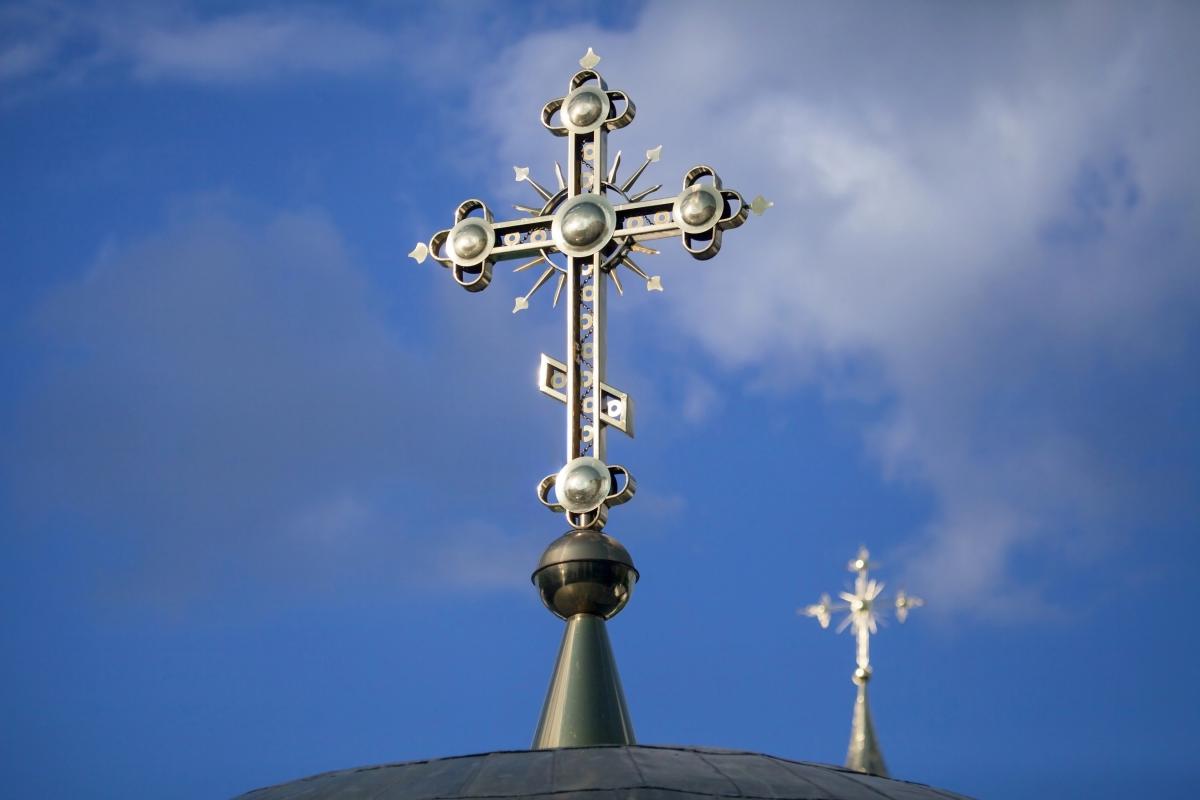
Orthodox Christians who follow the new church calendar are marking the Exaltation of the Holy Cross on September 14, 2026, one of the twelve major feasts of the church year. The holiday commemorates the finding of the life-giving cross on which Christ was crucified by Saint Helena.
The same day, the church also honors the memory of Saint John Chrysostom, one of the most revered teachers in church history and one of the Three Holy Hierarchs, alongside Basil the Great and Gregory the Theologian.
Who Was St. John Chrysostom
John Chrysostom was born around the year 347 in Antioch. His father, a military commander, died when he was young, and his mother raised him in the Christian faith. After receiving a strong education, he became a monk following his mother's death, a period during which he wrote his earliest theological works, including Six Books on the Priesthood.
In 386 he became a presbyter and spent twelve years preaching, interpreting scripture and continuing to write. In 397 he was appointed Archbishop of Constantinople, where he worked to improve the spiritual conduct of the clergy and cared for the sick and for pilgrims, while living a modest and restrained life himself.
He later clashed with Empress Eudoxia after openly condemning the customs of the capital. He was falsely accused, sentenced to death, and then banished from the city instead. An earthquake struck Constantinople after his exile, and the frightened empress begged him to return, but he was banished again two months later, a period during which the Hagia Sophia church and the senate building burned down. He spent his final years in exile and died on September 14 in the year 407. He earned the nickname Chrysostom, meaning golden-mouthed, for the power of his sermons and his extensive theological writing.
The Old Calendar Date
Those who follow the old church calendar mark September 14 differently. On that date, the church honors the Council of Vinnytsia Saints.
Traditions and Prohibitions
On the Exaltation of the Holy Cross, believers traditionally pray for the health, wellbeing and happiness of their families and attend a festive church service.
The feast is popularly known simply as Vozdvyzhennia, as well as Sdvyzhenie or the Third Autumn Day. The name Sdvyzhenie is linked to the end of Indian summer, as everything is said to shift toward preparations for winter.
By tradition, homes are sprinkled with holy water on this day, and a cross is drawn above the entrance in chalk, charcoal or soot to protect the household. Only meat-free dishes are served at the table, since the Exaltation falls during a strict fast, meaning meat, fish, dairy and eggs are avoided even if the feast lands on a Sunday. It is believed that whoever fasts on this day is forgiven seven sins.
The church discourages quarrels, swearing and gossip on this day, and people are urged not to refuse help to others or mistreat people or animals.
Folk belief also holds that new undertakings or important projects should not be started today, as anything begun is thought to be doomed to fail. Lending money is also discouraged, since tradition holds that nothing at all should leave the house on major feast days, as prosperity is believed to leave along with any borrowed items, and the debt itself risks never being repaid.
Heavy physical work is put off for the day, so people traditionally avoid cleaning, doing laundry or carrying out repairs. Going into the forest is also discouraged, a caution rooted in practical seasonal behavior, since snakes are aggressively seeking places to overwinter at this time and bears are preparing to den for hibernation.
Weather Omens for September 14

Folk weather signs observed on this day are said to hint at what winter and spring will bring.
- Birds that have already flown south are said to signal severe frosts ahead in winter.
- Morning frost on September 14 is taken as a sure sign of an early winter.
- A sharp cold snap after warm weather is said to point to an early spring.
- A north wind blowing on this day is said to mean next summer will be warm.
- A west wind that holds for several days is said to mean the weather will turn bad.
- Warmth lingering on the Exaltation is said to hold until the feast of Pokrova.
There is also a hopeful sign attached to the day: anyone who spots birds flying south and makes a wish is said to be certain to see it come true.
Name Day: Ivan
Those named Ivan celebrate their name day on September 14, which falls on September 27 under the old calendar. People with this name are described in folk tradition as having an inner strength that helps them overcome life's trials. They are said to be sociable and to easily become the life of any gathering, to value stability, and to know how to earn and save money. They are typically described as faithful husbands who rarely raise their voices at their children.


