

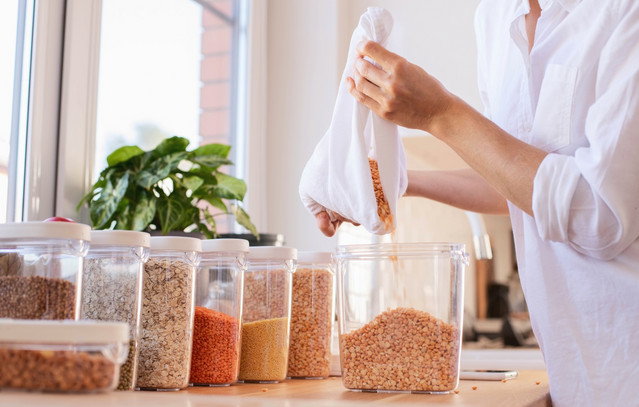
Plastic food containers often retain a characteristic smell after washing, especially after storing foods like tomato sauce, onions, garlic, fish, or spices. Most plastic containers are slightly porous, allowing microscopic food residues and fats to become trapped in their surfaces over time.
Replacing affected containers is unnecessary, as simple household steps keep them clean and odor-free. The most effective method involves filling the container with warm water, adding one tablespoon of baking soda, and letting it sit overnight before washing it normally with dish detergent. Baking soda neutralizes odors instead of covering them.
Vinegar and sunlight solutions
Containers should dry completely before storage, as moisture promotes unpleasant smells. When storing containers that are not used daily, keep lids off or slightly open so air can circulate. For stubborn odors, mix equal parts white vinegar and warm water, let the solution sit inside for about 30 minutes, and rinse thoroughly.
Drying clean containers in the sun for a few hours also reduces odors and some stains without extra products. However, long sun exposure should be avoided because it can degrade plastic over time. In addition, heating fatty foods in old plastic containers should be avoided, as high temperatures combined with fat increase stain and odor absorption. Glass containers should be used for microwave heating whenever possible.
Replacing damaged containers
A container should be replaced if it develops severe discoloration, deep scratches, or persistent odors that remain despite repeated cleaning. Worn containers hold food residues more easily and are harder to clean. For strong-smelling foods such as garlic, fish, or heavily spiced dishes, glass storage containers serve as a better option because they do not absorb odors or stain easily.


