The Museo del Prado in Madrid has opened an exhibition dedicated to Mariana de Austria, the 17th-century Habsburg queen consort, regent and queen mother, showing how painters and printmakers helped her construct and defend her political power.
The show is part of the museum's El Prado en Femenino project and brings together 111 works, including paintings, drawings, sculptures, illuminated manuscripts, medals, coins, prints and decorative art pieces, all centered on Mariana de Austria.
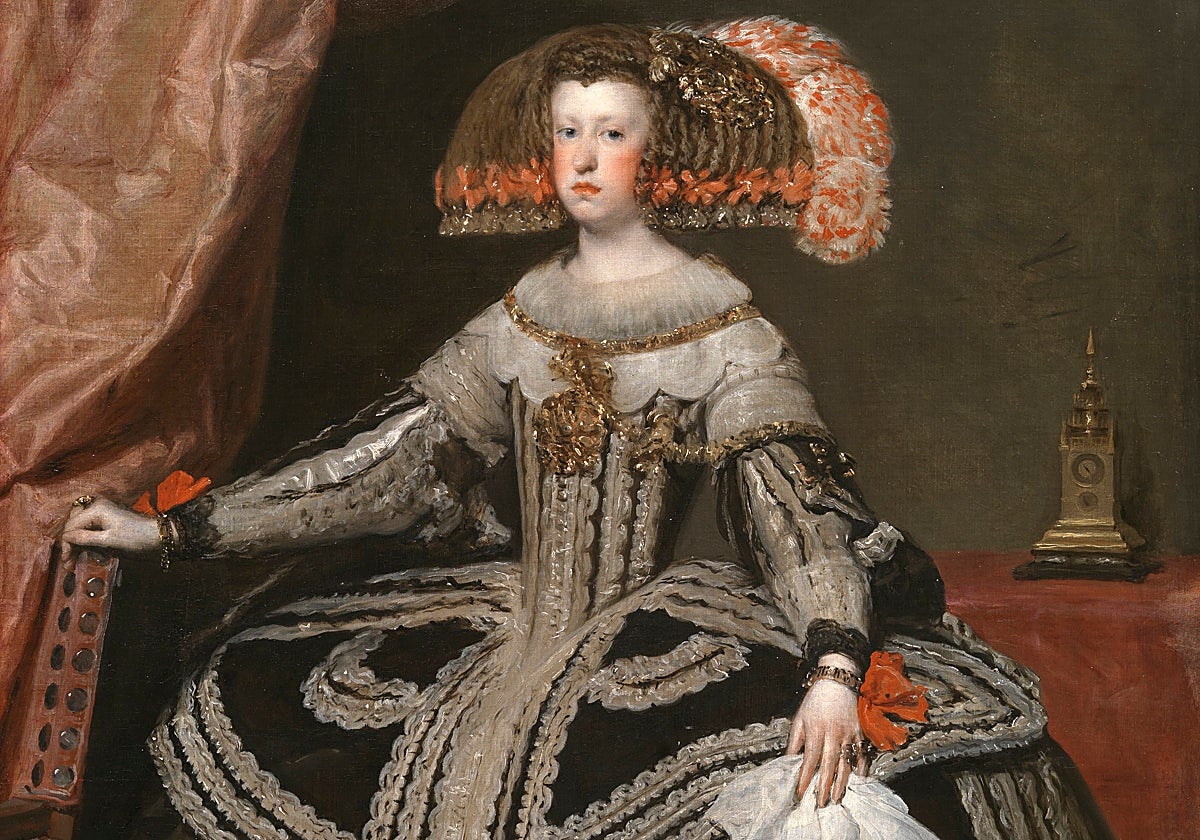
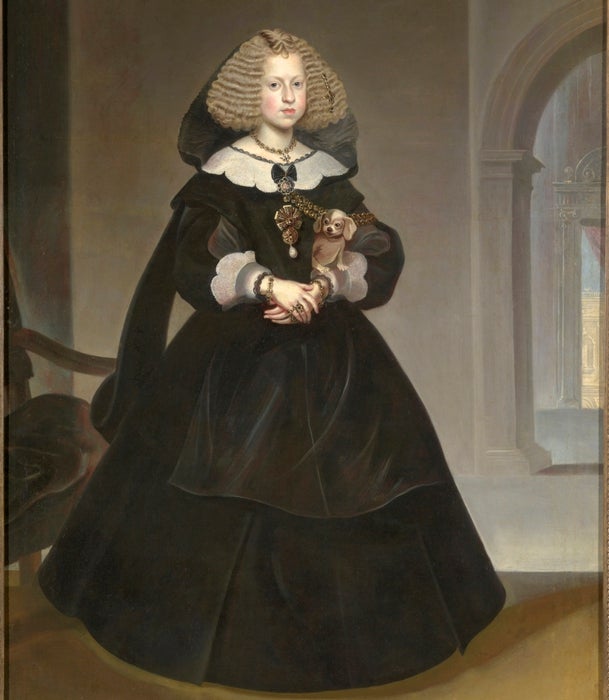
Mariana de Austria (1634 to 1696) is most widely known today as the queen glimpsed in the mirror at the back of Diego Velazquez's painting Las Meninas, alongside her husband Felipe IV. Velazquez, the court's official painter, was also the artist chosen to create her formal royal image.
Exhibition curator Noelia Garcia Perez said Mariana de Austria understood the value of images as instruments of power. She said the exhibition shows how art served the construction, transformation and promotion of an image of female power.
Garcia Perez, who is also scientific director of El Prado en Femenino, said that after Isabel I of Castile, no other queen, regent or governor exercised such broad and prolonged political power within the Hispanic Monarchy. She added that Mariana de Austria is the queen of the Spanish Habsburg line for whom the most surviving depictions exist, most of them held in the Prado's own collections.
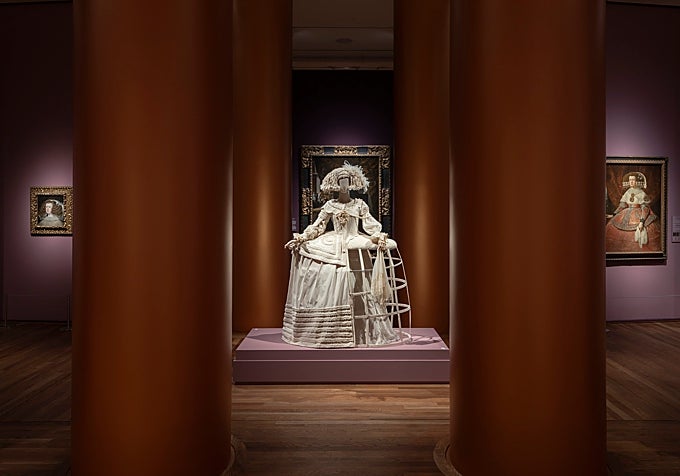
Alongside the historical works, two outfits recreated by designer Lorenzo Caprile's workshop are on display: a sophisticated corseted dress with a guardainfante hoop skirt and saya skirt befitting her status as queen consort, and a widow's outfit complete with headdress and mantle.
From archduchess to regent
Born an archduchess of Austria in Wiener Neustadt, near Vienna, Mariana de Austria arrived in Spain in 1649 to become the second wife of her uncle, King Felipe IV, whose first wife had been Isabel de Borbón. Her wedding was one of the most significant events of the Spanish Baroque, involving court spectacle, festivities, painted imagery and printed material.
Everything changed when Felipe IV died in 1665. With her son Carlos II still a minor, Mariana de Austria became regent. Garcia Perez said it was during the regency that it became necessary to reinforce her image as a governing queen who embodied virtue in the face of adversity, power in action and a fully visible authority.
Court painters, among them Juan Bautista Martinez del Mazo, Juan Carreno de Miranda and Claudio Coello, worked to project that authority across early modern Europe. The exhibition also traces her family: her father, Kaiser Fernando III, painted by Jan van den Hoecke; her mother, Queen Maria Ana de Austria, painted by Velazquez; her husband Felipe IV, also painted by Velazquez; and her son, shown as Carlos II on horseback by Luca Giordano.
Mariana de Austria herself first appears in the exhibition as painted by Frans Luycks in 1646, while still an archduchess. Once in Madrid and on the throne, she was painted by Martinez del Mazo, since Velazquez was traveling in Italy. On his return, between 1652 and 1653, Velazquez produced what became her official image, a portrait of an eighteen-year-old Mariana invested with full royal solemnity. That portrait was copied widely in and beyond the Spanish court and was later used by Carreno de Miranda to establish her image as queen mother.
A portrait as a political statement
While serving as regent and facing a discrediting campaign against her that included satires and libelous pamphlets, the portrait Martinez del Mazo had painted of her was placed in the Salon de los Espejos of the old Real Alcazar of Madrid, today the Royal Palace, where Felipe IV had held his audiences. Garcia Perez said the placement firmly confirmed her position, and that Mariana de Austria was, in every sense, the sovereign.
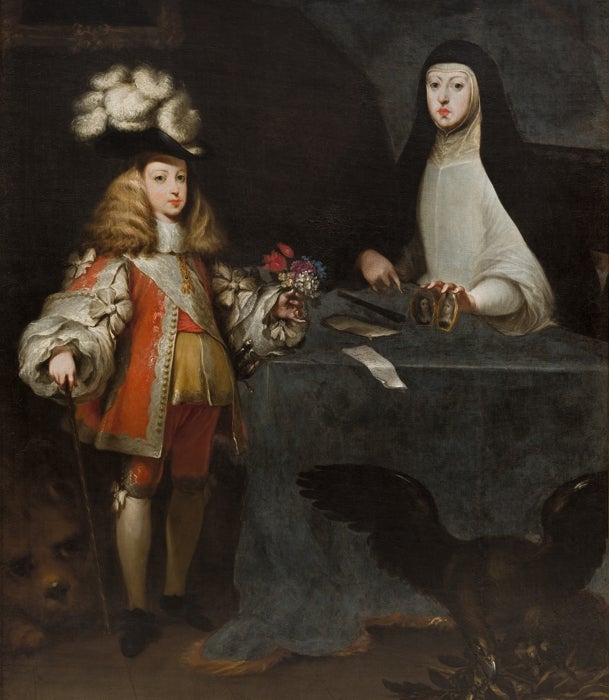
She exchanged the elaborate dresses of a queen for a sober, almost monastic black mourning dress, although it was made from rich Italian silks. Artists began showing her seated as a symbol of stability and firmness of spirit, on horseback holding a commander's baton, a visual language previously reserved for men, and in double portraits alongside Carlos II as king and his regent and governor. These images spread widely through drawings, engravings, medals and commemorative coins.
An idealized image of the young king was also built up to counter persistent rumors about his fragile health. Once Carlos II reached adulthood, Mariana de Austria's image shifted again as she became queen mother, no longer governing but still called upon to influence the monarchy's future.
Securing the succession
Carlos II had no descendants, leaving the question of an heir unresolved. He ultimately willed the crown to Felipe de Anjou, who succeeded him in 1700 as Felipe V, the first Bourbon king of Spain.
The exhibition, which runs until March 28, was inaugurated by King Felipe VI and Queen Letizia.
What happens next
The exhibition at the Museo del Prado remains open until March 28.
Test yourself
Who curated the Mariana de Austria exhibition at the Museo del Prado?
How did Mariana de Austria become regent?
Who ultimately inherited the Spanish throne after Carlos II died without descendants?
Where it happened
Madrid, Spain