

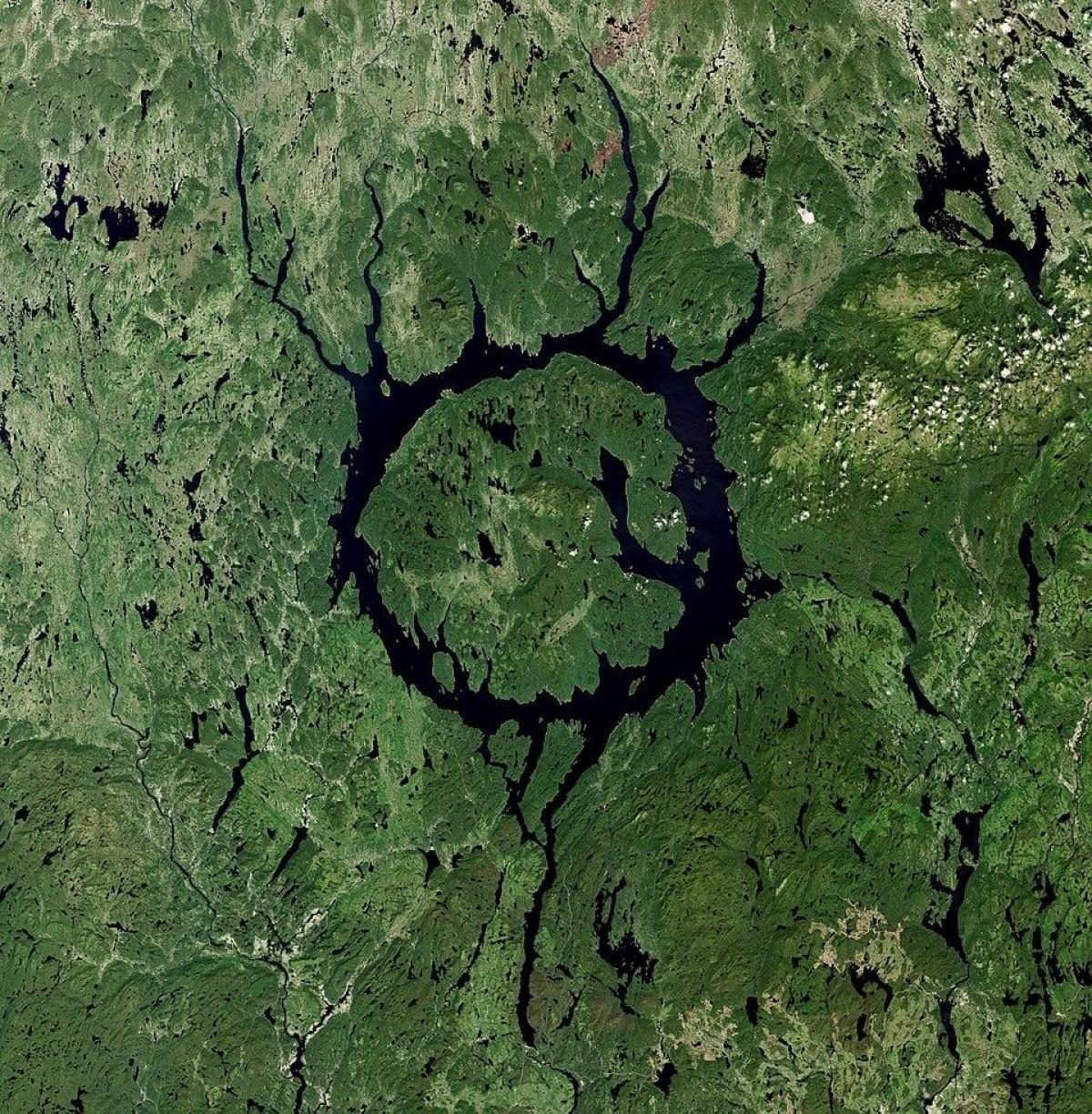
A ring-shaped lake in central Quebec, Canada, known as the Eye of Quebec, covers 1,942 square kilometers and was formed by an ancient asteroid impact, discoverwildlife reported. The structure is larger than Greater London and is clearly visible from space.
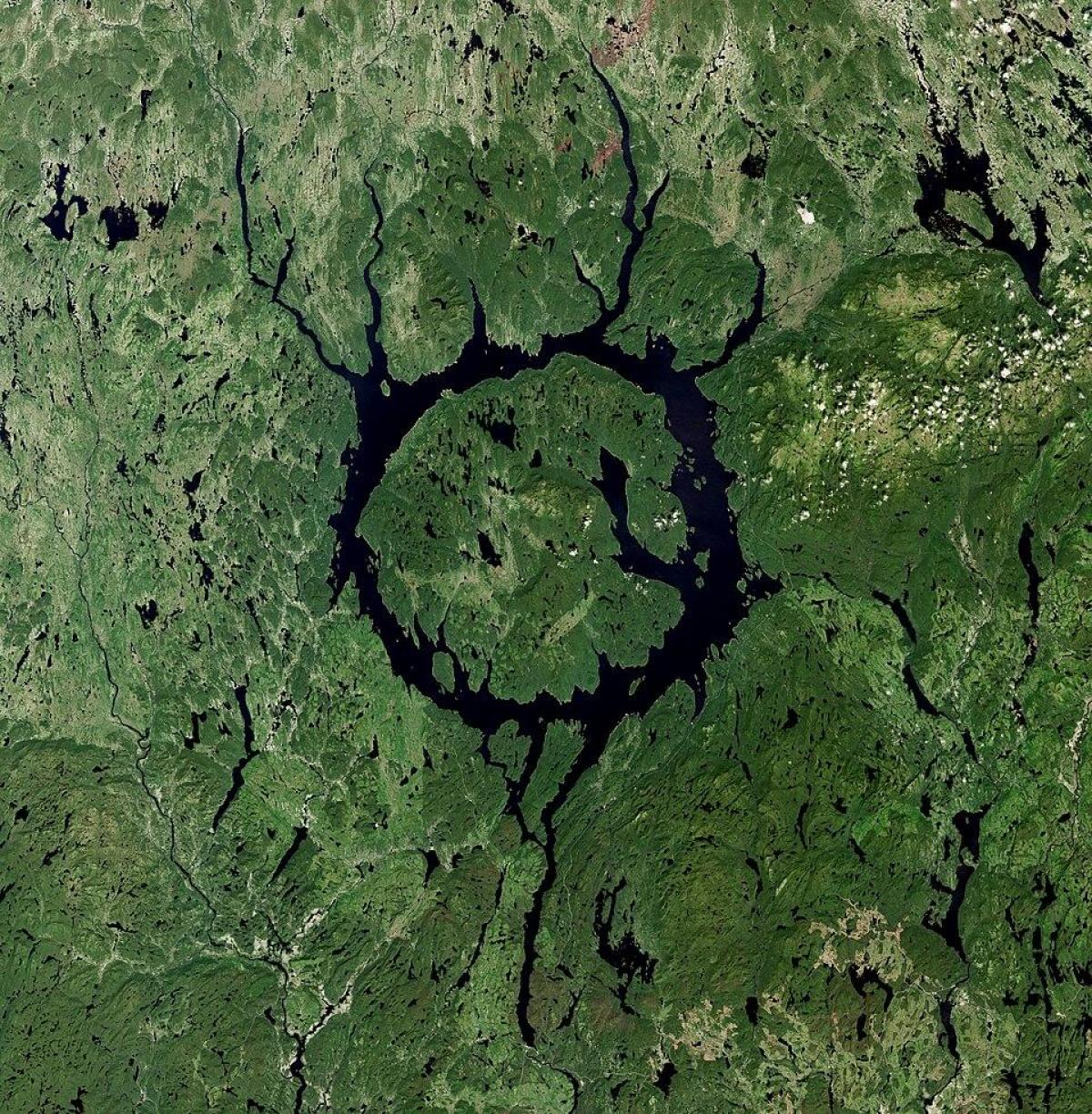
Scientists estimate that the asteroid had a diameter of approximately five kilometers when it collided with Earth about 214 million years ago in the late Triassic period. The impact created a massive crater that now holds the circular lake.
Asteroid impact and crater geology
Glaciers heavily eroded the original outer rim of the crater over time, reducing its diameter from 100 kilometers to 72 kilometers. A central peak known as Mount Babel remains standing at the center of the structure at an elevation of 952 meters.
The collision produced ejecta of shock-deformed quartz that researchers discovered in rock layers of similar age as far away as England and Japan. The Manicouagan impact coincided with a localized extinction event that wiped out many non-mammalian therapsids and lizard-like archosaurs in North America, though radiometric dating ruled it out as the cause of the Triassic-Jurassic mass extinction that killed nearly 70 percent of all species.
René-Levasseur Island and local wildlife
René-Levasseur Island sits in the center of the lake, making it the second-largest lake island in the world after Manitoulin Island on Lake Huron. The Louis-Babel Ecological Reserve, established in 1991, occupies one-tenth of René-Levasseur Island to protect its boreal and alpine ecosystems, which host woodland caribou, black bears, and moose.
The surrounding Manicouagan Reservoir was formed by a dam project starting in the 1960s that connected two crescent-shaped lakes on opposite sides of the impact crater. Its deep waters support fish species including lake trout, brook trout, northern pike, and landlocked Atlantic salmon, while surrounding wetlands provide habitat for more than 200 bird species, such as short-eared owls, golden eagles, and peregrine falcons.
Lake Vostok in Antarctica
In Antarctica, Lake Vostok remains liquid beneath a four-kilometer ice sheet despite extreme cold, total darkness, and 15 million years of atmospheric isolation.


