
A new 13-kilometre walking route has opened at Rathcroghan in County Roscommon, linking dozens of prehistoric monuments across the ancient Irish royal centre.
For generations, visiting many of the 266 recorded earthworks across the 6.5-square-kilometre complex proved difficult because the land remains working private farmland. The newly signposted loop now gives walkers structured access to mounds, Iron Age fortifications, carved stones, and holy wells.
Rathcroghan spans roughly 5,500 years of human activity and holds a central place in early Irish history and mythology. The opening of the trail was highlighted in a report by the BBC, drawing fresh interest to one of Ireland's least explored heritage landscapes.
Royal centre of ancient Connacht
Settlement at Rathcroghan began about 5,500 years ago, eventually growing into one of the most vital political and religious hubs in ancient Ireland. The complex served as one of the island's three major royal burial centres and contains around 40 individual burial mounds.
Historically known as Cruachan, the site was the seat of the kings of Connacht, one of the traditional provinces that divided Gaelic Ireland. Unlike modern capitals, royal centres in early Ireland functioned as ceremonial landscapes where rulers gathered subjects from across the territory rather than permanent urban cities.
Elaine Conroy, a tour guide and research assistant at the Rathcroghan Visitor Centre, explained that the area was not simply a place where a palace stood. Instead, Conroy said, people gathered across the grounds for community celebrations, weddings, and the formal signing of political treaties.
Conroy added that the sacred complex also served to honour the dead, conduct royal funerals, and inaugurate new monarchs in front of their people.
The epics of Irish mythology
Rathcroghan is closely tied to Ireland's early literary heritage. It serves as both the starting point and the conclusion of the Táin Bó Cúailnge, the celebrated Irish epic also known as The Cattle Raid of Cooley.
The ancient epic recounts the military expedition led by Queen Medb, the formidable Iron Age ruler of Connacht who held court at Cruachan. In early Irish folklore, Medb marshalled the armies of Connacht from the site to capture the prized brown bull of Cooley from the rival kingdom of Ulster.
The Táin forms the heart of the Ulster Cycle, a foundational collection of Gaelic heroic legends preserved by medieval scribes. Queen Medb remains one of the most recognizable figures in Celtic tradition, symbolizing female sovereignty and royal authority in pre-Christian Ireland.
Underground discoveries beneath the main mound
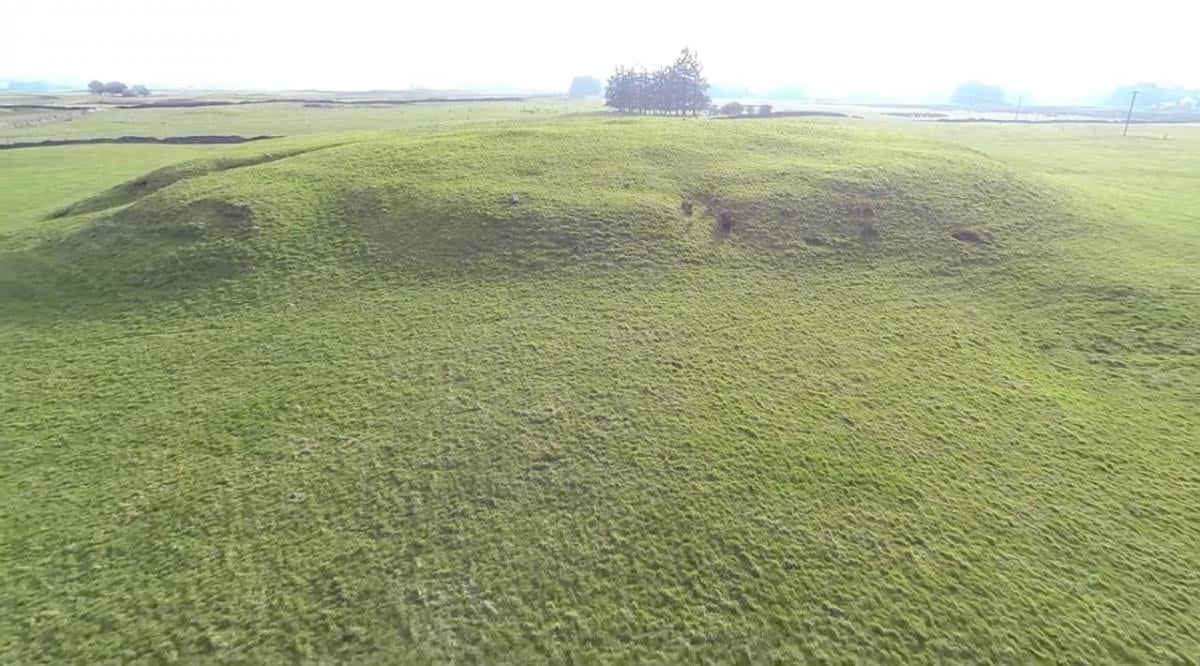
The most prominent landmark in the complex is the Rathcroghan Mound, an imposing earthen monument measuring 88 metres across and 5.5 metres high. Archaeologists have deliberately left the mound unexcavated to preserve its physical structure.
Despite the absence of physical digs, non-invasive geophysical surveys have allowed researchers to see beneath the surface. The scans revealed several buried circular structures that partially overlap one another, showing multiple phases of construction.
According to John Waddell, emeritus professor of archaeology at the University of Galway, the mound possesses a long and complex history. Waddell said the underground imagery showed distinct circular foundations built directly over earlier remains. He suggested that one of these buried structures may have served as a grand ceremonial venue or an enormous circular wooden hall.
Geophysical surveying has transformed Irish archaeology, allowing researchers to detect buried trenches, postholes, and stone foundations through magnetometry and soil resistance without digging a single trench.
The new walking trail also brings visitors to Relignaree, an expansive circular earthwork measuring 110 metres in diameter that is traditionally known as the Cemetery of the Kings. Archaeological investigations indicate that the circular enclosure was used both for elite burials and as a high-status residence.
The gateway to hell at Oweynagat Cave
The most famous and feared site at Rathcroghan is Oweynagat Cave, located about one kilometre southwest of the main mound. Celtic monks produced the earliest known written references to the underground chamber during the ninth century, recording folklore that identified it as an entrance to the otherworld.
Local tradition earned the cavern the title of the Gate to Hell. Ancient tales claimed that terrifying beasts and malevolent spirits emerged from the dark subterranean passage to terrorize the human world above.
Mythology strongly links the cave to the Morrígan, a powerful Celtic deity of war and fate associated with Samhain, the ancient festival beginning on 31 October that marked the start of winter.
According to ancient Gaelic beliefs, the boundary dividing the mortal realm from the otherworld grew exceptionally thin during Samhain. People wore masks and disguises so that roaming spirits and ghosts would not recognize them, establishing the historical customs that eventually evolved into modern Halloween.
Visitors can no longer enter the interior of Oweynagat because high concentrations of carbon dioxide create a serious health hazard. The underground passage reaches seven metres deep and extends 37 metres into the limestone bedrock.
Walkers can still inspect the outside entrance, reached through a narrow stone-lined passage measuring 10.5 metres long. The masonry entrance dates from between the fourth and eighth centuries, and the stone lintels bear inscriptions written in Ogham, Ireland's earliest native alphabet.
Legendary landmarks and farming heritage
The 13-kilometre walking route leads to several other sites linked to ancient legends. These include Rathnadarve, an earthen fort where, according to the final chapter of the Táin Bó Cúailnge, the legendary battle between the two great bulls took place.
The trail also visits Rathbeg, another site known locally as the Cemetery of the Kings. Folk tradition holds that Rathbeg served as the burial ground for the Aos Dána, regarded in ancient lore as an elite warrior class of the Iron Age, although no archaeological excavations have yet taken place there.
Much of the circular path crosses active farmland, where visitors walk alongside grazing cattle and sheep. The preservation of Rathcroghan depends directly on the cooperation of local farmers who manage the pastures surrounding the monuments.
Mike McCarthy, an archaeologist at the Rathcroghan Visitor and Heritage Centre, emphasized that traditional farming has kept the prehistoric landscape intact. McCarthy said the ancient monuments had survived because of agriculture, warning that wild vegetation and nature would have reclaimed the historic earthworks if farmers had not looked after the land.
The new trail offers the public a managed way to explore Ireland's ancient royal heritage on foot, with visitors able to obtain maps and trail guidance at the Rathcroghan Visitor Centre before setting out across the historic pastures.