
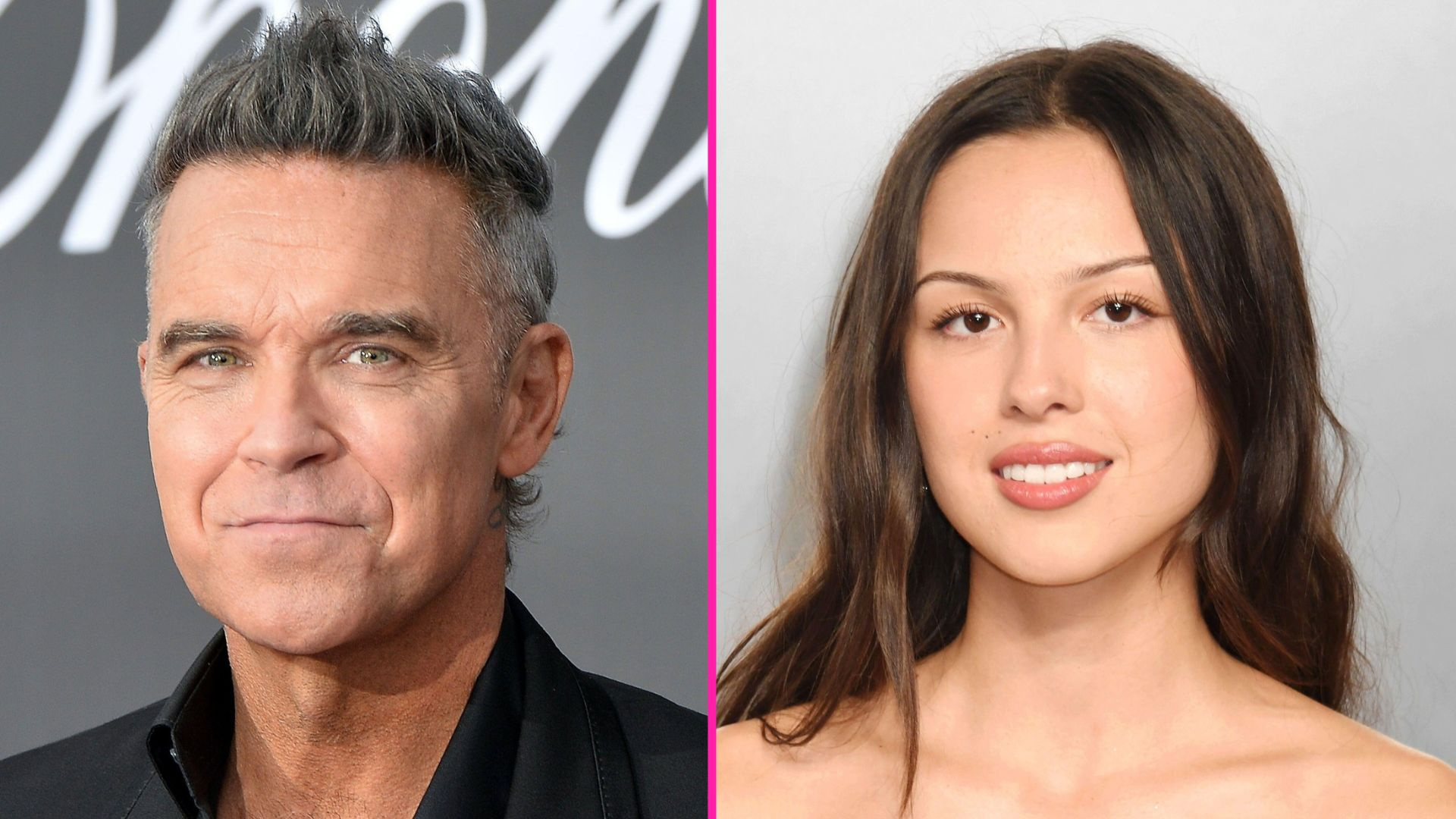
British singer Robbie Williams has moved to halt online accusations that American pop star Olivia Rodrigo plagiarised his 2012 hit single Candy.
The British pop veteran issued a statement defending Rodrigo, praising her musical ability, and questioning the ease with which modern songwriters face legal complaints over melodic similarities.
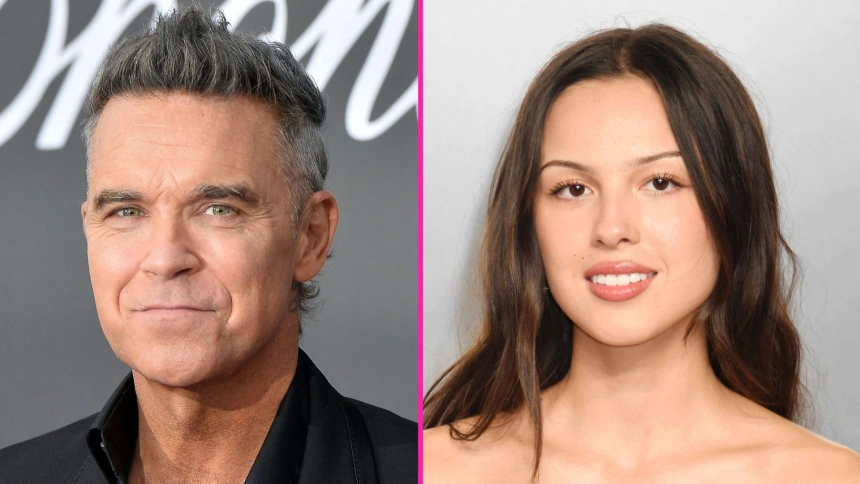
The controversy emerged after Rodrigo released an early festive track titled Take Me Home (4 Christmas). The song tells the romantic story of a young woman who wants her partner to take her home to meet his parents during the Christmas holidays.
What began as a celebratory seasonal release soon turned into an online ordeal for the American singer. Users across social media platforms quickly accused her of copying Candy, the popular single Williams released in 2012.
Williams intervened directly to shut down the speculation. He confirmed that he will not claim any royalties or pursue legal action against Rodrigo, making clear that he has no intention of dragging the matter into court.
The dispute gathered pace following a short social media post by Williams, in which he wished Rodrigo a Merry Christmas. Although the message appeared harmless, many online commentators interpreted it as an ironic swipe at the plagiarism claims.
The post rapidly attracted millions of views without the singer anticipating such a reaction. That viral attention fueled the growing controversy, prompting Williams to publish a longer statement to dispel any misinterpretations.
Social Media Speculation and Statement
In his follow up statement, Williams reflected on his own career and noted that he had frequently faced similar accusations himself. He explained that there were occasions when he heard comparisons between his songs and earlier works and understood the connection, while at other times the claims made no sense to him at all.
Addressing the specific comparison between his track and Rodrigo's holiday single, Williams argued that there is only a limited number of notes available to composers. He suggested that Rodrigo may have simply hit upon an accidental musical echo of Candy while writing her song.
Williams stated that the resemblance could not matter less to him, adding that he was definitely not going after her. He also confirmed that he had not checked for any copyright infringement and had no interest in investigating the issue.
The former Take That star explained that his primary goal was to prevent a simple musical similarity from escalating automatically into a formal legal complaint. He described capitalizing on such disputes as disgusting, warning that constantly suing other artists over coincidences threatens to stifle musical creativity.
Praise for Rodrigo and Stage Language
Alongside his defense of her new release, Williams openly declared his admiration for Rodrigo's musical career. He revealed that he had followed her closely ever since hearing Brutal, the opening track on her celebrated debut album Sour, which she released five years ago.
Williams praised Brutal as a great song, remarking that he wished he had written it himself. He emphasized that he had loved her work ever since, even as he poked gentle fun at her stage presence.
Joking about her performances, Williams remarked that while he was known for having a foul mouth, Rodrigo made him look like a Victorian schoolteacher. He playfully urged her to cut down on the profanity, before conceding that his own written statement already contained more swear words than necessary.
Inspiration and The Waitresses
The debate surrounding Candy was not the only musical comparison that listeners identified in Rodrigo's seasonal track. Fans also pointed out that the song shared noticeable musical qualities with Christmas Wrapping, the classic holiday single released in 1981 by the American new wave band The Waitresses.
In contrast to the claims involving Candy, the connection to The Waitresses was openly acknowledged from the beginning. Songwriter Christopher Butler explained that Rodrigo had reached out to him personally before releasing the track to tell him that his 1981 composition had served as a direct reference for her new material.
Butler praised the final track and clarified that he considered Rodrigo's song a genuine tribute rather than an act of plagiarism. Her proactive approach highlighted that whenever she consciously borrows from an existing song, she communicates directly with the original creator.
Pop Background and Songwriting Disputes
Williams, who rose to fame in the 1990s with Take That before launching an internationally acclaimed solo career, co-wrote Candy with Take That bandmate Gary Barlow. The upbeat track was issued as the lead single from his 2012 album Take the Crown and became his fourteenth UK number one single across his solo work and group catalog.
Rodrigo first gained worldwide attention with her 2021 breakout single Drivers License, which propelled her debut studio album Sour to multi-platinum sales and multiple Grammy Awards. The California native has since established herself as one of the defining pop-rock voices of her generation.
Songwriting disputes and copyright battles have become an increasingly prominent issue across the global music industry in recent years. Many prominent artists have called for greater tolerance regarding incidental similarities, arguing that pop music naturally relies on shared scales, rhythms, and chord structures.
By issuing his statement, Williams sought to protect a younger colleague from unwarranted legal pressure while reinforcing the principle that artistic inspiration should not be treated as a courtroom offense.