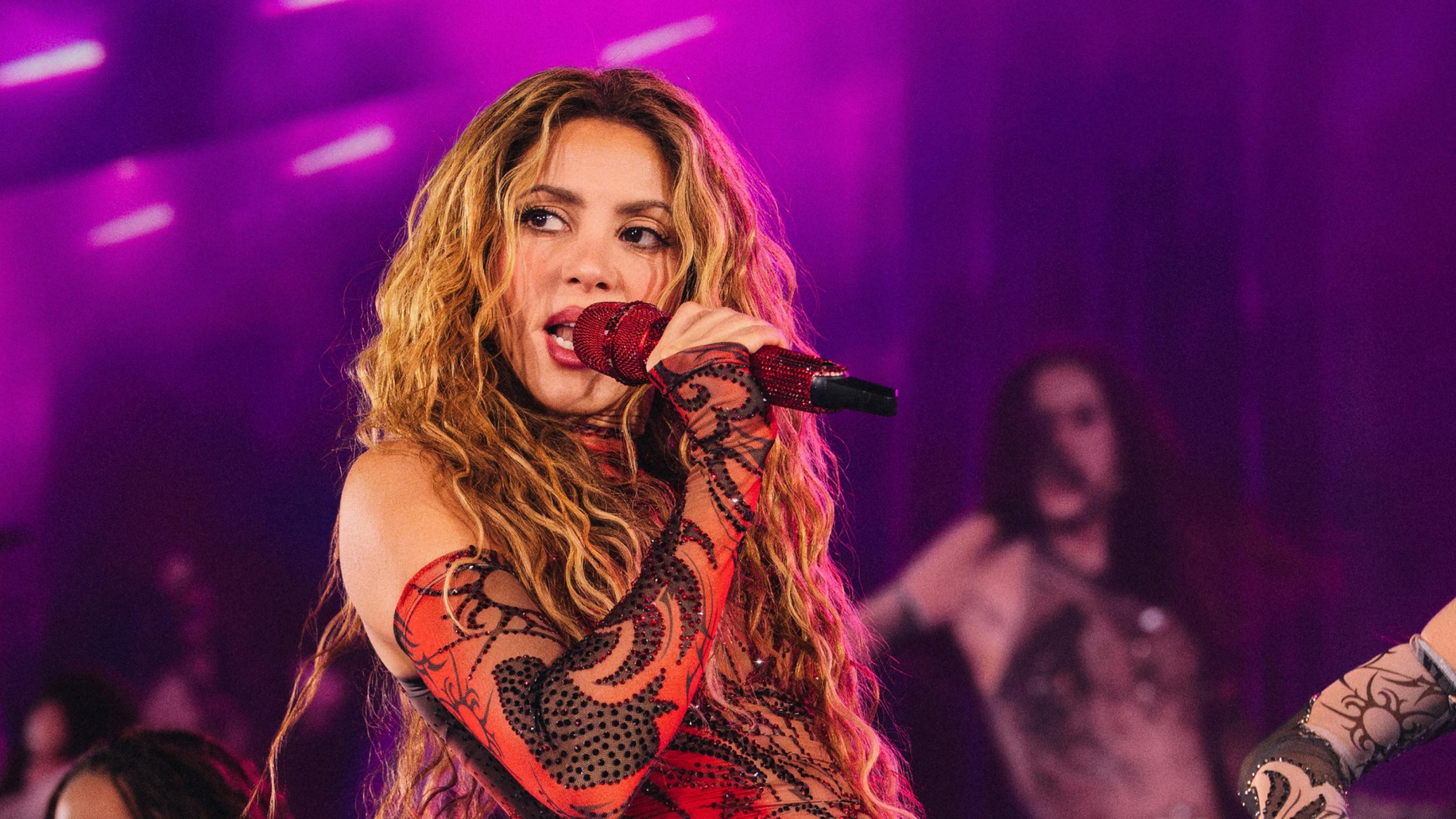


Spanish singer Rosalía heads into the Latin Grammy Awards in Las Vegas with seven nominations for her fourth studio album, Lux. The ceremony, which takes place tomorrow, will decide whether the artist expands her collection of international music honours.
Her nominations include three of the event's top categories: Album of the Year, Record of the Year, and Song of the Year. The recognition cements her position as the most internationally prominent Spanish singer working today.

As the music industry gathers in Nevada, composer and musicologist Daniel Gómez Sánchez has published a new study exploring how she reached the top of global pop music. His essay, Rosalía, universo creador, released by the publisher Aguilar, traces her artistic choices, technical training, and personal investments.
Study of an artistic rise
Gómez, who holds a doctorate in musicology from the Complutense University of Madrid, based the book on years of research. He conducted direct interviews with Rosalía as well as members of her private circle and professional management team.
The author told the Spanish newspaper that the Catalan performer takes calculated risks rather than chasing immediate commercial trends. He argued that modern listeners face loneliness and a cultural void driven by instant gratification, creating an appetite for music that tackles philosophical and spiritual questions.
Gómez explained that Lux arrived as a cultural necessity because the music market lacked an artist who combined philosophical depth with solid professional craft. Rosalía chose to step away from short-term digital habits to offer listeners a reflective and demanding musical journey.
Choral arrangements and musical islands
The investigation includes conversations Gómez held with Rosalía backstage during a stop on her worldwide Lux Tour. He asked the singer whether she approached composition from a vocal and choral perspective rather than using traditional songwriting instruments.
Gómez recalled that while most musicians write songs on the piano or guitar, Rosalía confirmed that she is fascinated by choral arrangements. That interest shaped Lux directly, which features contributions from two complete vocal choirs.
The musicologist identified this choral technique as proof of her authenticity, noting that she builds complete songs within her songs. He described these passages as musical islands that alter the pacing and structure of her work.
According to Gómez, she refined that skill through major pop collaborations, including her appearance on The Weeknd's hit Blinding Lights. On that track, Rosalía sang in Spanish and slowed down the rapid disco rhythm to pull the song into her own operatic style.
Sonic cathedrals and compositional rules
Throughout her four studio albums, Rosalía has developed a personal set of creative guidelines that avoid standard commercial formulas. Gómez stated that she insists on introducing disruptive elements into every track and giving melodic ideas room to expand.
He argued that the singer constructed sonic cathedrals on Lux by adopting classical compositional techniques. The album functions much like opera, bringing together multiple staging arts into a unified work that listeners must experience rather than casually hear.
Gómez noted that Rosalía does not copy ballet or classical forms directly, but recodes traditional dances that inspire her. He explained that such innovation requires a musician to master formal harmony and heritage before reinterpreting them.
To maintain that creative discipline, Rosalía set a strict personal rule for Lux: she banned the use of audio loops, the short recorded sequences repeated continuously in modern pop production. While she used loops across her 2022 album Motomami, Gómez said she abandoned them to avoid easy commercial temptations.
Orchestral production on Berghain
The scale of that ambition became apparent on 27 October 2025, when she released Berghain as the lead preview for Lux. The single surprised critics and audiences by opening with bowed baroque strings from the London Symphony Orchestra before dividing into two distinct movements separated by silence.
The track combined Spanish and German lyrics, choral singing, violins, audio distortion, and experimental sound design, shifting from fast flamenco vocal flourishes to the avant-garde tension associated with Icelandic singer Björk. Gómez noted that the composition used empty space deliberately to explore how silence can balance musical density.
Early self financing and industry backing
The study also addresses the financial realities behind her rise, acknowledging the major corporate backing that helped launch her across global markets. In September 2018, Rosalía signed a worldwide recording agreement structured around a multimillion-dollar advance and a massive promotional budget.
However, Gómez stressed that commercial investment followed years of independent risk. For his doctoral thesis, the musicologist interviewed José María Barbat, the president of Sony Music Iberia, who confirmed that the singer risked large amounts of personal capital when launching her career.
Her 2017 debut album, Los Ángeles, was paid for entirely out of her own pocket and with financial support from her family. Rosalía then took the revenue earned from touring that initial project and spent it on producing music videos before signing her major label contract.
The deal with Sony took place shortly before the release of her breakthrough 2018 album, El mal querer. Gómez said he is convinced nobody handed her success, pointing out that she faced total financial ruin if her second album had failed, before comparing her current momentum to a rocket in orbit.
Flamenco roots and cultural legacy
Gómez based his analysis on two central musical variables that connect Rosalía to Spanish musical history. The first is a direct artistic link to the flamenco singer Enrique Morente, whose innovative approach to Andalusian music influenced her studies.
Rosalía enrolled at the Taller de Músics academy in Barcelona in 2010, where she immersed herself in Morente's creative philosophy. Gómez said Morente treated creative freedom as his supreme guiding principle, an attitude Rosalía adopted in her complex harmonies and egalitarian use of vocal choirs.
The second variable demonstrated in the book connects Rosalía's vocal delivery directly to Catalan singer and composer Sílvia Pérez Cruz. Gómez proved a clear technical correlation between the two performers, tracing how their vocal phrasing and control share common ground.
The musicologist concluded that Rosalía now acts as a maternal guiding figure for emerging musicians by demonstrating how to confront record labels and protect artistic ideas. Looking to the future, Gómez suggested that her next creative move could combine rock with flamenco, echoing Morente's landmark 1996 album Omega.