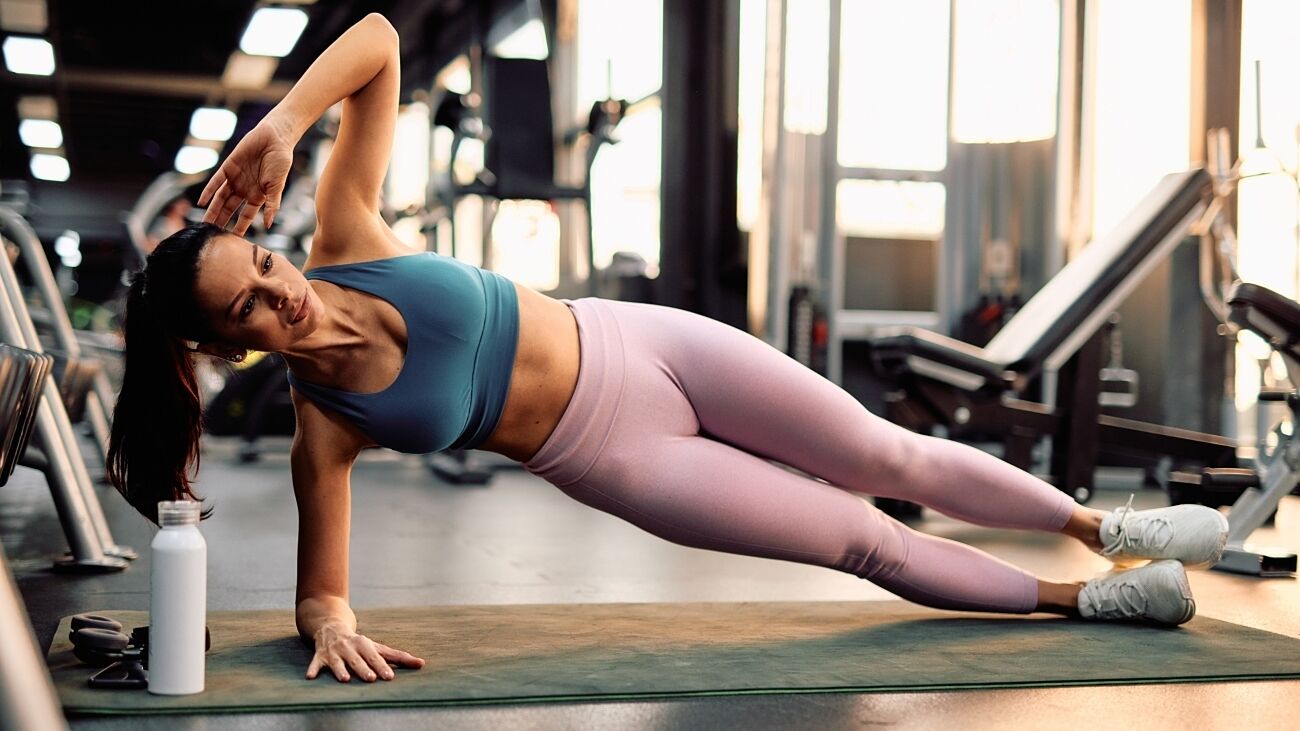
Fitness trainer Sergio López has recommended that adults modify side planks by resting on their knees to protect posture and build core strength safely.
López, a physiotherapist with a doctorate in physical activity and sport sciences, cautioned that extending a set after posture collapses serves no purpose. He explained that exercisers often try to force an extra few seconds while their hips are already dropping or their breath is held, and advised stopping immediately to rest whenever form breaks.
To begin practicing the side plank, particularly for adults at 50, López advised resting on bent knees rather than keeping the legs straight and balancing on the feet. He explained that bending the knees shortens the lever arm, making the exercise substantially less demanding while continuing to work the lateral abdominal muscles, the back, the hips, and the stabilizing muscles of the shoulder.
The modification provides an accessible starting point if it represents an appropriate challenge. However, López noted that anyone who has already mastered the knee version with full control will likely need another variation to continue making progress.
Correct setup and alignment
To perform the movement correctly without rotating the body, López outlined a step-by-step setup. An individual should lie on their side with their knees bent and stacked, resting on their forearm with the elbow positioned roughly underneath the shoulder.
From that position, López instructed exercisers to raise their hips until forming a comfortable line between the shoulder and the knees. The person should look straight ahead, keep breathing steadily, and rest the free hand on the hip.
López stressed that the key is lifting without twisting the torso or shrugging the shoulder toward the ear. If an individual ends up facing the floor or pulling their shoulder toward their ear, he recommended reviewing their posture immediately.
The first correction to test is placing the elbow directly under the shoulder and gently pushing the forearm into the floor. In biomechanics, pressing through the forearm engages shoulder stabilizers and helps secure the joint. López added that exercisers must also verify that their hips do not sag as the seconds tick by.
The side plank activates the obliques alongside surrounding muscles in the trunk, hip, and supporting shoulder. López noted that these lateral demands make the movement an effective complement to abdominal exercises performed while lying flat on the back.
Recommended sets and hold times
For beginners starting the exercise, López recommended choosing a brief static hold consisting of two to three attempts of 10 to 20 seconds on each side, paired with sufficient rest and fluid breathing. Exercisers who find it more comfortable can also test small hip raises instead of a static hold.
López warned that a set concludes the moment an exerciser can no longer hold the position with control, needs to hold their breath, or feels pain. Breathing steadily remains vital during isometric holds because breath-holding increases blood pressure and signals that core muscles can no longer stabilize the spine.
Endurance often differs between sides of the body. López noted that one side commonly holds out for less time, and he advised starting with the weaker side and matching that duration on the other. Depending on personal tolerance, a brief additional attempt can be added on the weaker side.
When the knee variation no longer requires significant effort, progression is necessary to maintain a training stimulus. Once an exerciser comfortably sustains the target times on both sides with control, López advised trying a few seconds with one leg straightened, or with both legs extended onto the feet.
Managing joint discomfort and progressions
Joint irritation can sometimes occur during floor training, and López outlined practical alternatives for sensitive areas. If the knee feels uncomfortable, he proposed using a padded cushion or switching to a standing variation.
If shoulder discomfort occurs, López advised training resistance to lateral tilt by standing upright while holding a dumbbell or a bag in one hand. This loaded movement works the lateral core and quadratus lumborum without forcing the shoulder joint to bear body weight against the floor.
López reminded exercisers that if discomfort persists, they should adapt the exercise with a qualified professional. He added that side plank work should form part of a broader routine that incorporates progressive strength training for the rest of the body.
Alternative core exercises and progressions
Other fitness coaches have also emphasized variety and structured progression in core training. Coach José Ruiz said the plank is overrated as a sole abdominal exercise, explaining that he would prioritize the farmer's walk as one of the most complete movements available.
The farmer's walk is a loaded carry where an individual walks while holding heavy weights at their sides. The exercise challenges grip strength, upper back endurance, and core stability by forcing the trunk muscles to prevent swaying and maintain upright posture.
Coach Marcos Flórez shared progression methods for standard abdominal planks performed on the elbows and toes. Flórez said that once someone can hold a plank for a full minute, they can add difficulty by removing a point of support or introducing leg, arm, or trunk movements in 15-second sets.
Lifting a limb or moving during a plank reduces points of contact, transforming a static hold into an anti-rotational exercise that forces stabilizing muscles to work harder without requiring longer hold times.