


Spanish television viewers must retune their television sets on Thursday, November 5, as digital terrestrial television networks reconfigure channels across the country.
The nationwide adjustment marks the first phase of Spain's National Technical Plan of 2025, an infrastructure deployment designed to prepare the broadcast network for regular Ultra High Definition 4K transmissions under DVB-T2 technology while opening capacity for new television stations.
Broadcasting authorities confirmed that the reorganization will not cause any blackout of high-definition signals, distinguishing this change from the major technical transition of February 2024. Households will not lose access to their regular programming, and consumers will not need to purchase a new television to continue watching existing high-definition broadcasts.
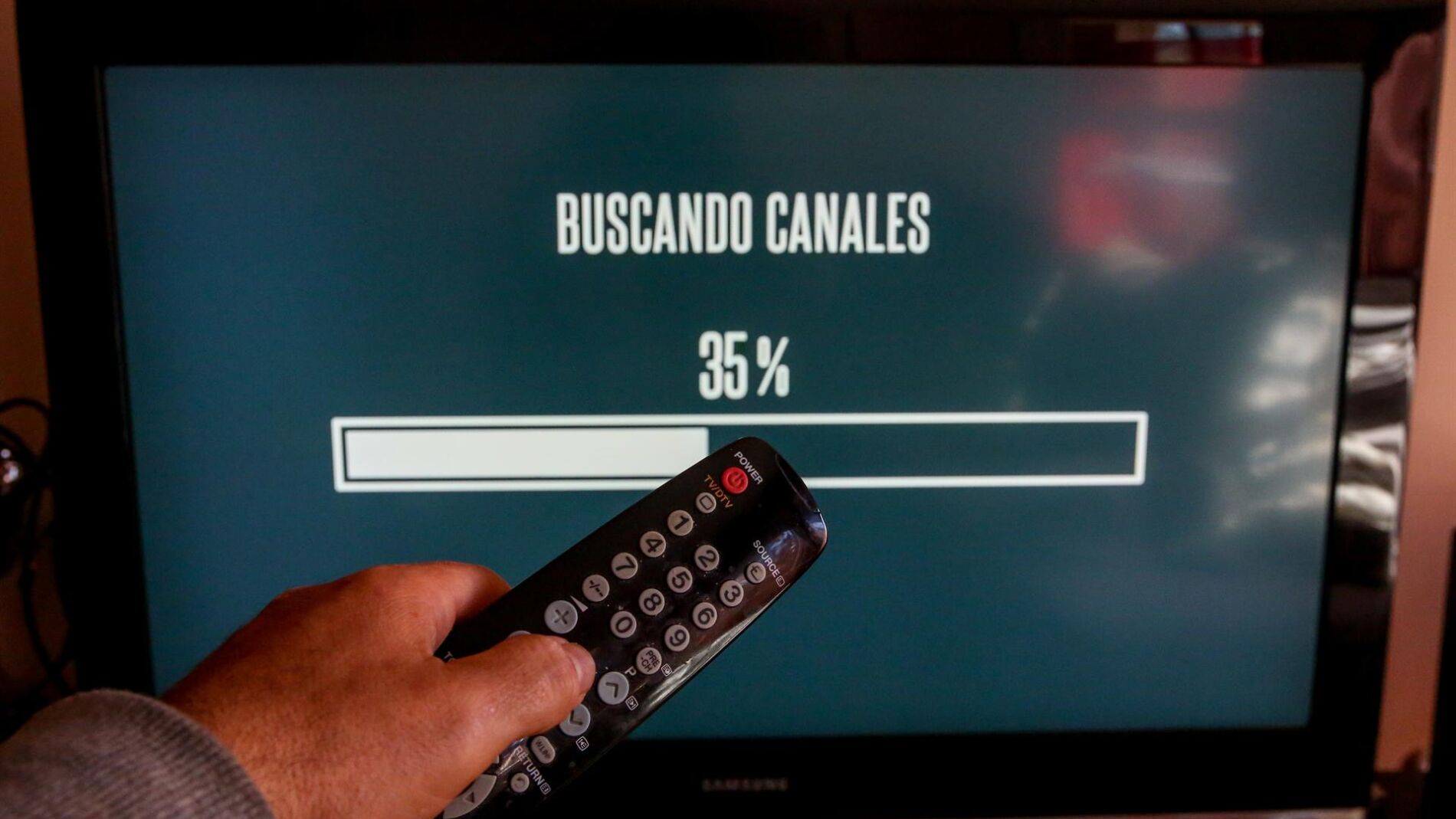
Digital terrestrial television, widely known in Spain as TDT, is the primary platform through which Spanish households receive free-to-air national and regional programming using standard rooftop antennas. The current upgrade represents the next stage in modernizing the country's television frequency map to accommodate higher picture resolutions.
Overnight technical overhaul
Broadcast technicians will carry out the necessary frequency migrations during the early morning hours, with the entire technical operation scheduled for completion by 08:00 on Thursday, November 5. Viewers have been instructed not to retune their television sets before that morning deadline, as any channel scan performed before 08:00 will fail to capture the finalized broadcast frequencies.
In the hours leading up to the changeover, public broadcaster RTVE will execute a temporary technical relocation on the RGE1 digital multiplex to reposition several of its television signals.
Once the 08:00 deadline is reached, the RGE2 multiplex will transition to transmit exclusively using DVB-T2 modulation. This multiplex will subsequently be dedicated to hosting 4K Ultra High Definition programming.
Digital multiplexes are individual radio frequency channels that carry multiple digital video and audio streams simultaneously through digital compression. By switching RGE2 entirely to DVB-T2, network operators can deliver the significantly higher data bandwidth required for 4K resolutions without interfering with standard broadcasts.
Channel relocations across commercial networks
Spain's leading private media groups are also restructuring their broadcast footprints as part of the spectrum reorganization. Commercial broadcaster Atresmedia will move five of its channels into the MPE2 multiplex.
Rival media conglomerate Mediaset will shift a separate package of five channels into the MPE3 multiplex. Media group Radio Blanca will simultaneously reorganize its assigned broadcast space inside the MPE5 multiplex.
The reordered MPE5 multiplex will also introduce a brand-new national broadcast service with the high-definition launch of La Septima. The new network is operated by the media company Servicios Integrados Entretenimiento Televisivo.
Atresmedia and Mediaset represent the two commercial broadcasting giants that dominate Spanish private television, operating major networks including Antena 3 and Telecinco alongside an array of specialized thematic channels. Radio Blanca manages national radio stations alongside television holdings such as the entertainment channel DKISS.
Impact on popular thematic channels
The State Secretariat for Telecommunications warned that several widely watched thematic channels will change their dial locations or temporarily show no signal until viewers retune their television sets. The affected channels include children's networks Clan and Boing, lifestyle broadcaster DKISS, series channel Atreseries, and movie channel BeMad.
Clan is broadcast by public network RTVE, while Boing and BeMad operate under Mediaset. Atreseries forms part of the Atresmedia portfolio, and DKISS broadcasts under Radio Blanca's national television concession.
Officials stressed that while these channels may temporarily appear to have vanished from television screens on Thursday morning, they have not ceased broadcasting. Their signals will reappear as soon as the television memory updates its stored channel tables.
Step by step guide to retuning
Updating television equipment on the morning of November 5 does not require professional help or specialist technical expertise. Viewers can complete the process in a few minutes using their remote controls.
To carry out the update, viewers should open the main menu on their television set or external set-top box. From the menu, users should navigate to the configuration, installation, or channel management section and select the automatic channel search option.
The device will automatically scan all terrestrial television frequencies, identify the relocated channels, and store the updated station list. On television sets equipped with an exploration function for new services, viewers can add La Septima and the relocated channels while retaining their personal channel sequence.
Equipment requirements for 4K reception
While all existing high-definition channels remain accessible on standard high-definition televisions, access to the new 4K Ultra High Definition broadcasts requires specific technical hardware. Only televisions or external set-top boxes equipped with DVB-T2 tuners and HEVC/H.265 video decoding will be able to display the 4K signals.
DVB-T2 represents the second generation of European digital terrestrial television transmission, delivering substantial gains in signal robustness and data capacity compared to the initial DVB-T standard. The High Efficiency Video Coding codec, also known as H.265, doubles the data compression efficiency of older video formats, allowing ultra-high-definition video to be broadcast efficiently over terrestrial spectrum.
Televisions that lack DVB-T2 tuners or HEVC decoding will continue to display standard high-definition channels without any loss of reception. Viewers who do not possess compatible 4K equipment do not need to replace their televisions unless they wish to receive the new ultra-high-definition broadcasts.
Troubleshooting and communal aerial systems
In situations where certain channels still do not appear after completing an automatic scan, authorities advise viewers to check local signal coverage or consult with their community of property owners.
In Spain, many urban residents live in multi-family apartment buildings served by shared communal aerial systems. These collective antenna installations often employ specialized frequency amplifiers to distribute broadcast signals to individual apartments.
Officials indicated that not all collective aerial systems will require physical intervention or visits from a certified antenna technician. In many cases, modern communal distribution systems will pass the reorganized signals without requiring additional rooftop adjustments.