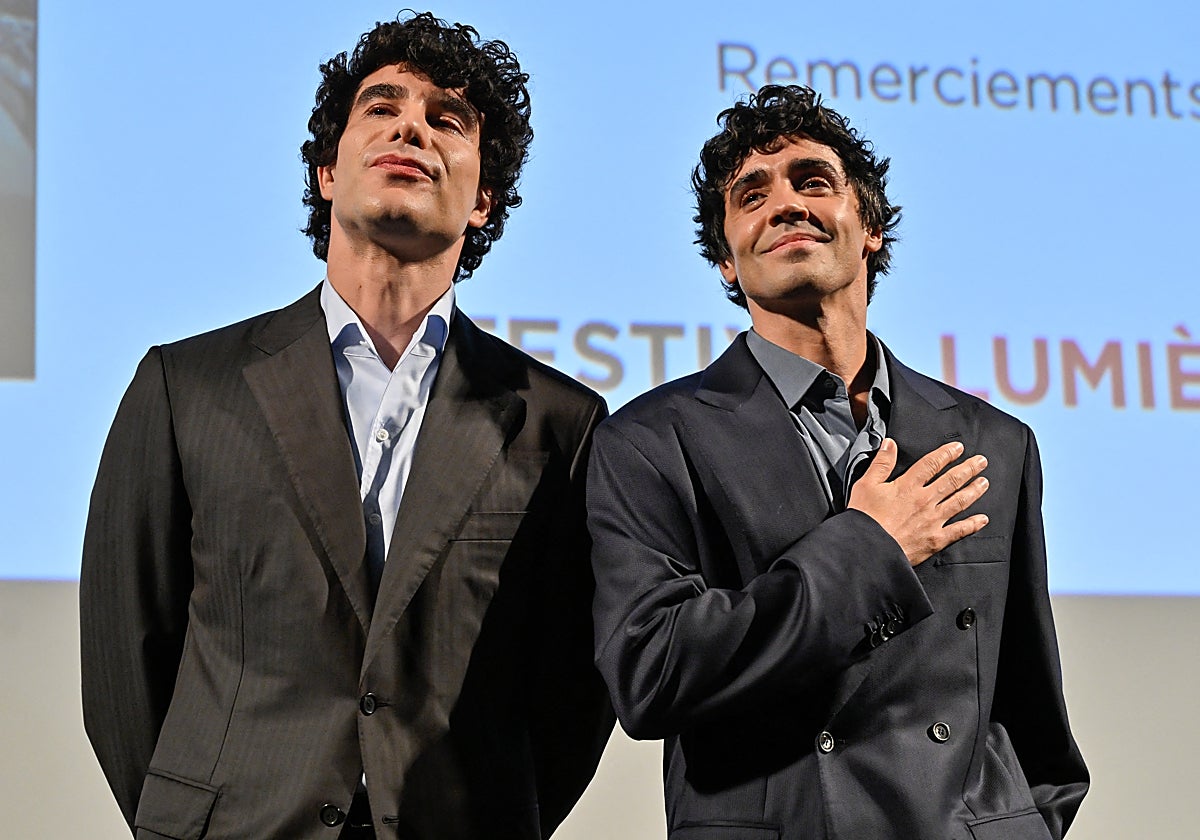
"La bola negra," directed by Javier Calvo and Javier Ambrossi, the Spanish filmmaking duo known as Los Javis, has become Spain's top-grossing film of 2026, outperforming "La Odisea" and "Spider-Man: Brand New Day" at the domestic box office. The film is now winning over critics across Asia as well, a market that has historically proven difficult for Spanish cinema to crack.
Calvo and Ambrossi built their reputation in Spain through television series such as "La Veneno" and "La Mesías" before turning to "La bola negra," which they also wrote.
The film has already earned strong reviews from specialized critics around the world. It ranks second among the best films of 2026 on FilmAffinity, a widely used Spanish-language film database, holds an 86 percent approval rating on the review aggregator Rotten Tomatoes and scores 8.2 out of 10 on IMDb, the film and television database. In the United States, where reviews have mostly been positive, the film has screened in 473 theaters.
Time Out magazine described the film as queer, overwhelming and seductive, saying it is destined to endure. The Financial Times said few films present a plot as densely woven as this Spanish epic. The New Yorker struck a dissenting note, calling the film not a monument but a failure.
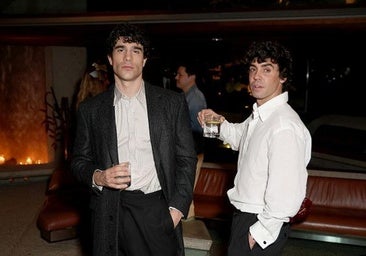
The Peruvian newspaper El Comercio also reviewed the film, with critic Rodrigo Carretero weighing in on the Los Javis production.
Asian Critics Embrace the Film
Spanish-language cinema has historically struggled to break into Asia's biggest markets, where local productions and Hollywood blockbusters dominate box office charts, making the reception for "La bola negra" notable.
The warmest reception has come from Asia's edition of Tatler magazine, which recently described Spain's Princess Leonor, heir to the Spanish throne, as a royal icon of her generation. Tatler devoted an extensive article to "La bola negra" under the headline: "Ninety years after Lorca's execution, his queer masterpiece is rescued."
The piece opens by tracing the film's origins to an unfinished manuscript by the Spanish poet and playwright Federico García Lorca, which the magazine calls his most ambitious project about an openly homosexual protagonist. Lorca, a leading figure of Spain's Generation of '27 and the author of plays such as "Blood Wedding" and "The House of Bernarda Alba," was executed by Nationalist forces in 1936 at the outset of the Spanish Civil War.
The magazine notes that almost a century later, the Madrid-born directing duo, who ended their romantic relationship during filming but maintain what Tatler calls an indestructible professional bond, teamed up with playwright Alberto Conejero, a Spanish screenwriter who has previously written other works inspired by Lorca, to expand Lorca's four surviving pages into a full feature.
Compared to The English Patient
Tatler highlights "narrative courage" as the film's defining trait, comparing it to the epic elegance of "The English Patient," the Oscar-winning 1996 war romance, and the hypnotic, baroque style of British director Ken Russell, known for films such as "Tommy." The magazine calls the gamble an absolute triumph, pointing to the film's best director award at the Cannes Film Festival, one of the world's most prestigious cinema events, along with further honors at the San Sebastián International Film Festival, Spain's leading film festival, as well as at the Toronto International Film Festival and the BFI London Film Festival.

The review also singles out the complex relationship between the trumpeter Sebastián, played by the musician Guitarricadelafuente, the stage name of Spanish singer-songwriter Álvaro Lafuente, and the wounded Republican soldier Rafael Rodríguez Rapún, played by Miguel Bernardeau, an actor known in Spain for the Netflix series "Elite." Rodríguez Rapún was Lorca's real-life secretary and close companion in the years before the poet's death. Tatler praises actor Carlos González for bringing a physicality and sensuality rarely seen in leading roles set in past eras.
Penélope Cruz, the Spanish Oscar-winning actress, also draws praise, shining as a variety singer, while Glenn Close, the American actress and multiple Academy Award nominee, speaking fluent Spanish as the academic Isabelle, delivers what the magazine calls the sharpest line in the film: that the character has inherited something but does not know what to do with it, because he is very Spanish.
Festival Wins Ahead of Asian Release
Although "La bola negra" is not expected to open commercially in countries such as Japan and South Korea until early 2027, its run through Asian festivals has already paid off. In October, the film won the audience award at the Busan International Film Festival, the largest film festival in South Korea and one of the most influential in Asia.
It also sold out every screening within minutes at the Latin Beat Film Festival in Tokyo, where local media have already reported on the buzz building ahead of its commercial release in Japanese cinemas. Distributors have also confirmed upcoming releases in Taiwan, Thailand, Singapore and the Philippines.
What happens next
The film is expected to open commercially in Japan and South Korea in early 2027, with releases also confirmed for Taiwan, Thailand, Singapore and the Philippines.
Test yourself
Which film did "La bola negra" surpass to become Spain's top-grossing film of 2026?
What literary work inspired "La bola negra"?
Which award did the film win in October 2026?