

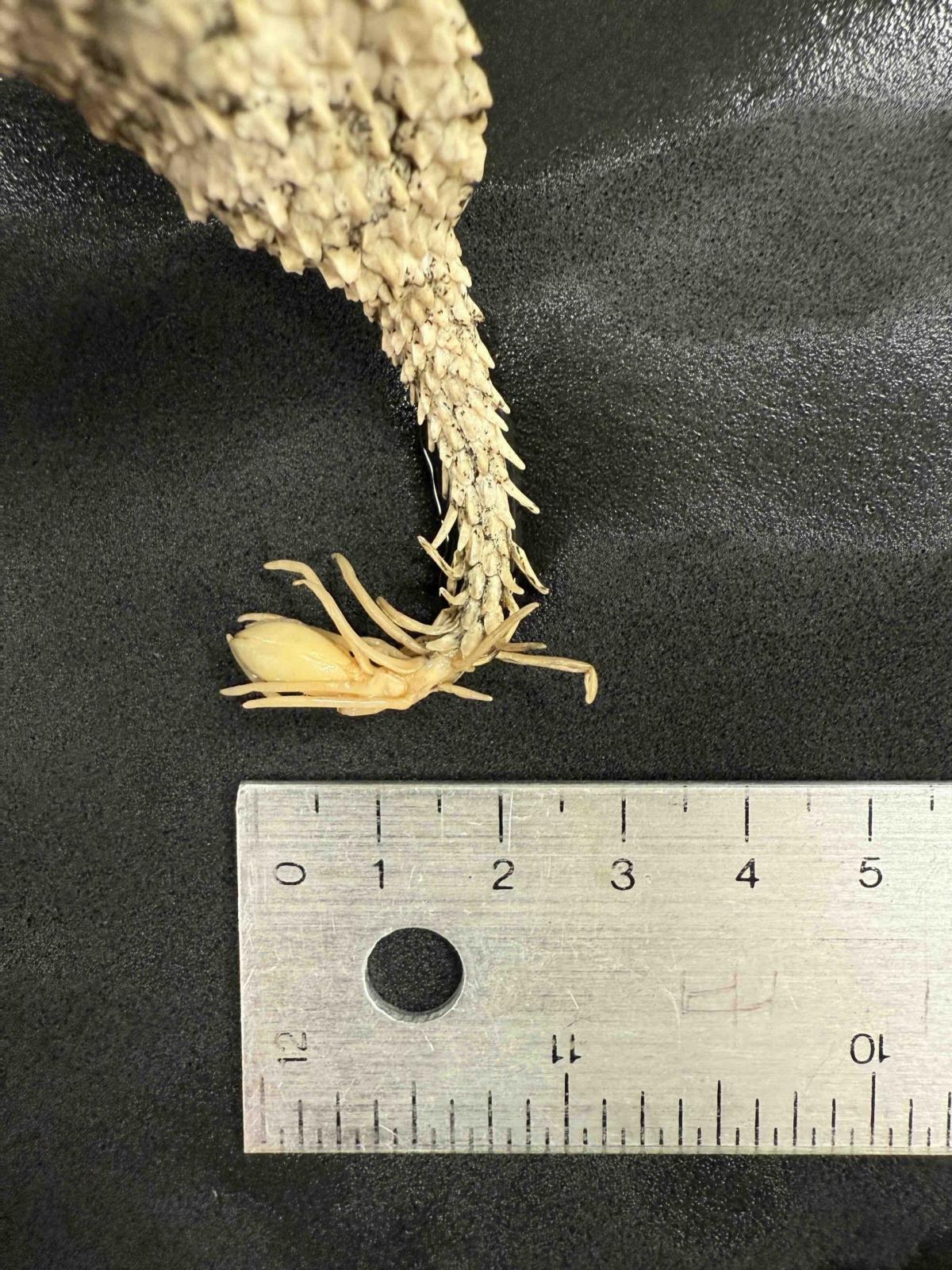
Researchers at the Field Museum of Natural History in Chicago have conducted the first three-dimensional X-ray study of the skeletal structure inside the tail of the spider-tailed horned viper. The study, published in the scientific journal The Anatomical Record and reported by Discover Wildlife, used advanced computed tomography to examine how the snake forms its unusual prey lure.
The research team found that the tail vertebrae of the snake are structurally typical of standard vipers. According to the scientists, the elaborate appendage that resembles a spider is formed entirely from external soft tissue rather than modified tail bones.
The study was led by Sara Ruane, associate curator of herpetology at the Field Museum, and Georgios Georgalis, an assistant professor at the Polish Academy of Sciences in Krakow. The researchers scanned the specimen using the new X-ray computed tomography (XCT) laboratory at the museum. Computed tomography uses non-destructive X-rays to construct detailed 3D digital models of internal animal anatomy. Herpetology is the branch of zoology that focuses on reptiles and amphibians.
Discovery and museum history
The specimen analyzed in the new scanning study was originally collected in Iran in 1968 and deposited at the Field Museum. For decades, museum researchers assumed the unusual tail was simply a physical anomaly on an individual belonging to an already known species, such as Pseudocerastes fieldi or Pseudocerastes persicus.
Interest in the specimen was renewed after scientists found a second snake with an identical tail in 2003. Ruane explained that the specimen had remained in museum storage for decades until the 2003 discovery prompted researchers to re-examine it. In 2006, scientists formally classified the snake as a distinct species named Pseudocerastes urarachnoides. Ruane noted that the appendage on the tail appeared so extravagant that she immediately found it remarkable, adding that it represents a unique feature among snakes.
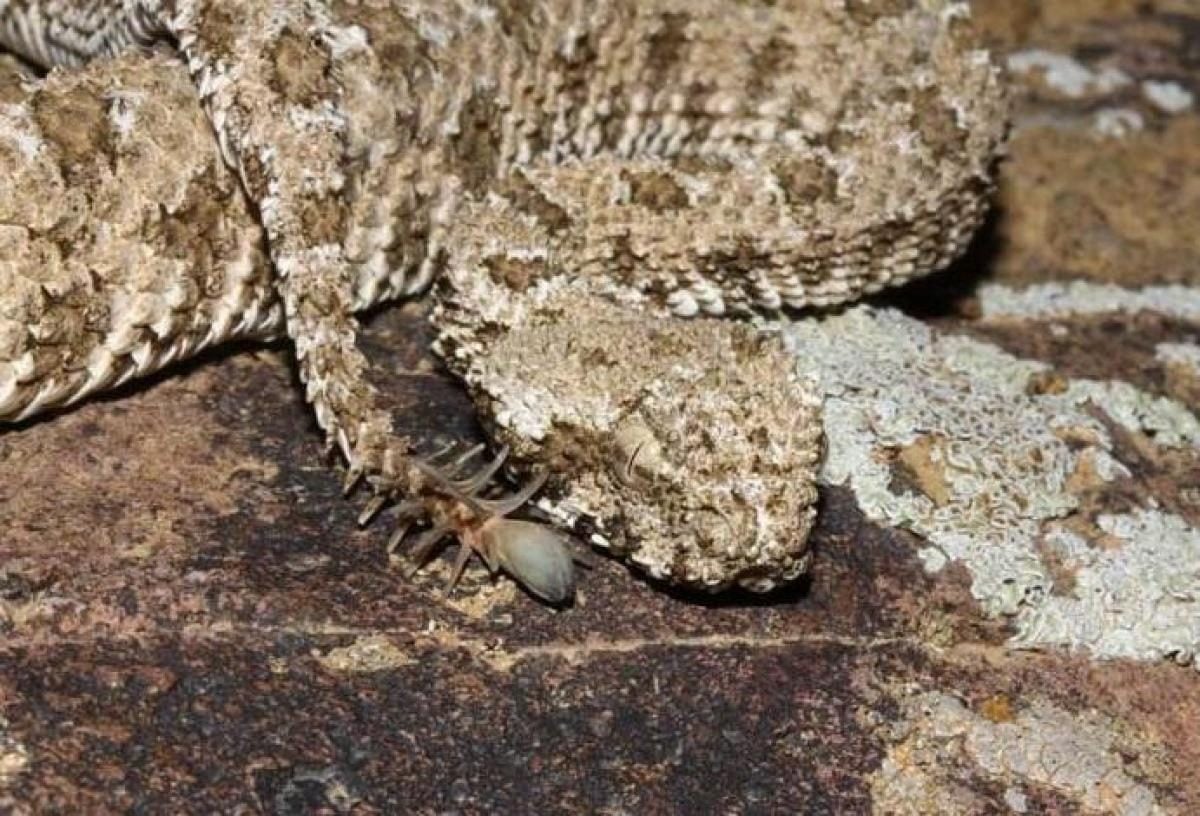
The spider-tailed horned viper is native to the Zagros Mountains in Western Asia, a major mountain system located in Iran. The species is known for its tail adaptation, which features leg-like appendages surrounding a bulbous tip designed to mimic arachnids.
Lure function and hunting behavior
Herpetologists initially hypothesized that the specialized tail evolved as a lure to attract prey. In 2008, researchers captured footage of a spider-tailed horned viper demonstrating this hunting behavior in the wild for the first time.
The wild viper concealed itself on a rocky ledge, using its natural camouflage to blend into the surrounding stone while moving the tip of its tail in a figure-eight pattern. The movement mimicked the motion of a spider, increasing in intensity whenever potential prey approached. Researchers observed birds, including the red-backed shrike and several warbler species, attempting to strike at the tail before being caught by the snake.
Skeletal analysis and future research
Georgalis, who specializes in paleontology, explained that the research team was particularly interested in inspecting the vertebrae at the tip of the tail because of its complex external appearance. Paleontology is the study of ancient life and skeletal structures through fossil and anatomical evidence. Georgalis said that as a paleontologist, he was keen to explore physical features that cannot be determined from skeletal structures alone.
He noted that the examination revealed the tail bones were typical of viper species, with nothing in the skeleton indicating the presence of such an unusual external lure. Having confirmed that the skeletal structure of Pseudocerastes urarachnoides is characteristic of vipers, the research team expressed hope that their findings will serve as a foundation for future research into the soft tissue structure of the spider-like lure.


