

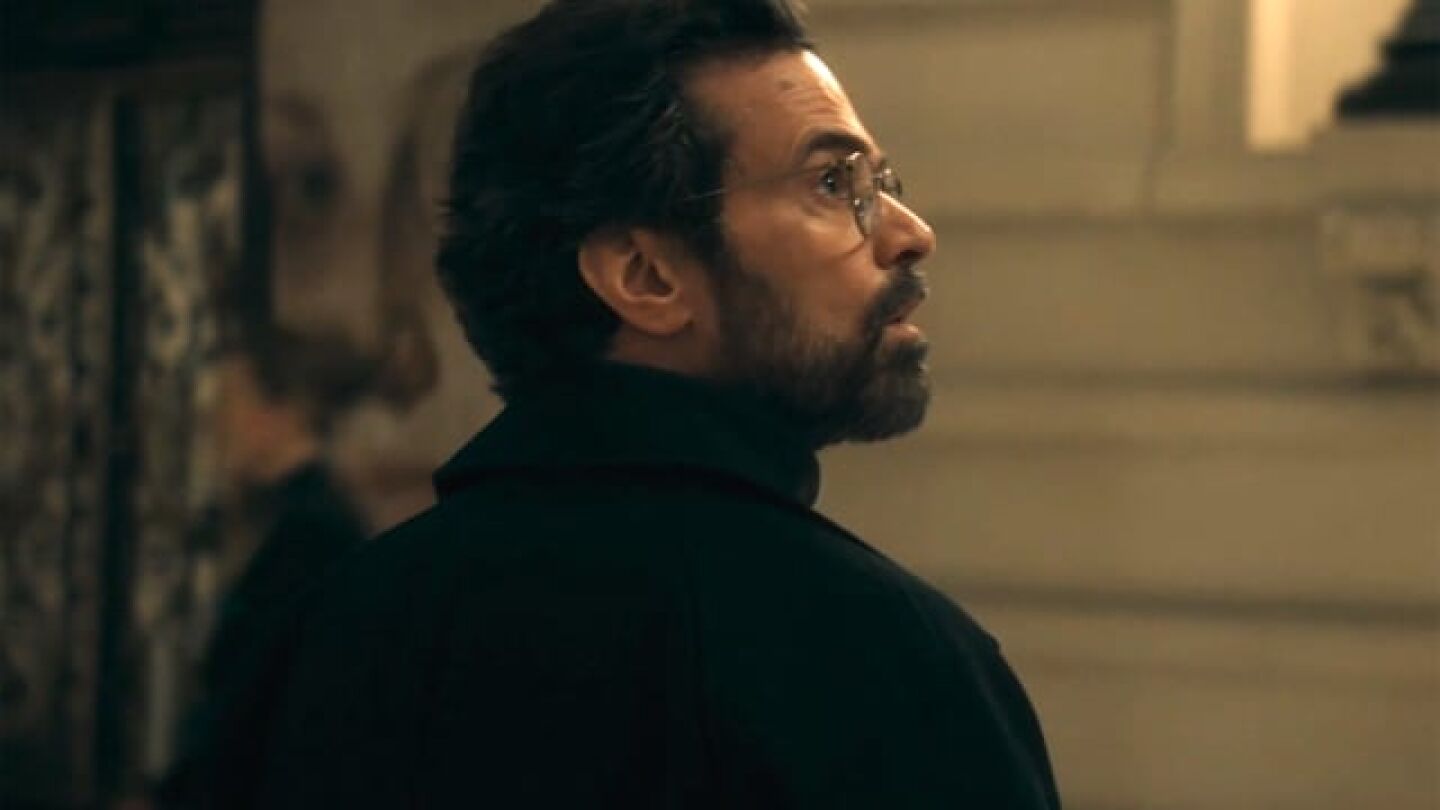
French director Pierre Schoeller has released "The Rembrandt Syndrome," a 107-minute drama starring Camille Cottin, Romain Duris, Céleste Brunnquell and Joel Ödmann, reviewed by critic Sergi Sánchez for Gossipify's film section and awarded two out of five stars.
The film follows Claire, a nuclear scientist whose seemingly perfect life is upended after she embraces, literally, a painting by the Dutch master Rembrandt at the National Gallery. Sánchez wrote that the premise is eccentric and mysterious enough to hold the viewer's attention for a while, particularly because the film draws a thick veil over what actually happened during that encounter with the painting, leaving it in a deliberate ambiguity that avoids any rational explanation.
From art to nuclear policy
According to Sánchez, nothing suggests at first that Claire's revelation will trigger a far-reaching existential crisis, one that draws her into a reassessment of nuclear energy policy in present-day France. That reassessment, he wrote, seeks to highlight the effects of climate change and the moral responsibility of governments when making decisions about ecological sustainability.
Rembrandt Harmenszoon van Rijn was a 17th-century Dutch painter widely regarded as one of the greatest artists in European history, known for his portraits and self-portraits and his masterful use of light and shadow. The National Gallery in London holds one of the world's most important collections of European paintings.
A promising mystery that unravels
Sánchez argued that as the film progresses, its enigma dissolves, exposing Schoeller's inability to weave together two storylines that ultimately repel each other. At that point, he wrote, the opacity of Claire's character reveals itself as a mask, evidence of a failure.
He wrote that "The Rembrandt Syndrome" is so enamoured of its own poetic starting point that it forgets to shape it into a coherent argument, settling instead for a mystery that turns out to be as contrived as the humility it claims to adopt as its moral.
Best and worst of the film
Sánchez singled out the film's best quality as its originality in exploring the secret links between artistic creation and scientific knowledge. Its worst flaw, he wrote, is that it does not know how to develop the mysteries promised by its own premise.
The screenplay for "The Rembrandt Syndrome" was written by Violette Garcia, Pierre Schoeller and Anne-Louise Trividic. The French production was released in 2025.