

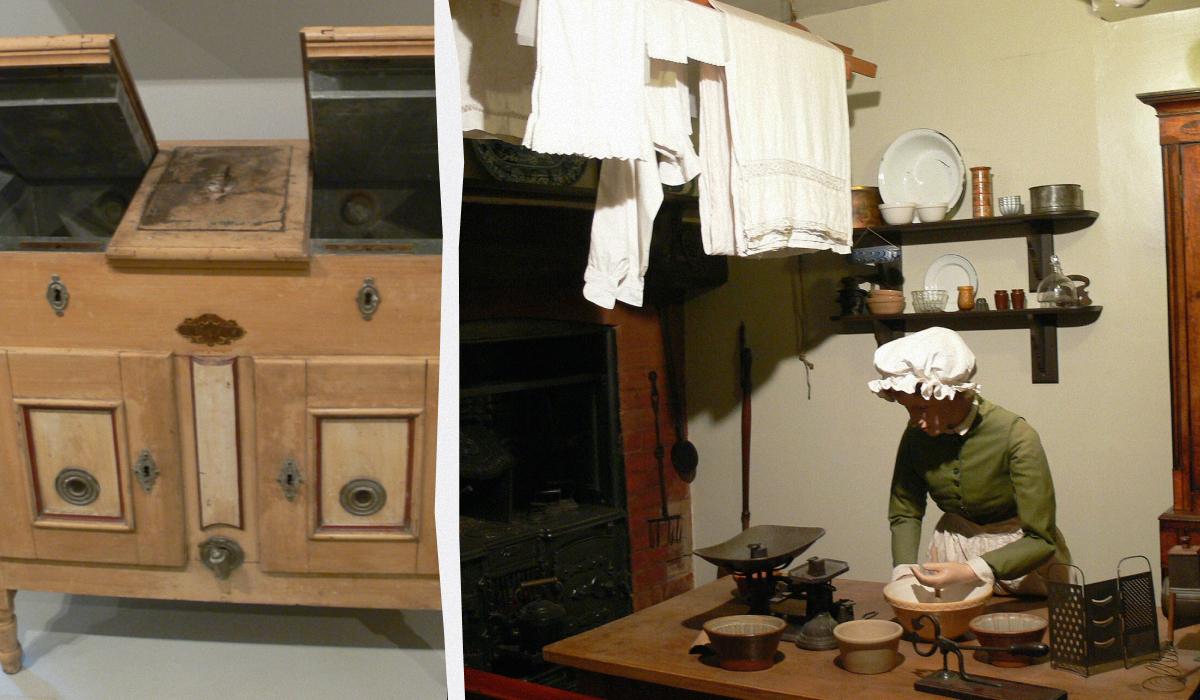
Traditional pre-electric iceboxes are returning to modern home kitchens as functional decor that operates without electricity, Romanian news portal Ziare.Com and House Digest reported.
While smart home technology dominates modern housing conversations, homeowners are increasingly adopting non-electric ice chests to provide extra cold storage space and unique vintage charm without adding to their power bills.
According to House Digest, the revival is driven by practical utility as well as aesthetic appeal. The insulated furniture units allow households to store food during power outages or complement standard electric refrigerators with secondary non-electric cooling space.
Before domestic electric refrigeration became widespread in the early 20th century, wooden iceboxes were standard fixtures in European and American homes. Typically constructed from heavy oak or pine and lined with zinc, tin, or cork insulation, the cabinets relied on natural ice harvested from frozen lakes or manufactured ice blocks delivered by local suppliers. During the 19th century, an extensive commercial ice industry developed, shipping ice blocks by rail and barge to keep household iceboxes stocked throughout the summer months.
How non-electric iceboxes work
The cooling system of a traditional icebox functions through simple thermodynamics. Users place large blocks of ice in an upper compartment, while perishable food items sit in a separate chamber located directly below.
As the ice gradually melts, water drains through an internal channel into a collection tray situated at the bottom of the cabinet. Keeping the interior cold requires regular ice replacement and careful organization, creating a routine maintenance pattern that House Digest noted adds a distinct rhythm to daily kitchen life.
With the advent of compressor-driven electric refrigerators using chemical refrigerants in the mid-20th century, traditional iceboxes rapidly lost utility. Most were discarded, repurposed as general furniture, or stored away in attics and pantries. Design experts note that contemporary homeowners are now repurposing these antique pieces as both decorative accents and functional auxiliary coolers.
Alternative energy-free cooling technologies
In related reporting on sustainable cooling technologies, Ukrainian news agency UNIAN highlighted recent scientific advancements in passive thermal management.
Researchers have developed an advanced nanomaterial capable of cooling buildings without consuming electrical energy. The material operates by reflecting solar radiation while efficiently emitting thermal energy, allowing building surfaces to drop below the surrounding ambient air temperature. Passive radiative cooling relies on materials engineered to radiate infrared energy directly into space through the atmospheric window, offering zero-emissions cooling for modern architecture.
Hidden disability awareness symbols
UNIAN also reported on the growing international recognition of the hidden disability symbol, which features a yellow sunflower set against a green background.
The emblem signals that the wearer has a non-visible impairment or specific assistance needs in public environments, enabling service providers, transportation staff, and members of the public to offer appropriate support when required. First created at London Gatwick Airport in 2016, the Sunflower scheme has since been adopted by transit systems, airports, and venues worldwide to assist individuals with non-visible conditions.


