

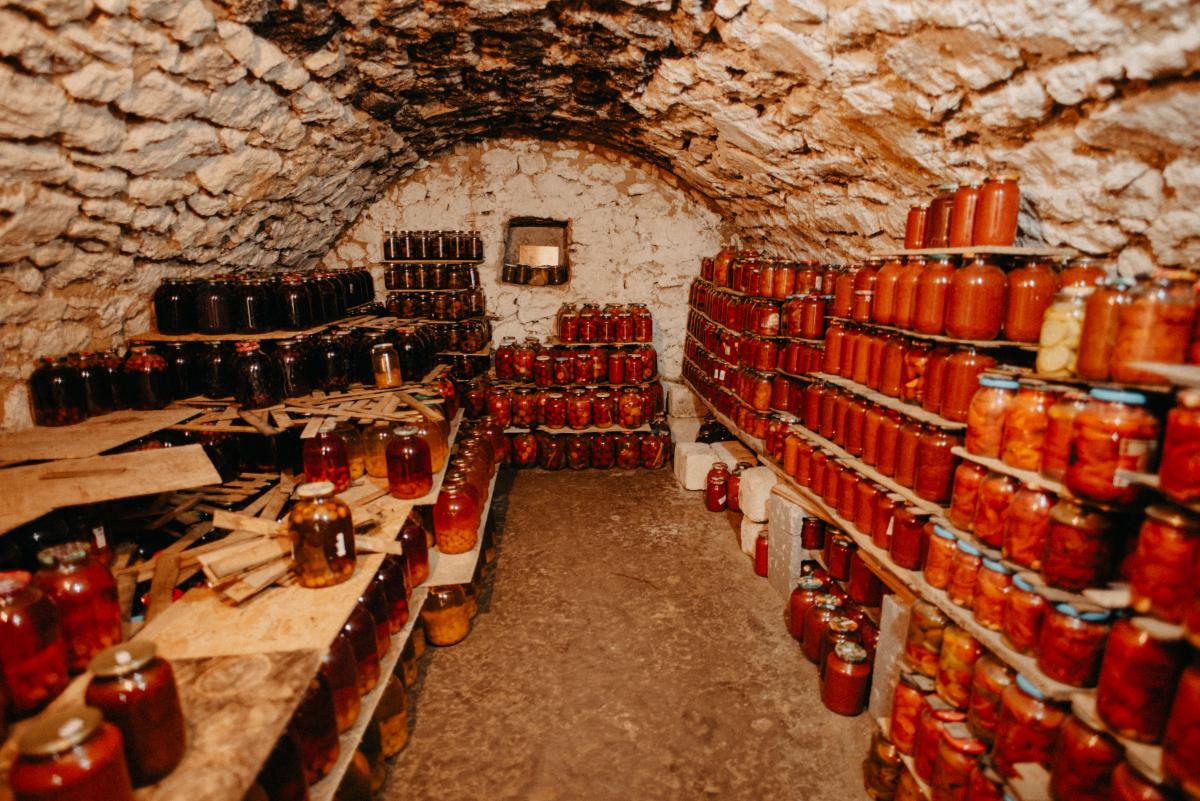
Ukrainians preparing underground cellars for the annual home canning season are being urged to eradicate dangerous mold, slugs and rodents before storing food preserves.
Descending into subterranean storage spaces often reveals fungal growth, dampness and unwanted pests. These infestations not only ruin stored food supplies, but can also pose severe risks to human health if left untreated.
Preparing cellars for deep chemical cleaning
Cleaning underground structures is a laborious process that requires proper safety equipment. Workers should put on old clothing, a medical mask and protective gear before entering contaminated spaces.
All stored preserves and glass jars must be removed from the cellar prior to chemical treatment. Anything not permanently attached to the walls, including storage crates, wooden shelves and barrels, must also be carried outside.
If visible fungal plaque has formed on the walls, it should be scraped away with a spatula, though older deposits may prove difficult to remove. While recommendations vary on the initial surface treatment, applying an antifungal primer or a chlorine bleach solution is widely recommended for preliminary cleaning.
Root cellars are traditional subterranean storage spaces used across Eastern Europe to preserve root vegetables, apples and canned goods at stable, cool temperatures throughout winter. Maintaining humidity control and strict hygiene in these unheated spaces is essential to stop fungal spores from multiplying on porous brick or timber structures.
Sulfur bomb fumigation and safety rules
The primary chemical method for clearing severe cellar dampness and mold is a sulfur smoke bomb. As the device smolders, it releases sulfur dioxide gas, which acts as a powerful toxic agent against fungi and subterranean pests.
While sulfur smoke bombs offer high efficiency, they demand exact compliance with safety instructions. Sulfur dioxide is hazardous to human health, meaning these canisters are strictly forbidden in basements located directly beneath inhabited residential living quarters.
To execute the fumigation safely, all nonessential items must be cleared from the space. The sulfur bomb should be set on a completely fireproof surface, such as a solid brick. After lighting the fuse, workers must exit immediately and seal the door tightly, allowing the sulfur dioxide gas to treat the enclosed space for one to two days.
Sulfur dioxide has long been utilized in agriculture and winemaking as a disinfectant due to its antimicrobial properties. When burned, elemental sulfur combines with oxygen to produce dense fumes that penetrate small wall cracks and masonry crevices that liquid sprays cannot reach.
Following the sulfur treatment, the cellar must be thoroughly ventilated for at least one week until all chemical odors disappear entirely. Food supplies and jars cannot be brought back into the space for at least one month after treatment.
Alternative solutions using copper and iron sulfate
For locations where sulfur smoke bombs cannot be safely deployed, alternative chemical treatments using iron sulfate or copper sulfate provide effective microbial control. Copper sulfate, a bright blue crystalline compound also known as cupric sulfate, is an established agricultural fungicide used to prevent fungal spore germination on wood and masonry.
Preparing a copper sulfate spray requires dissolving 300 grams of the chemical in 10 liters of water. The resulting liquid is sprayed directly over floors, ceilings, wooden shelves and timber surfaces, with special attention paid to tight wall corners.
For wall disinfection, a specialized whitewash mixture is applied. This solution combines 10 liters of water with 1 kilogram of slaked lime and 100 grams of copper sulfate. Slaked lime, or calcium hydroxide, creates an alkaline environment that neutralizes surface acidity and inhibits fungal growth.
After applying copper or iron sulfate solutions, the room must be ventilated continuously for several days before reentering.
To prevent mold and dampness from returning in future seasons, proper environmental conditions must be maintained. Fungi require high humidity and stagnant air to thrive. Without adequate continuous ventilation to lower moisture levels, fungal spores will quickly reestablish themselves inside subterranean storage areas.


