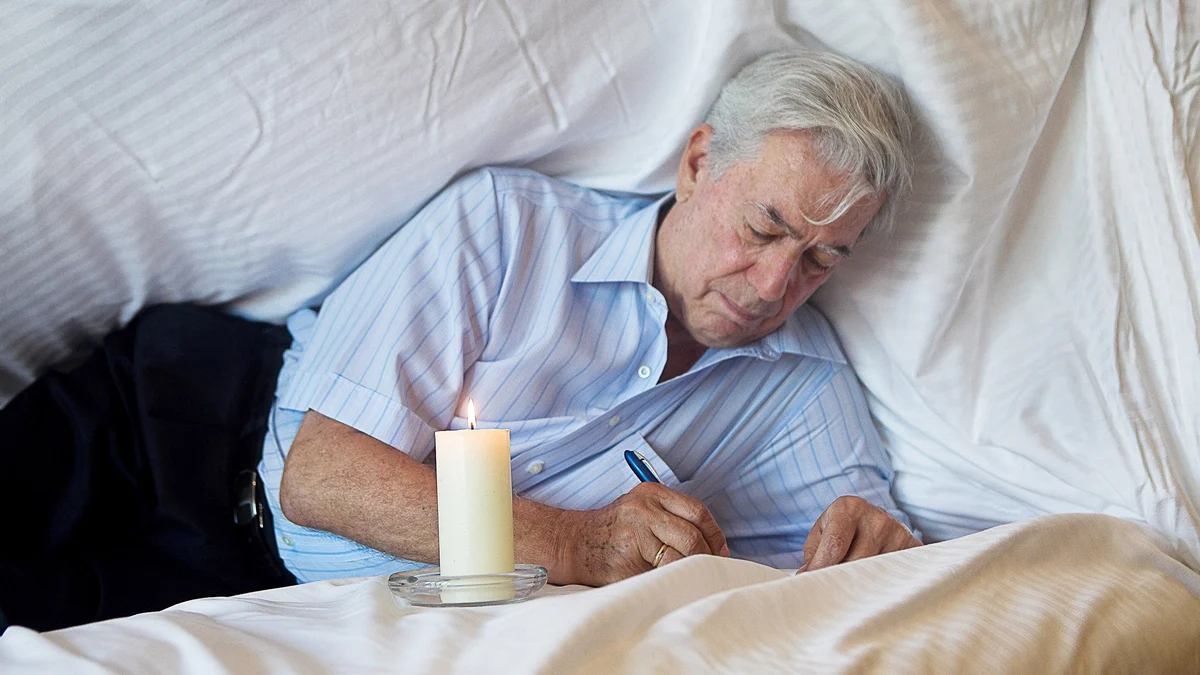
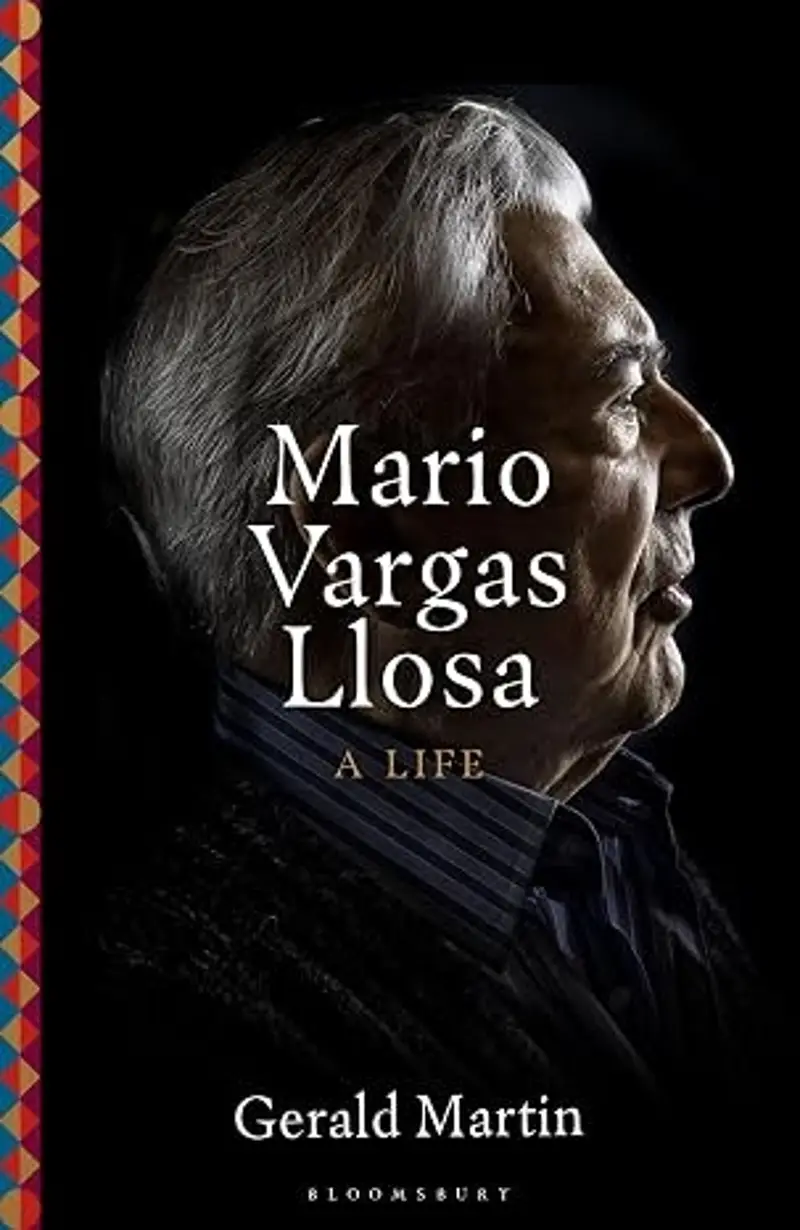
A new biography of Mario Vargas Llosa, the Peruvian writer and Nobel laureate who died in 2025, has revealed previously unpublished details about his affairs, his jealousy and the women he left behind. The book, "Mario Vargas Llosa: A Life" by Gerald Martin, is the result of thirteen years of research.
Penguin Random House declined to publish the biography in Spanish, and the Deusto publishing house has since announced it will release the Spanish edition. Among its revelations are testimonies from Vargas Llosa's lovers, what they sacrificed for him, and how their lives ended up as material in his fiction. Literary agent Carmen Balcells, who helped build the Vargas Llosa myth, wrote to Martin in August 2015: "Forget his literary career, forget his political career, and write a soap opera about all his love affairs."
A hotel room in Washington
In November 1980, Vargas Llosa was with a mistress at a hotel in the United States to whom he had promised a life together. In front of her, he called a friend and assured him his marriage to his wife, Patricia, was over. Then he left the room and never came back. The woman, identified by Martin only as L.B., never saw him again or received an explanation. Years later she told the biographer, with irony, that she had at least been present while he wrote "The War of the End of the World."
Lea Barba and the communist years
In 1953, Vargas Llosa met Lea Barba at Lima's San Marcos University. She was the daughter of a communist who ran the Negro-Negro cabaret in Lima, and she introduced him to Marxist writers. The pair shared bookshops, French cinema and political meetings. Vargas Llosa fell in love, but Barba did not reciprocate. Martin suggests, drawing on testimony from the writer's contemporaries, that his membership in the clandestine communist organisation Cahuide may have had as much to do with staying close to her as with conviction.
Barba remained a communist even after Vargas Llosa embraced liberalism, and she never saw him as a true Marxist, once calling him a "weathervane." They met again in Lima in 2001, where he kissed her and promised to see her again. He never did. Barba, who had raised five children on a teacher's modest pension, also rejected as inaccurate the portrait of her youth that he gave in his memoir "A Fish in the Water."
An affair aboard the Rossini
In 1974, while sailing from Europe to Peru aboard the liner Rossini with his wife Patricia and their three children, including the baby Morgana, Vargas Llosa became fixated on a married Peruvian passenger and mother whom Martin calls "Ana Maria." While Patricia looked after the children, he pursued the woman around the decks, and during a stop in Guayaquil the pair went to the Hotel Humboldt. A poem kept in Princeton's archives recalls the greenish light of the room, the Guayas River and details of her body.
He had just finished "The Perpetual Orgy," his essay on Flaubert's "Madame Bovary," and Martin links the affair to Emma Bovary's search for an escape from an ordinary life. On disembarking, Vargas Llosa announced he was leaving Patricia and travelled with Ana Maria through the Caribbean and Europe. Balcells recalled seeing the couple tanned, dressed in black and happy in Barcelona. But Ana Maria could not bear being away from her children and returned to Peru; Vargas Llosa, according to Balcells, had suggested sending them to a British boarding school. He spent weeks lingering near her house writing desperate poems. His friend Abelardo Oquendo told Martin that Vargas Llosa seemed to need "crazy loves" and that a passing affair was never enough for him.
Julia Urquidi, the wife who financed his career
Julia Urquidi, a divorced and attractive older woman, discovered the cost of that need firsthand. She married Vargas Llosa in 1955, when she was twenty-nine and he was nineteen. Before the secret ceremony, a friend recalled, she cried, convinced the marriage could not last; he promised it would be forever. Urquidi sold her jewellery, typed his manuscripts and organised his studies, jobs and schedule. He later acknowledged how much he owed her. She lost a pregnancy after months of bed rest, which Martin attributes partly to his fear that fatherhood would derail his career.
Urquidi also said Vargas Llosa's jealousy was so extreme that he once locked her in their home by taking the keys. In Paris, she discovered he had secretly met the actress Pilar Pellicer, including an outing to Versailles; he denied any sexual relationship. The situation worsened when Urquidi took in his teenage cousins Wanda and Patricia. Patricia arrived at fifteen, when Vargas Llosa was twenty-five, and later told Martin she had initially mistaken his attention for family affection. In 1964 he told Urquidi by phone from Lima that he was leaving her because he loved his cousin. She left Paris on her own birthday, leaving roses in their room alongside a recording of Jean Cocteau's monologue "The Human Voice," about an abandoned woman.
Patricia Llosa and the weight of marriage
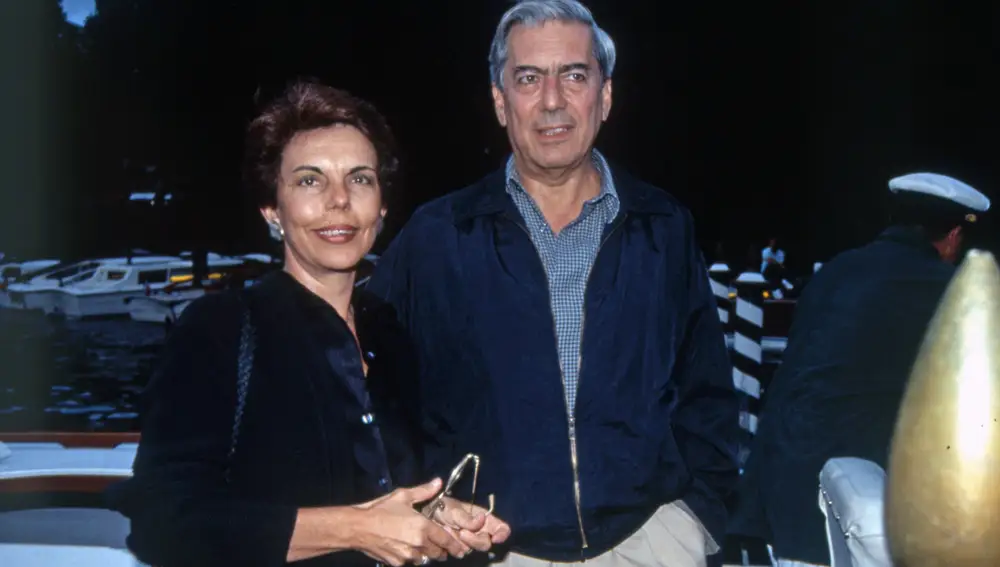
The pattern repeated with Patricia, whom he married in 1965 when she was nineteen. She left her studies and took on the family's finances and moves. One night she burned steaks she had prepared for the writer Jorge Edwards, and Vargas Llosa was furious at being embarrassed in front of a guest. Yet Patricia also held real influence: during his 1990 presidential campaign in Peru, she ran the Acción Solidaria organisation, persuaded him to stay in the race when he wanted to quit, and arranged a meeting with the Archbishop of Lima without telling him in advance.
Patricia also managed the fallout from both the Rossini affair and the 1980 crisis in Washington, finding an apartment in Cambridge near their children's schools. Their son Alvaro, then a teenager, was especially affected by the separation. Martin cannot explain why Vargas Llosa returned to the family after abandoning L.B. without any explanation. The women also paid a second price by seeing themselves turned into characters. Unlike Barba, Urquidi recognised herself in "Aunt Julia and the Scriptwriter," published in 1977, though its comic ending left out much of her real pain, and he had made her character older than she actually was. She responded with her own book, "What Little Vargas Didn't Say."
Isabel Preysler and the final years
In October 2021, six years into his relationship with the Spanish socialite Isabel Preysler, Vargas Llosa published the novel "Los vientos," in which an old man regrets leaving his wife, called Carmencita, for another woman. Martin reads this as a veiled reprisal against Preysler, though the writer denied it. In 2015, two weeks after celebrating his golden wedding anniversary with Patricia, he made his relationship with Preysler public. Martin visited Patricia in Lima that December; from her terrace she could see the Pacific, and her husband's desk stood empty except for a few pens and decorative hippopotamus figurines. She said she simply could not understand why he had chosen the social and media world he had so often criticised in his essays, telling Martin, as translated in the book, that it was as if he had gone mad.
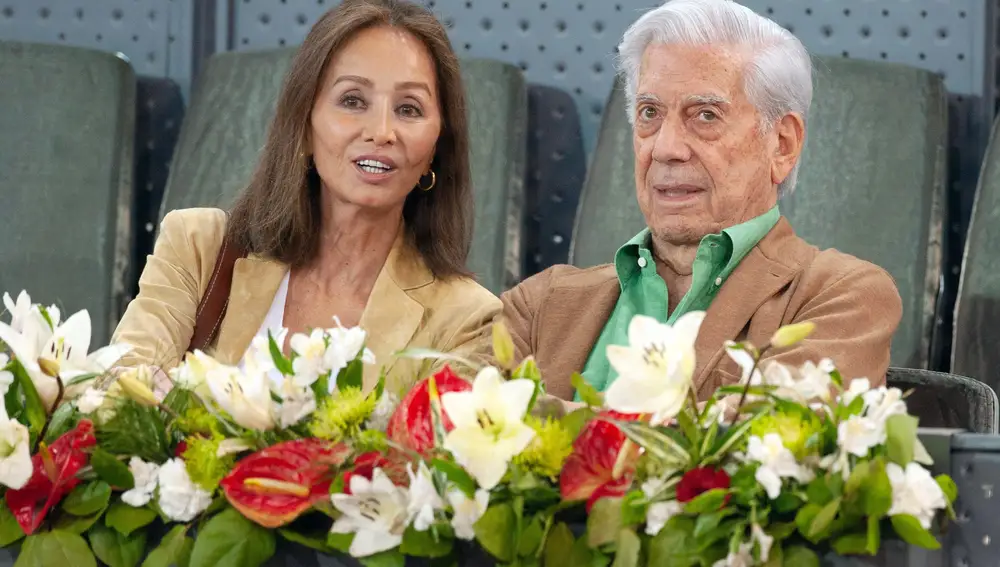
Martin, who acknowledges his ideological differences with the Nobel laureate, describes his later years as those of a "courtier to the Spanish ruling class," noting the contradiction between his liberal, anti-authoritarian writing and his life alongside Spain's best-known society figure. Preysler, unlike Urquidi and Patricia, had her own wealth, career, children and commitments. When Martin interviewed the couple separately in 2018, Vargas Llosa described himself as happy, while Preysler spoke of his demanding side and his "double bottom," describing episodes of jealousy including one in which he pulled her away from a man she was dancing with. She had already decided she would not marry him, and in December 2022 she ended the relationship by letter, asking him to send someone to collect his things. He had promised her in February of that year that he would dedicate a novel about Peruvian music to her; when "I Dedicate My Silence to You" appeared in 2023, it was dedicated to Patricia instead.
Final years and death
At the 2010 Nobel ceremony, Vargas Llosa said "Peru is Patricia," thanking her for organising his life. After the split with Preysler he returned to live under the family roof, though Martin believes there was no romantic reconciliation. He died in 2025 while listening to readings of "Madame Bovary." In his epilogue, Martin draws a comparison to the ending of Don Quixote, in which the knight returns home, regains his reason, and gives up the fantasies that had given his life meaning, but loses his will to live along with them.
Test yourself
Who wrote the new biography of Mario Vargas Llosa?
Why did first wife Julia Urquidi leave Paris, according to the biography?
How did Isabel Preysler end her relationship with Vargas Llosa?
Where it happened
Lima, Peru