

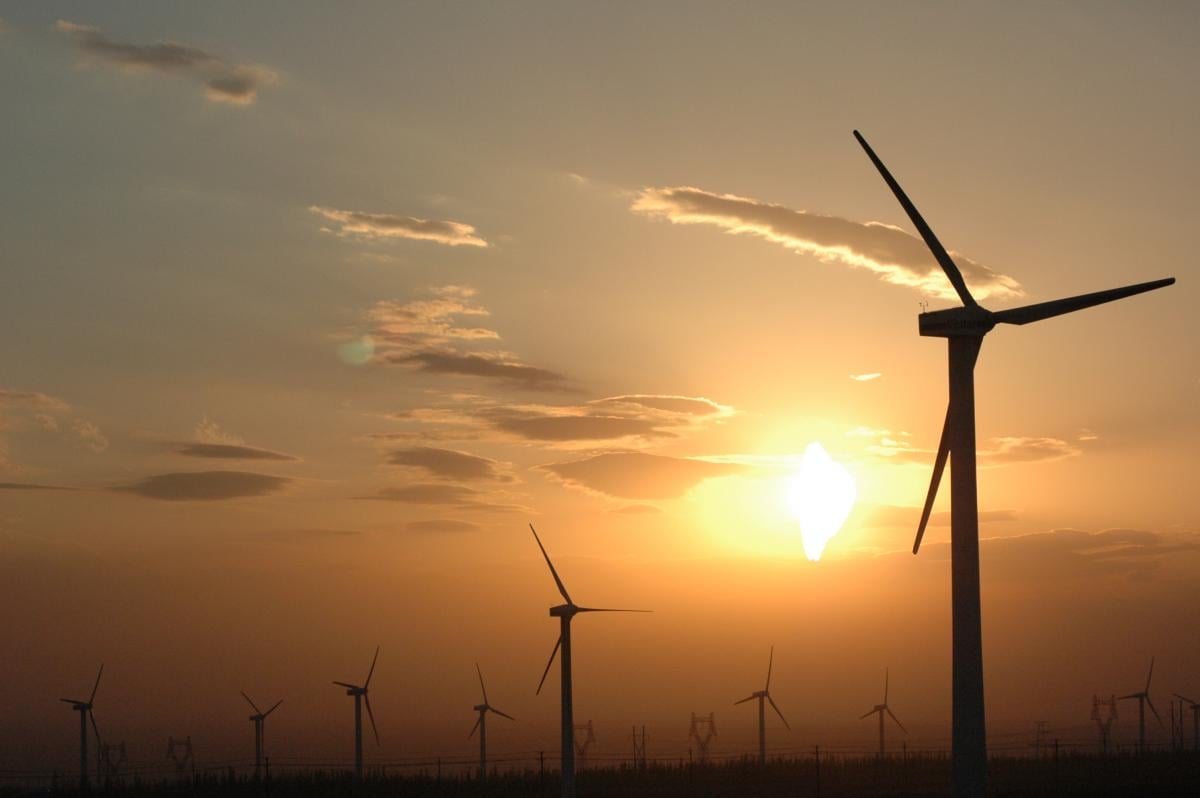
Scientists have discovered that a wind farm in Oklahoma is reshaping the atmosphere above it in ways nobody anticipated when the turbines were installed, producing a miles-long corridor of moving air researchers are calling an "air river."
The Kings Plain wind energy project covers 60 square miles of rural land in Garber County in the Great Plains region of Oklahoma. The facility consists of 88 turbines, each rated at 2.82 megawatts.
Researchers found that the collective kinetic effect of the turbine group can spread many miles beyond the installation. They noted that the interaction between the rotors and the atmosphere is complex, and that air momentum changes in ways that were previously impossible to predict.
Under stable atmospheric conditions, particularly at night, the farm acts as a soft barrier. Instead of allowing incoming air momentum to continue horizontally, the resistance of all 88 turbines forces it upward. Low-level jet streams that regularly pass over the Great Plains at heights of 800 to 1,600 feet above ground are redirected vertically.
The turbines draw kinetic energy from the lower atmosphere, causing turbulence above the rotors. This mechanism transfers momentum from the surface into the boundary layer. When the deflected streams interact with gravity waves in the stable night air, the combined forces lift airflow thousands of feet, creating a downstream corridor of moving air stretching many miles.


