


An eclipse corridor running from August 12 to August 28, 2026, opens with a total solar eclipse in Leo and concludes with a partial lunar eclipse in Pisces. Although recent survey data shows that most Russians express skepticism toward astrology, public interest in esoteric phenomena across the country remains exceptionally high. The two-week window has become one of the most widely discussed astronomical events of the year, with commentators attributing a major influence on human wellbeing and destiny.
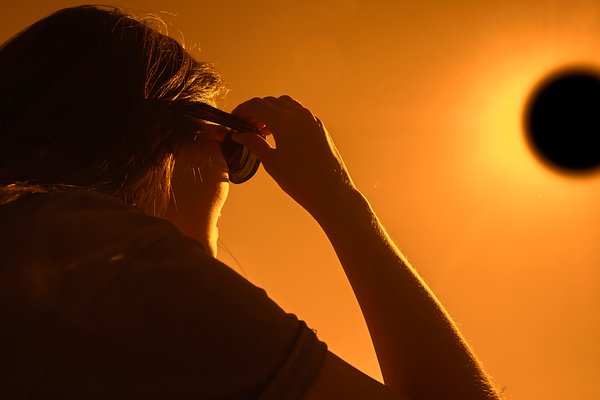
An eclipse corridor is an astronomical timeframe occurring between a lunar eclipse and a solar eclipse, which consistently take place back to back. The phenomenon typically lasts between 14 and 16 days, though some corridors stretch up to a full month. The count begins on the day of the first eclipse of the season and ends immediately following the second.
Astronomical eclipses occur when a celestial body passes along its orbit and obstructs another object, blocking its light. This alignment takes place when the Sun, Earth, and Moon line up near the lunar nodes, which are the intersection points of the orbit of the Moon with the ecliptic. During a new moon, this alignment creates a solar eclipse as the Moon blocks the Sun. During a full moon, Earth casts its shadow onto the Moon to create a lunar eclipse. Eclipse seasons occur twice a year, or rarely three times, lasting between 34 and 37 days.
Solar eclipses take four distinct forms: total, partial, annular, and hybrid. A total solar eclipse happens when the Moon completely covers the solar disk, causing darkness on Earth. A partial solar eclipse occurs when only a fraction of the Sun is obscured. An annular solar eclipse takes place when the Moon sits centrally in front of the Sun, leaving a visible glowing ring because of relative size differences. A hybrid solar eclipse shifts between total and annular appearances depending on the location of the observer. Lunar eclipses occur in total, partial, and penumbral forms. Total lunar eclipses submerge the Moon entirely in the shadow of Earth, turning it reddish, while partial eclipses cover only a portion. Penumbral lunar eclipses pass through the outer shadow of Earth, dimming lunar brightness without blocking it entirely.
August Solar Eclipse and Planetary Sky Events
The dates of the August 2026 eclipse corridor are anchored by two specific events: a total solar eclipse in Leo on August 12 and a partial lunar eclipse in Pisces on August 28. The solar eclipse on August 12 runs from 18:34 to 22:58 Moscow time, reaching its peak phase at 20:46. The total phase is visible from the northeast of Taymyr in Russia, as well as Greenland, Iceland, and northern Spain. Partial phases can be observed from Murmansk, Arkhangelsk, and Saint Petersburg, while observers in Moscow will see only one percent solar coverage.
Astronomers consider August 12, 2026, to be one of the most event-packed days of the astronomical year because three separate events coincide. Alongside the solar eclipse, skywatchers can observe a planetary parade and the peak of the Perseid meteor shower. Overnight into August 13, six planets gather within a single sector of the predawn sky: Mars, Jupiter, Mercury, Saturn, Uranus, and Neptune. In Moscow, this planetary alignment is visible between 03:30 and 05:00. Observers can view Mars, Saturn, Jupiter, and Mercury without equipment, while viewing Uranus requires binoculars and seeing Neptune requires a telescope. The Perseid meteor shower reaches maximum activity near dawn on a dark new moon night, producing up to 120 meteors per hour.
The closing event of the corridor is a partial lunar eclipse on August 28, lasting from 05:33 to 08:52 Moscow time. Observers in the United States will have the best view of the event. Across Europe and Africa, the Moon will sit low on the horizon during the eclipse, restricting visibility. Observers in Russia will miss the peak phase of 96 percent darkening, with only western regions able to see the initial stages of the eclipse.
Astrological Interpretations of the Corridor
Astrologer Margarita Terekhina stated in comments to Lenta.ru that the opening solar eclipse in Leo connects to external life events, including personal relationships, professional work, creative efforts, family matters, and social standing. Terekhina explained that the sign of Leo relates to self-esteem, personal ambition, leadership, love, children, art, self-confidence, and public self-expression. She noted that people may experience sudden intuitive insights or creative impulses during this period, advising against ignoring old ideas or deferred projects because reviewing past concepts with fresh eyes can yield strong results.
Terekhina urged individuals to ask key questions during the solar eclipse, such as who they are now, who they want to become, how they wish to feel, and how they want to manifest in the world. She advised monitoring incoming proposals and noticing which doors open or close, noting that endings often represent liberation rather than loss. Public figures and people born under Leo may feel the eclipse most acutely. Because Leo connects to self-worth, Terekhina warned that the period could highlight situations where personal desires were ignored or where relationships were preserved at any cost. She cautioned that loss of control or routine can feel painful, emphasizing that people should refrain from making impulsive, life-altering decisions regarding divorces, resignations, or financial investments during times of emotional instability.
Instead of drastic changes, Terekhina recommended using the solar eclipse for emotional cleansing and physical decluttering. She suggested clearing out closets, deleting unneeded digital files, discarding unused items, or cleaning house spaces. Symbolic actions such as taking a salt bath or washing floors with salt can help establish a feeling of closure. She added that energy should be directed toward creative outlets like painting, dancing, singing, playing instruments, and walking. She also advised tracking dreams and keeping a journal of daily emotions, meetings, and ideas to review weeks later.
Lunar Eclipse Cycles and Cause and Effect
The closing lunar eclipse in Pisces on August 28 marks the end of life cycles. Terekhina explained that Pisces connects to intuition, spirituality, sensitivity, the subconscious, and the shadow self. While the inner voice may feel stronger, confusion and heightened emotionality can distort objective perception. She stated that the main task of this phase is learning to separate genuine intuition from anxiety and emotional fantasy. She suggested that the broader purpose of an eclipse corridor is to gain deeper self-understanding through unexpected external events.
Addressing common fears surrounding the term karmic period, Terekhina explained that karma simply represents cause and effect. She noted that major life changes rarely appear from nowhere but instead reflect previous decisions, internal requests, or ongoing processes. She compared the corridor to a video game level completion and drew an analogy to the traditional August harvest, framing the period as a time when long-sown seeds finally yield results.
Scientific Rebuttal and Psychological Mechanisms
Scientific authorities push back against claims linking eclipse corridors to personal misfortunes. NASA refutes any connection between eclipses and individual life problems, attributing such beliefs to confirmation bias. Scientists note that people tend to notice events that match their expectations while ignoring contradictory evidence. Astrological claims cannot be confirmed experimentally, and coincidences stem from subjective interpretation rather than objective cause and effect. NASA emphasizes that the only verified physical danger during an eclipse is looking directly at the Sun without specialized protective filters, which can cause severe eye damage.
Psychotherapist and consulting psychologist Tatyana Galich told Lenta.ru that no laboratory studies show statistically significant effects of eclipses or full moons on human wellbeing. She noted that astrophysics views an eclipse strictly as a shadow alignment where celestial bodies block light. Galich explained that human distress stems from ancient psychological mechanisms built over thousands of years. Early humans reacted with fear when the Sun or Moon suddenly vanished, recording those events as omens in folklore and literature, such as The Lay of Igor's Campaign. Subconscious fears persist today and are reinforced by online astrological narratives, creating self-fulfilling prophecies.
Galich noted that magical thinking can act as a psychological coping mechanism in times of anxiety, allowing people to wait out perceived bad astrological weather. However, she warned that this mindset frequently leads to learned helplessness. By attributing life events to celestial movements like Mercury, individuals relinquish personal responsibility and delay necessary decisions. She added that alarming horoscope claims can trigger obsessive anxiety cycles and horoscope reliance. Most critically, Galich warned that relying on astrology causes some individuals to ignore genuine mental health issues, substituting horoscope waiting periods for professional therapy with psychologists or psychiatrists. She concluded that while horoscopes may occasionally ease temporary stress, critical thinking remains essential because personal destiny rests entirely in individual hands.


