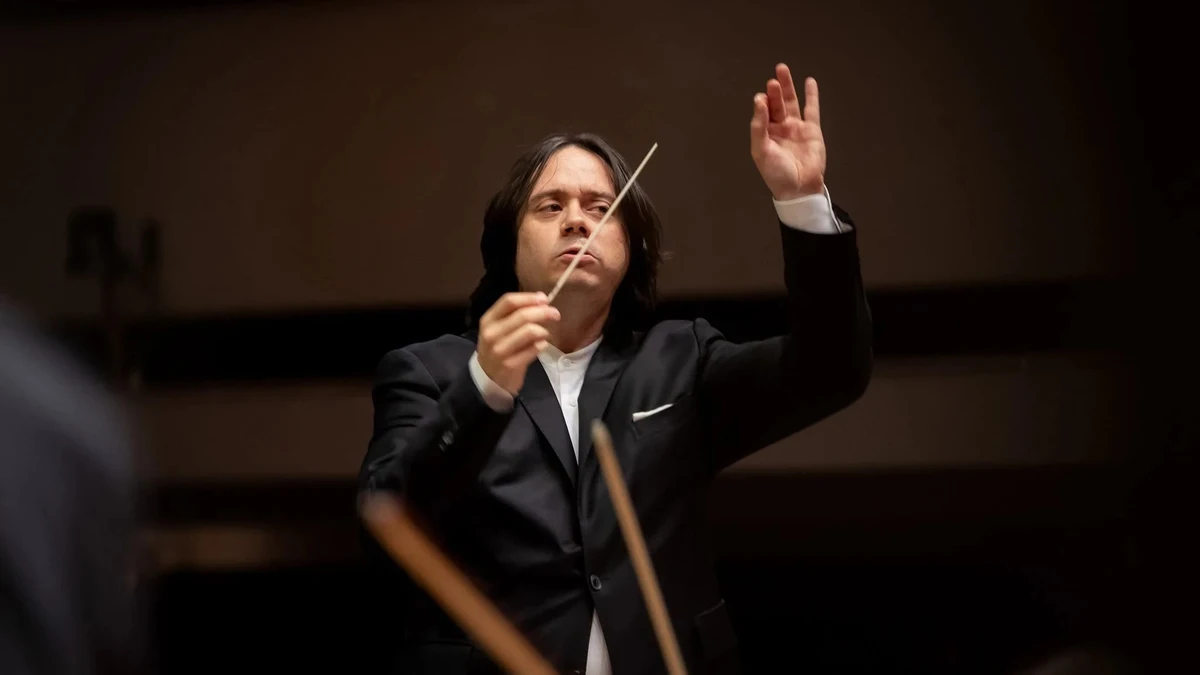
Romanian conductor Gabriel Bebeselea stepped in at short notice to lead Spain's National Orchestra and Choir at Madrid's Auditorio Nacional on November 27, 2026, after French conductor Pierre Bleuse, who had originally been announced for the concert, was forced to withdraw for reasons beyond his control.
The National Orchestra and Choir of Spain are the country's flagship state-funded ensembles and perform regularly at the Auditorio Nacional de Música, Madrid's main classical concert hall.
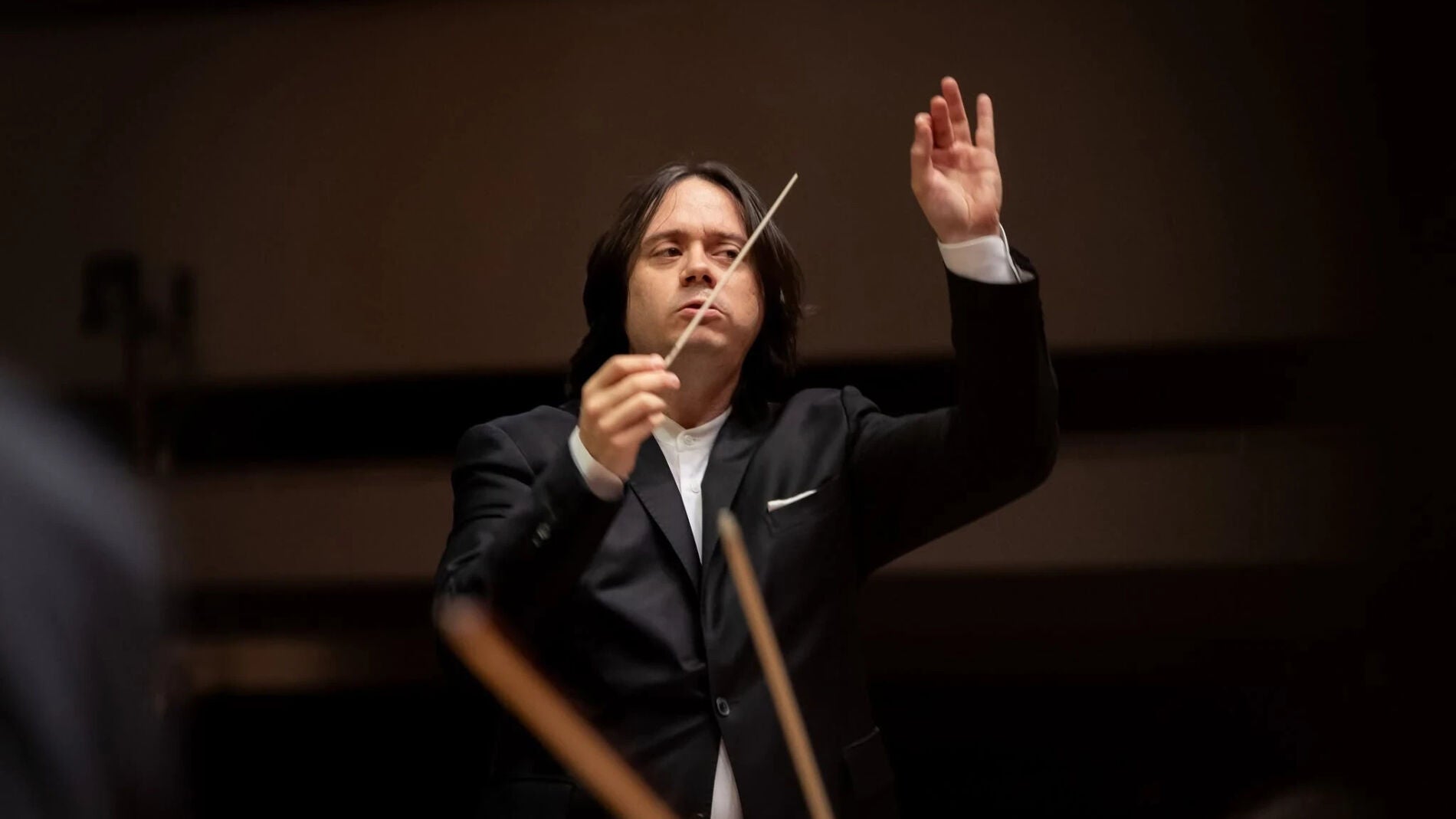
Bebeselea, who was born in 1987, took charge of a demanding program. Writing in La Razón, music critic Arturo Reverter said the conductor showed good technique, diligence, a clear and all-encompassing gesture, unfussy expression and firm rhythmic control.
A rare Debussy score
The most significant part of the evening, according to Reverter, was the inclusion of fragments from Claude Debussy's Le Martyre de Saint Sébastien (The Martyrdom of Saint Sebastian), a score he said is rarely performed in Spain.
Debussy, the French composer regarded as a central figure of musical Impressionism, was strongly drawn to the mystery play by the Italian poet and playwright Gabriele D'Annunzio on which the piece is based. The work is divided into five parts, described in medieval terminology as "mansions," and brings together Eastern and Western, pagan and Christian elements in a distinctive way.
Reverter described the result as an admirable, if not always balanced, work that gives off a very particular light and wraps the listener in unusual sonorities, the kind of score some commentators have suggested could have been Debussy's own version of Parsifal, a reference to Richard Wagner's final opera. According to Reverter, several circumstances prevented that from happening, among them opposition from the Church.
The critic said Debussy's writing in the piece is of exceptional refinement, built on chords that work independently of one another, with the composer moving toward polytonality and polymodality, techniques that layer or shift between different keys or scales within the same passage.
A trained choir and two sopranos
Reverter wrote that those qualities were not always fully present in the performance he heard, which he described as well delineated, reasonably measured and delivered with sufficient professionalism, though not always handling contrasts with the finesse the score calls for.
The National Choir, trained and prepared by Miguel Ángel García Cañamero, sang with very good tuning and subtlety under Bebeselea's direction, Reverter said, moving through its various parts with an orderly division between groups.
Soprano soloists Jone Martínez and Elsa Benoit performed diligently in their brief solo passages. Reverter described Martínez as secure and expressive, with excellent phrasing, while Benoit was somewhat lighter and more tremulous. They were supported in brief interventions by chorus members Ahgnieszka Grzywacz, soprano, and Carolina Muñoz, contralto.
Ives and Debussy's Nocturnes opened the program
The concert opened with Charles Ives's Central Park in the Dark, an early twentieth-century orchestral piece by the American composer. Reverter said the performance was well-judged in its dynamics, murmuring in tone but sparkling at the right moment.
That was followed by Debussy's three Nocturnes, Nuages, Fêtes and Sirènes. Reverter said they were well played and adequately shaped by the conductor, but lacked the magical, esoteric quality the music can carry, with a sense of plainness creeping in at times. He added that the delicacy, evanescence, finesse and absolute tuning the third Nocturne requires never fully came together.
Reverter closed his review by writing that, despite those reservations, the audience's spirit floated gratefully after hearing the second number of Act V of Le Martyre de Saint Sébastien, "Je viens, je monte, j'ai des ailes..." ("I come, I rise, I have wings...").
Test yourself
Who replaced Pierre Bleuse as conductor for the concert?
Which rarely performed Debussy work was highlighted in the concert?
Who wrote the mystery play that inspired Debussy's score?
Have your say
Would you like concert halls to program more rarely performed works like Debussy's Le Martyre de Saint Sébastien?
Where it happened
Madrid, Spain