

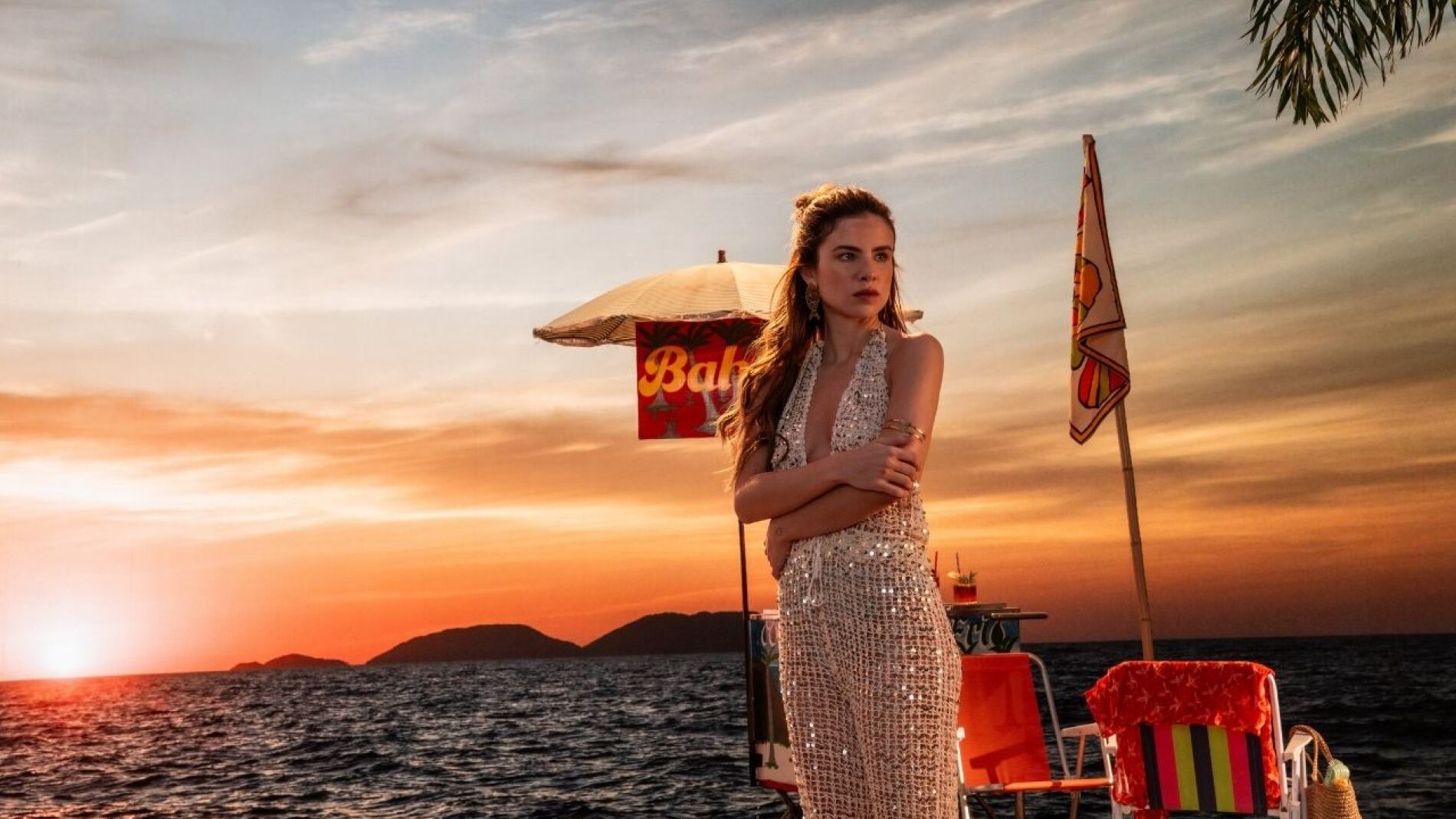
Brazilian singer Giulia Be has released her first full album in Spanish, a self-titled record born out of her love for the language and for a generation of powerful Latin artists. The singer, who has already picked up two Latin Grammy nominations and is a recognised name in her native Brazil, made the album entirely in what she calls the language of Cervantes.
Giulia Be was born in Rio de Janeiro and was set to become a lawyer before music took over. Her sound blends singer-songwriter and popular genres, occasionally reaching the dance floor, without following the standard formulas of Latin dance music.
Learning Spanish in Miami
Giulia Be said most Brazilians believe they speak Spanish when in fact they speak Portunhol, a mix of Portuguese and Spanish. She moved to Miami at 15 and quickly noticed that all the "cool" girls at school, and her eventual friends, were from Ecuador, Colombia, Peru and Mexico. She said she realised early on that without Spanish it would be very hard to make friends, so she learned it, listening heavily to Danny Ocean and Bad Bunny, who she said were her first steps into the language back in 2015.
She said dictionary Spanish is one thing and street Spanish another, and that she picked up many words first from friends and later from the songwriters she worked with, phrases that felt more natural and informal for songwriting. She described Miami as an extension of Latin America, saying more Spanish is spoken there than English.
A gift for languages
Giulia Be said she has always found it easy to pick up languages, recalling a two-week childhood fixation with German, when she found a dictionary and begged her mother to sign her up for classes, an idea her mother eventually talked her out of. She said connecting with a language changes everything, and that she never expected Spanish to become a professional tool but is happy because she fell in love with it, calling it romantic and intense and saying it adds depth to songs.
From law school to the piano
Giulia Be said she was set to study law after finishing school when music, which she called her calling, never stopped calling her. She said the piano was her first form of therapy and remains so today. She traced her musical awakening to watching the first episode of "Hannah Montana," which made her want to play piano. Her teacher, who was Russian, gave her a strict classical training built around Chopin before introducing modern repertoire two years later, after which, she said with a smile, she never wanted to hear about Beethoven again. She fell in love with songwriting at eight years old, writing a song called "Super Hero" that she nervously played for her parents.
Nobody believes in your dreams
Giulia Be said breaking into music is hard not only because of the workload but because of other people, since almost nobody believes in your dreams and you have to be the one who believes in them the most. She said many people lack the courage to admit their own dreams, let alone chase them, and that she believes God would not have brought her this far if it were not to see her dream through. She recalled a time when she had only three followers online, her mother, her grandmother and a fake account, and said she always had total conviction that things would work out.
She said she was prepared to fail but also knew she would never forgive herself for not trying, adding that people only get one life and that youth, and perhaps also old age, is the time to chase dreams. Asked about her law studies, she joked that university will still be there in a hundred years and is not going anywhere.
Heartbreak and "Bandera Blanca"
The Spanish-language album touches repeatedly on disappointment in love. Giulia Be said she writes songs because of the connection listeners feel with the lyrics, and that she would not be a singer if she did not write her own material. She said putting her stories on paper starts a healing process, and that many fans have told her they recognise themselves in her lyrics and asked whether she wrote certain songs for them. She said she likes being a friendly voice for people going through heartbreak or difficult times.
Asked whether music matters more in a time of division and suspicion of outsiders, she agreed, saying music helps people see how alike they are and helps them connect at a time when much in life pulls people apart.
On the song "Bandera Blanca," she said it is a request for peace rather than surrender. She wrote it about a friend who broke her heart, which she said can hurt more than a romantic breakup. She said she is someone who will never speak badly of others and always wants the best for people even if she has been mistreated or hurt, and that she does not like holding grudges. She called the song a healing process that let her finally accept that it was best for each of them to go their own way.
Part of a new generation of Latina artists
Asked about the wave of Latin women reshaping the music world, from Karol G and Shakira to Rosalia and Anitta, Giulia Be said she feels part of it, since she has many friends in that world and knows firsthand what Latina artists go through to get where they are. She said there is no competition between them, and that when one reaches the top she reaches back to bring others up with her, something she said she loves and takes pride in.
She said the world is changing and Latin music is occupying a space it never had before, pointing out that non-Spanish speakers now sing and dance along to it without understanding the words, which she called inspiration for the next generation. She credited Shakira with opening doors over many years, while describing her own style as closer to singer-songwriter and more instrumental.
Hopes to perform in Spain
Asked whether she has plans to perform in Spain, Giulia Be said she would love to and asked anyone watching the interview to call her. She said she has loved the country for ten years and is familiar with its musical and acting talent, and that she would love to do something there.