

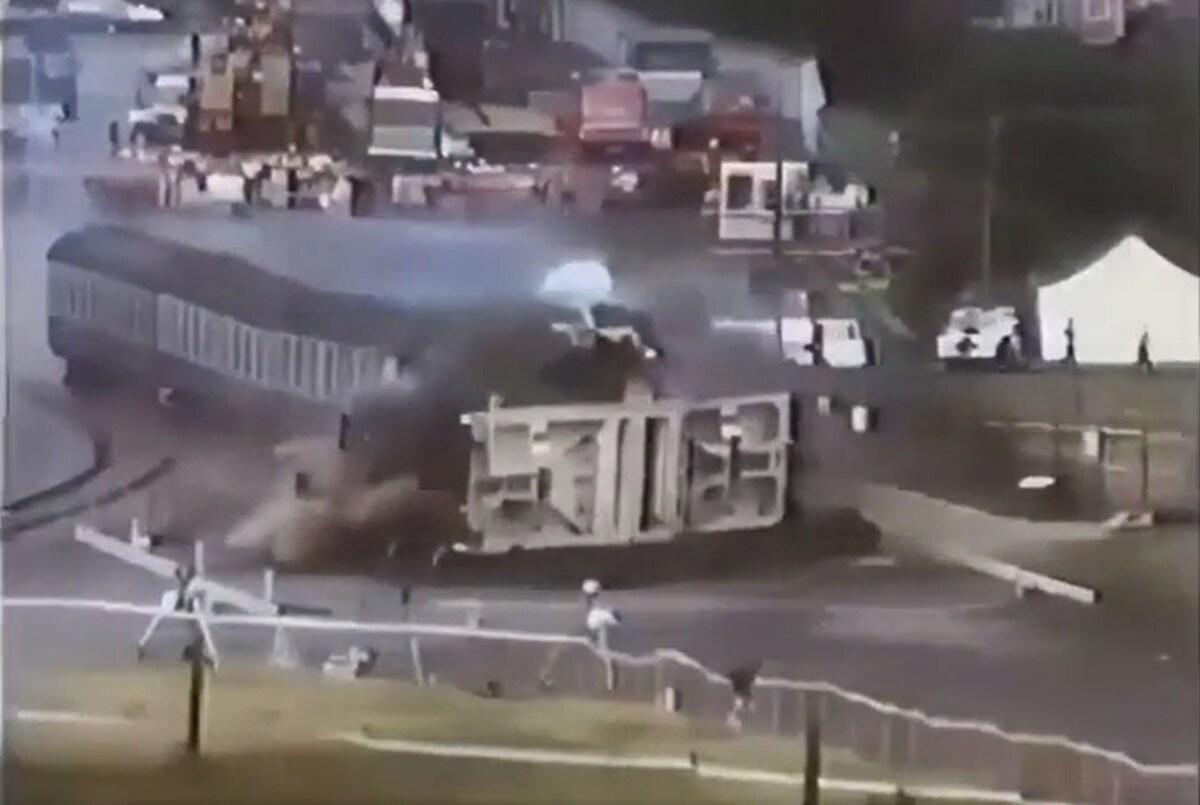
Great Britain's Central Electricity Generating Board deliberately crashed an uncrewed train traveling at 160 kilometers per hour into a nuclear container on July 17, 1984. The experiment aimed to demonstrate that massive rectangular steel containers used for transporting nuclear fuel could survive a rail disaster.
As discovermagazine.com explained, the British public had long held safety concerns about transporting nuclear materials, and anti-nuclear protests were frequent during the 1980s. The Central Electricity Generating Board previously dropped containers from heights, burned them, and smashed them, but public doubts persisted.
To resolve public fears, the corporation partnered with British Rail to stage a real train crash. The test was named Operation Smash Hit.
Operation Smash Hit setup
The Central Electricity Generating Board purchased a decommissioned locomotive capable of reaching 160 kilometers per hour and modified it to pull three standard carriages. Workers placed a nuclear flask on a platform similar to those used by British Rail, overturned the wagon onto its side, and laid it across the test track rails directly in the path of the train.
The driverless train set off approximately 10 kilometers from its destination, accelerating to around 160 kilometers per hour. A crowd of 1,500 spectators watched from a distance as cameras filmed the collision from various angles.
The impact threw the locomotive into the air, creating a fireball and a huge swirling cloud of dust. The nuclear flask suffered only minor external damage.
Test results and costs
Experts checked the pressure inside the container following the crash and found it lost only 0.26 pounds of pressure from its pre-experiment level of 100 pounds. The various tests, including the train crash, cost approximately 4 million pounds sterling at the time, which equals about 2 million US dollars in today's inflation-adjusted prices.
The experiment proved that railways are one of the safest methods for overland nuclear fuel transport, a practice Great Britain continues today.
UNIAN previously reported that a former Cold War bunker in Great Britain was put up for sale with a starting price of 45,000 pounds sterling.


