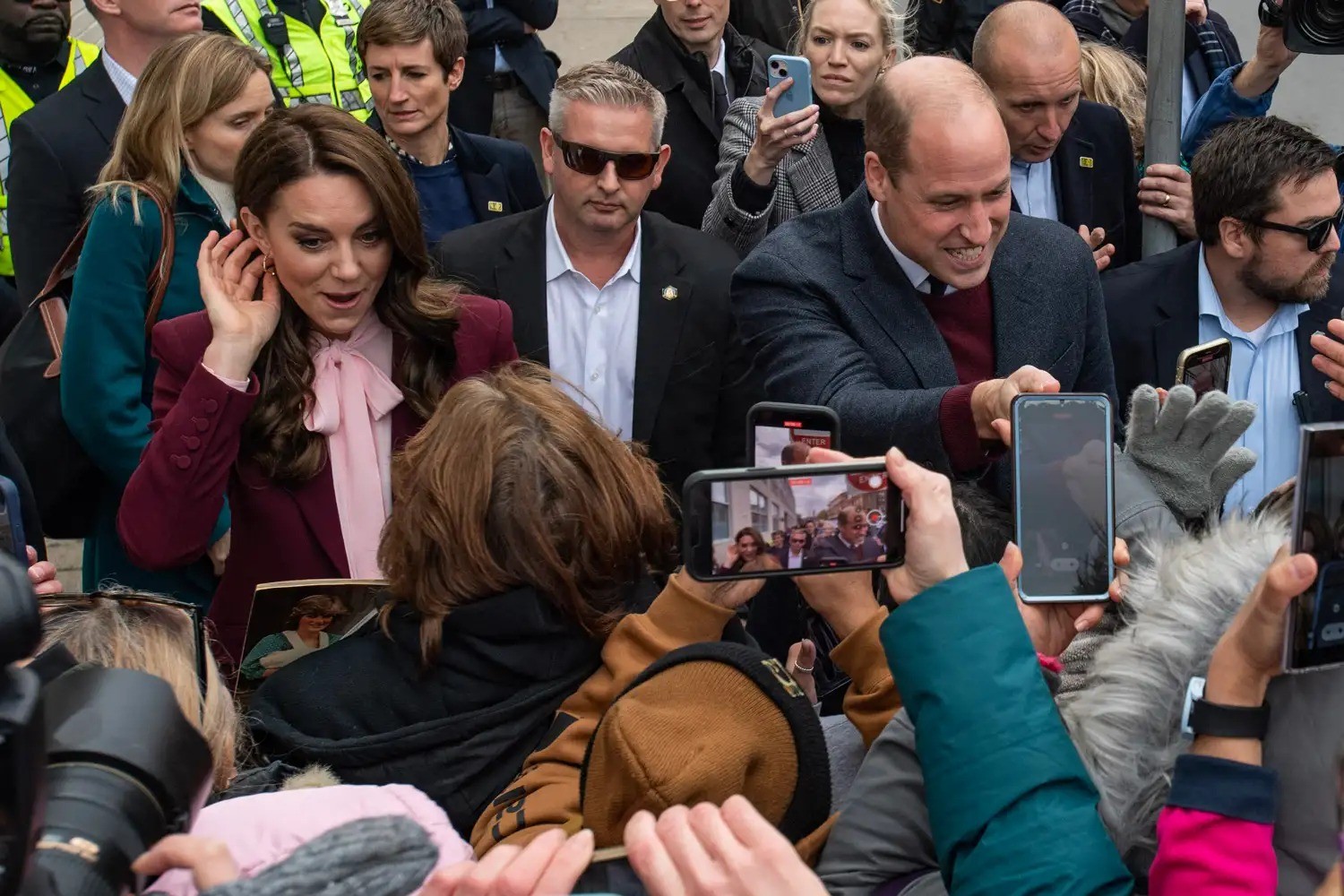
Members of the British Royal Family, including King Charles III, Queen Camilla, Prince William and Catherine, Princess of Wales, follow a long list of protocols that shape even their simplest interactions with the public during official engagements, according to People magazine.
Some royals grow up learning these customs from childhood, while others adapt to them later. Camilla and Kate are examples of the latter, having become official members of the institution only after marrying their husbands.
People magazine reported that there are at least ten customs and protocols that help determine how representatives of the Crown should behave at official engagements. Some of these guidelines are widely known, while others can surprise even attentive royal watchers.
Why autographs are banned
Unlike musicians and actors, members of the British Royal Family do not usually hand out autographs to admirers. The restriction exists mainly to prevent signatures from being copied or used fraudulently.
Royal expert Richard Fitzwilliams explained that there is also a concern about favoritism, since giving an autograph to one person could upset others nearby.
Despite the restriction, royals are allowed to sign visitor books during official engagements and on certain specific occasions.
In November 2026, Kate Middleton had to politely decline a request for an autograph during a visit to Mumbai, India. The Princess of Wales explained that she was not permitted to sign.
Rules on photos and selfies
Although selfies have become common at meetings between celebrities and fans, the Royal Family has traditionally taken a more cautious approach to this kind of photograph, largely for security reasons, since the pictures require standing close to strangers.
Queen Elizabeth II, who died in September 2022, was not a great fan of selfies and preferred conventional photographs, which allowed more direct eye contact with the public.
In recent years, however, that stance has become more relaxed. William and Kate, for example, have already agreed to pose for selfies during public engagements.
Keeping affection discreet
Kisses, hugs and other displays of affection between royal couples also follow certain unwritten conventions. There is no official rule banning public displays of affection, but royals tend to avoid overly intimate behavior at institutional events.
William and Kate largely follow the example set by Elizabeth II and Prince Philip, who kept a reserved public manner. Even so, the Prince and Princess of Wales occasionally show affection through discreet gestures, such as a hand on the back, a kiss on the cheek or brief physical contact.
Avoiding political topics
Royals are traditionally careful to avoid partisan comments or statements that could compromise the monarchy's neutrality. During official engagements, they tend to favor brief conversations about everyday subjects.
During a visit to Wales in 2022, for instance, William spoke with residents about his interest in learning Welsh and shared some phrases he had been studying.
Sitting posture and the Duchess Slant
Even how royal women sit is part of the etiquette. One of the best-known positions is called the Duchess Slant, in which the knees are kept close together and the legs tilted slightly to one side.
The posture is often used when royals are wearing dresses or skirts, especially in front of photographers, and is credited with keeping an elegant appearance during long ceremonies while preserving modesty.
Dress codes for every occasion
Clothing also plays an important role in royal protocol. Royals must choose outfits suited to the type of engagement, taking into account the time, the location and the level of formality.
Although the monarchy has adopted a more contemporary style in recent years, overly casual clothing remains rare at official events. Kate Middleton, for example, has worn jeans to less formal engagements. At traditional ceremonies, however, specific customs remain in place, such as wearing hats on certain daytime occasions.
Packing black clothing for trips
One of the more unusual protocols is the recommendation to pack at least one black outfit for every trip. The tradition gained strength after an episode involving Elizabeth II in February 1952, when she learned of the death of her father, King George VI, while abroad.
At the time, the then-princess did not have suitable mourning clothes and had to wait for a black outfit to arrive before being photographed on her return to the United Kingdom. Since then, royals have made it standard practice to travel prepared for unexpected situations requiring mourning attire.
Restrictions on gifts from the public
Flowers, cards and keepsakes are often handed to royals during public appearances, but not every gift can be accepted. Official guidelines allow certain low-value items, such as flowers, books without controversial content and food in reasonable quantities.
For these categories, policy sets a limit of £150. Gifts that fall outside the approved conditions may need to be returned or given another appropriate use. The measures are meant to avoid conflicts of interest and prevent royals from receiving inappropriate benefits because of their roles.
Table manners follow the monarch's lead
During official meals, royals must also take their cue from whoever holds the highest rank at the table. Etiquette experts say the pace of a meal usually follows that of the host or the monarch, and traditionally, once the king finishes eating, the other guests are expected to stop as well.
Preparation for these situations starts in childhood. Children of royal family members receive guidance on posture, behavior, tone of voice and proper ways of greeting other people. The order in which people enter and are seated at certain events also reflects royal hierarchy.
Garlic and onion banned from the menu
One of the oddest traditions concerns the royal diet. During Elizabeth II's reign, garlic and large amounts of onion were avoided in royal kitchens, out of concern for breath, since royals frequently have to talk closely with officials and members of the public.
Queen Camilla touched on this preference during an appearance on MasterChef Australia in 2018, confirming that garlic was an ingredient the kitchens avoided. Former royal cooks have also said that dishes prepared at Buckingham Palace traditionally did not include garlic or excessive amounts of onion.
Test yourself
Why are members of the British Royal Family not allowed to give autographs?
What is the gift value limit mentioned in the royal guidelines?
What ingredient did Queen Camilla confirm was avoided in royal kitchens during Elizabeth II's reign?
Where it happened
London, United Kingdom