


Spanish media personality Carmen Lomana has defended social media influencers and reflected on the history of Marbella in her latest national newspaper column following a one-week writing break.
Writing in her regular column for Spanish newspaper La Razón on August 29, Lomana explained that she had skipped her previous article due to a lack of inspiration, feeling that current public debates were redundant and absurd.

Defense of Influencers
Lomana criticized public attacks directed at young digital content creators, attributing the widespread backlash to frustration and envy. She questioned why attractive young people working in non-traditional media roles with high user engagement and large followings face criticism for their work.
She noted that followers enjoy viewing influencer content and defended the financial success of digital creators. She stated that luxury, fashion, and beauty companies would not sign advertising contracts with influencers unless those partnerships yielded a solid return on investment.
Turning to broader online trends, Lomana expressed annoyance over self-proclaimed experts who offer unsolicited advice and instruct the public on what to eat. She described social media platforms as a circus and a public square where everyone eventually gathers, though she admitted that she enjoys using them to laugh and learn new details.
Lomana is a prominent Spanish media figure, socialite, and businesswoman who regularly contributes opinion pieces on culture and society to national publications.
Views on Menopause
In her column, Lomana also addressed public discussions surrounding menopause, referring to it as the major discovery of the year. She questioned why the topic is treated as a cursed term and blamed for numerous health issues affecting women.
She suggested that a lucrative commercial industry has emerged behind public anxiety surrounding menopause. She described the condition as a welcome release from a monthly burden, relieving women of timing concerns and unwanted pregnancy worries.
Lomana rejected assertions that menopause inherently causes a decline in female libido as false. She explained that reduced passion typically stems from spending many years with the same partner and the routine of daily domestic life, advising women who feel unwell to consult a qualified gynecologist rather than listening to public rhetoric.
History and Culture of Marbella
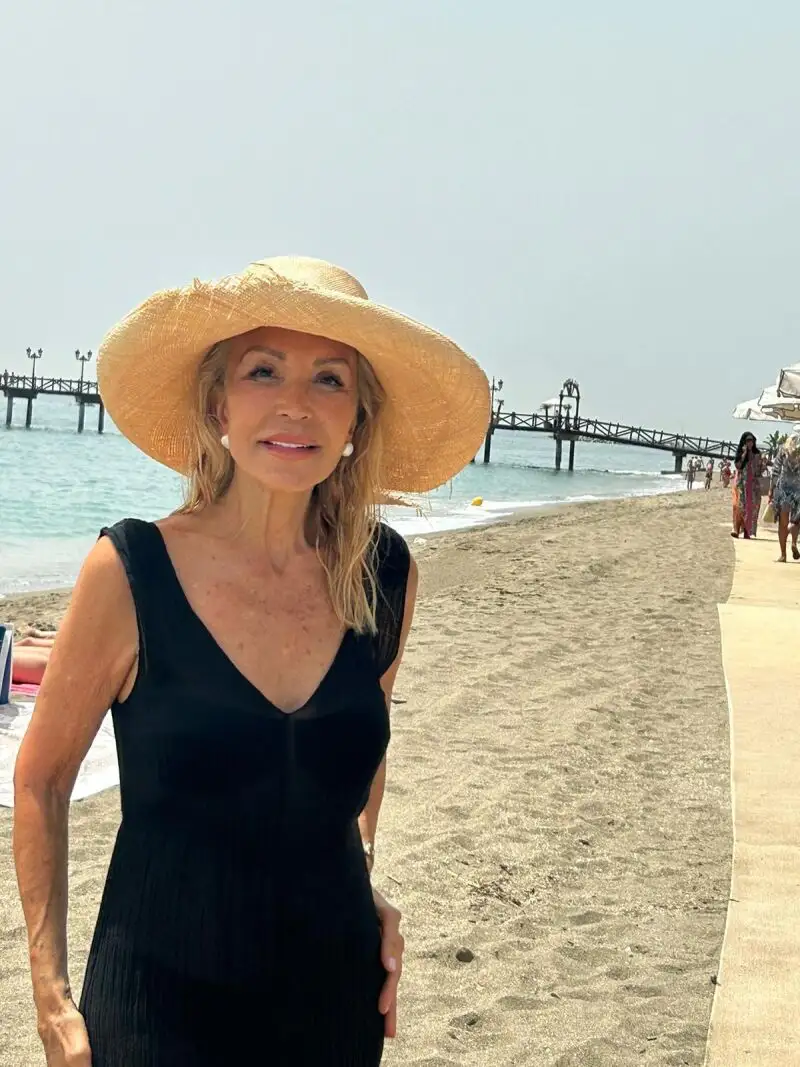
Reflecting on her summer vacation in southern Spain, Lomana expressed affection for Marbella as she prepared to return to her regular routines and obligations in Madrid. She praised the resort city for its entertainment options, cuisine, and traditional beachside bars.
She emphasized that Marbella offers far more than modern beach tourism, highlighting its historical heritage and old quarter. She singled out local landmarks including the Plaza de los Naranjos, narrow streets filled with shops and bars, and the Church of the Incarnation.
Lomana noted that the settlement dates back to the Roman Empire, when settlers chose the location for its mild climate and the shelter provided by the Sierra Blanca mountain range. She added that the highest peak overlooking the town is named La Concha due to its seashell shape.
Marbella is a renowned coastal city located on the Costa del Sol in Spain's southern Andalusia region, situated along the Mediterranean shoreline in Málaga province.
Local Heritage and Tourism
Lomana voiced frustration that media coverage frequently focuses only on tourism while ignoring Marbella's past. She recalled that troops led by King Ferdinand the Catholic captured the town from Muslim rule on June 11, 1485, the feast day of Saint Barnabas, incorporating it into the Crown of Castile and establishing Saint Barnabas as its patron saint.
She explained that modern luxury tourism in the area originated around the Marbella Club, a hotel founded by the Hohenlohe family. The establishment attracted German aristocrats who settled in the coastal town following World War II.
Lomana concluded that Marbella possesses a resilient social fabric that has weathered historical challenges with dignity and elegance. She stated that the town continues to grow more beautiful each day as it welcomes international visitors drawn by the warmth and hospitality of its residents.


