Dominican writer Chiqui Vicioso has published "NuYORK" (2026), a historical novel that revisits a little-known chapter of Dominican migration: the roughly 5,000 Dominicans, including judges, lawyers, musicians and painters, who fled the dictatorship of Ulises Heureaux, known as Lilis, for New York in the late 19th century.
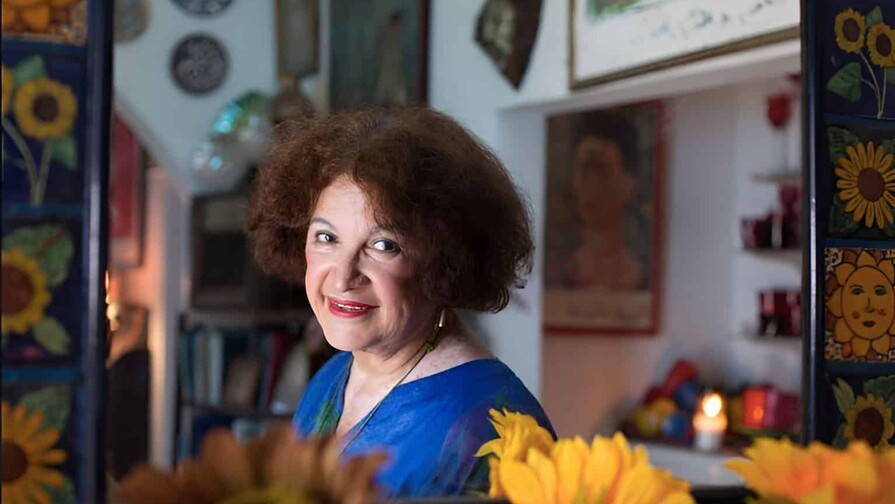
Vicioso said questions about who those emigrants were, how they lived and what they found on arrival led her to research the little-known period, work that eventually became her new novel.
She will present the book in the Dominican Republic in two events with readers: on Friday, December 4, at Cuesta Libros in Santo Domingo, and on Saturday, December 5, at the Centro Leon in Santiago de los Caballeros.
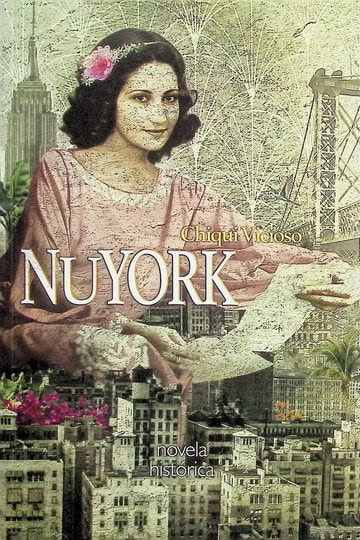
The title reproduces the way Dominicans pronounce and popularly refer to New York, an everyday expression that reflects how the community made the city their own through their own language and identity.
The novel is set in a city undergoing transformation, where cigar factories, textile mills and working-class neighborhoods were settings for cultural exchange, migratory dreams and social demands.
To rebuild that world, Vicioso built the story around two sisters from Santiago: Amelia, who emigrates to New York, and Maria Luisa, who stays behind in the Dominican Republic. Through 22 letters the sisters exchange, readers see what unfolds in both countries and how distance changes the lives of those who leave and those who remain.
How the Project Began
The research began with a different story altogether. Friends had suggested Vicioso write about a Danish model who had married a man from Santiago de los Caballeros.
That idea led her to research the fashion industry, the early years of modeling and the links between Denmark, New York and Santiago. She ended up finding far more than she had set out to look for.
Although she had lived in New York for 16 years, Vicioso said she was surprised to discover a city she had never known, describing her trips through Lower Manhattan, former worker housing and the spaces where immigrants once lived.
Cigar Workers and Their Readers
One of her discoveries was the presence of around 28,000 cigar workers in the city, among them Cubans, Puerto Ricans and Dominicans.
That is why the book carries special meaning for her. She said the novel is a tribute to the cigar workers, to Santiago and to the Dominican emigrants of that era.
Beyond the factory work itself, she was particularly struck by a tradition known as cigar factory readers. These were people hired by the workers themselves, paid with part of their wages, to read newspapers, novels and magazines aloud while the workers rolled cigars.
Labor Struggles and Rights
Life for those workers was far from easy. Shifts could stretch to 16 hours, and women and children also worked in the factories.
Looking deeper into the period, Vicioso found large labor movements demanding eight-hour working days and better conditions. She also learned of tragedies such as the fire at the Triangle factory in New York, where 146 garment workers died in 1911.
She said learning these stories is a reminder that many rights now taken for granted were won through the sacrifice of earlier generations, adding that today's workers should understand that past generations fought so they could have eight-hour working days.
The author also drew a connection to the current debate over migration and how societies perceive people who leave their countries in search of opportunity. She said it is important to recognize the role immigrants have played in the development of the societies that receive them, arguing that history shows migration has played a fundamental role in the growth of cities.
Dominican Businesses and Political Figures in New York
"NuYORK" also recovers the Dominican role in New York's economy at the time, describing cigar makers and textile entrepreneurs who built businesses and contributed to the growth of those industries. Among the names Vicioso cites are Juan Vicini and Eduardo Leon, who exported his cigars to the United States and Germany.
Figures such as Jose Marti, Eugenio Maria de Hostos and Ramon Emeterio Betances passed through those same spaces, where readings also served to share ideas and support political causes. Vicioso said workers even donated a week of their wages to support the Cuban independence struggle, a practice she believes is worth reviving, saying factories of the period became spaces for intellectual formation and community gathering.
Why She Chose Letters
The choice of letters as a narrative device was not accidental. A playwright and winner of the National Theater Prize, Vicioso said she feels at ease building stories through dialogue and is drawn to what the epistolary genre reveals about everyday life.
She said women are very observant, explaining that the letters in the novel offer descriptions of the era, its spaces and its customs.
The result is a novel that combines fiction, memory and historical research. The book is already available in English and is being translated into Italian, with plans for distribution in Spain and France.
Vicioso said she feels very happy to have finished the novel, adding that it was not exactly the book she originally set out to write, but that she came to understand it was the story she had to tell.
What happens next
Chiqui Vicioso will present "NuYORK" to readers on Friday, December 4, at Cuesta Libros in Santo Domingo, and on Saturday, December 5, at the Centro Leon in Santiago de los Caballeros.
Test yourself
What idea first led Vicioso to the research behind "NuYORK"?
How many letters do the two sisters exchange in the novel?
Where will Vicioso present the book on December 5?
Where it happened
Santo Domingo, Dominican Republic