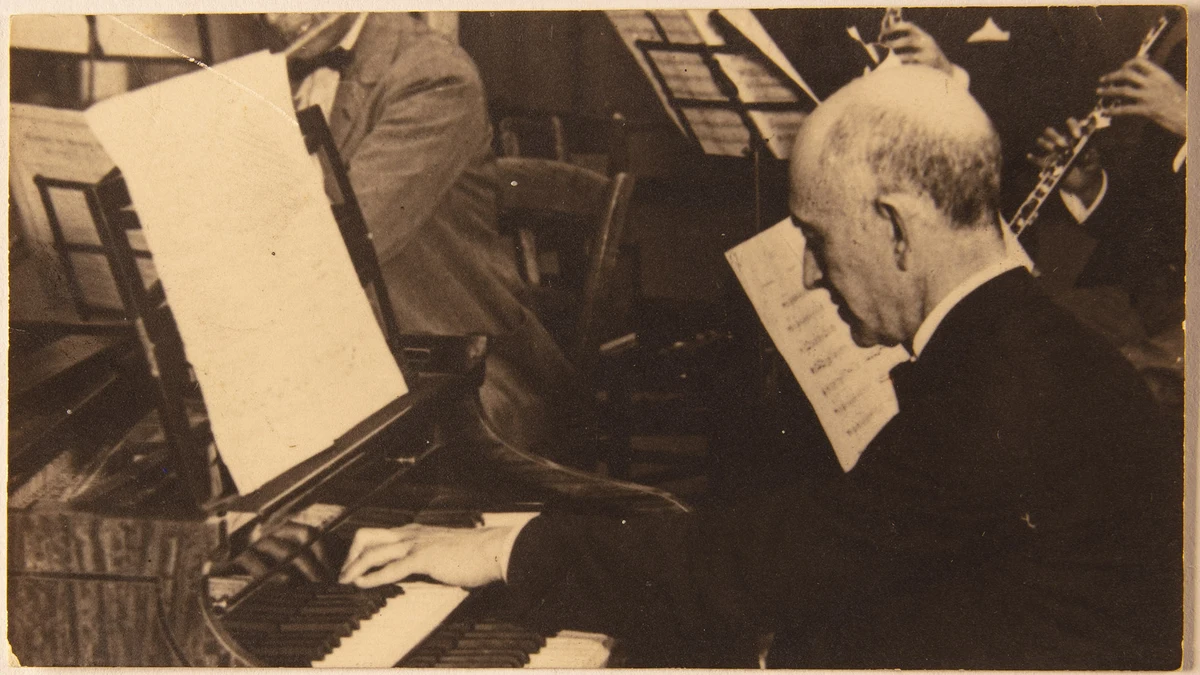
This month marks 150 years since the birth of Spanish composer Manuel de Falla, coinciding with the 80th anniversary of his death on November 14 in Alta Gracia, Argentina. Falla, one of Spain's most significant classical composers, spent his final years refusing to become the celebrated musician of a regime he blamed for the death of his friend, the poet Federico Garcia Lorca.
In January 1947, a ship carrying Falla's coffin arrived at the port of Cadiz from Argentina. Waiting on the dock were government minister Raimundo Fernandez-Cuesta and writer Jose Maria Pemán, as Francisco Franco's regime staged a formal welcome for the composer's remains. Falla was laid to rest in the crypt of Cadiz Cathedral, close to the sea where he had been born.

Falla was a small, balding man who lived with a lifelong fear of drafts and germs. He checked his temperature several times a day and disinfected piano keys with alcohol before performing in public.
From Cadiz to Paris
Falla came from a well-off family in Cadiz. His mother, a skilled pianist, first sat him at the keyboard. He later studied at the Madrid Conservatory under Jose Trago, and it was composer Felipe Pedrell who introduced him to cante jondo, the deep form of flamenco singing, teaching him a way of listening to music rather than specific songs. To pay his bills, Falla wrote zarzuelas, Spanish operettas, that have since been forgotten, including by Falla himself.
Between 1907 and 1914, Falla lived in Paris, where composers Paul Dukas, Claude Debussy and Maurice Ravel welcomed him, and fellow Spanish composer Isaac Albeniz opened doors for him. Falla absorbed the French school's approach to orchestral color without becoming anyone's disciple. He later drew on the music of Igor Stravinsky, Domenico Scarlatti and Castilian vihuela players, alongside his continued study of cante jondo.
A short, exacting catalogue
Falla's body of work is small because he refused to consider a composition finished until he had stripped it of everything unnecessary. His opera "La vida breve" won the Academia de Bellas Artes prize in 1905 but took eight years to reach the stage, premiering in Nice in French. In it, the heroine Salud dies as much because of her social class as for love, after her lover Paco leaves her for a woman with a dowry, though the work's dance and interlude are now better known than the full opera.
"El amor brujo" premiered in 1915 at Madrid's Teatro Lara as a "gitaneria" with singing and spoken dialogue, written for dancer Pastora Imperio. The libretto was credited to Gregorio Martinez Sierra, though it was actually written by his wife, Maria Lejarraga, a fact only acknowledged decades later. "Noches en los jardines de España" premiered in 1916 at Madrid's Teatro Real, a work in which Falla insisted the piano should dissolve into the orchestra rather than compete with it.
Into the European avant-garde
With "El sombrero de tres picos," staged by impresario Sergei Diaghilev in London in 1919 with choreography by Leonide Massine and sets by Pablo Picasso, Falla entered the heart of Europe's artistic avant-garde. Pianist Arthur Rubinstein premiered Falla's "Fantasia betica" in New York in 1920, a piece that treats the piano almost as a percussion instrument.
Falla's puppet opera "El retablo de maese Pedro" premiered in 1923 in the Paris salon of the Princess de Polignac, heiress to the Singer sewing machine fortune, and was later staged by filmmaker Luis Bunuel in Amsterdam and painter Ignacio Zuloaga in Paris. With his "Concierto" for harpsichord, written for musician Wanda Landowska, Falla turned away from sensual Andalusian themes toward Castile, Don Quixote and early polyphony, producing a spare, austere sound.
War, exile and Lorca's death
The Spanish Civil War reached Falla in Granada, where he lived at his home in the Antequeruela Alta district. When his friend Lorca, with whom he had organized the 1922 Concurso de Cante Jondo, was arrested, Falla did everything he could to save him. He failed, and Lorca's killing left him devastated. Falla later turned down an offer to lead the Instituto de España, citing poor health, which was true but also served as a convenient excuse.
In 1939, Falla left for Argentina with his sister, Maria del Carmen. He lived through hardship there, relieved only by friends such as politician Francesc Cambo. Madrid later offered him a generous stipend to return to Spain, but he declined, unwilling to become the musician of a regime he held responsible for Lorca's death or to live in comfort in a country where people were going hungry.
An unfinished masterwork and a lasting legacy
In Alta Gracia, Falla continued working on "Atlantida," a stage cantata he spent nearly 20 years writing without finishing. His student Ernesto Halffter completed it after his death. A first concert version was heard in 1961, and the definitive version was not performed until 1976. Some have called it "the Falla that fails," a play on the composer's name.
Falla's influence shaped composers including his direct student Ernesto Halffter, Halffter's brother Rodolfo, and Rosa Garcia Ascot, part of the circle known as the Grupo de Madrid, who learned from him that an artist could be both Spanish and European. The Civil War scattered the group, and several ended up in Mexico. The later Generation of '51, including composers Cristobal Halffter and Luis de Pablo, broke from Falla's style, a rejection that was itself a form of tribute. Decades later, flamenco guitarist Paco de Lucia dedicated an entire album to Falla.
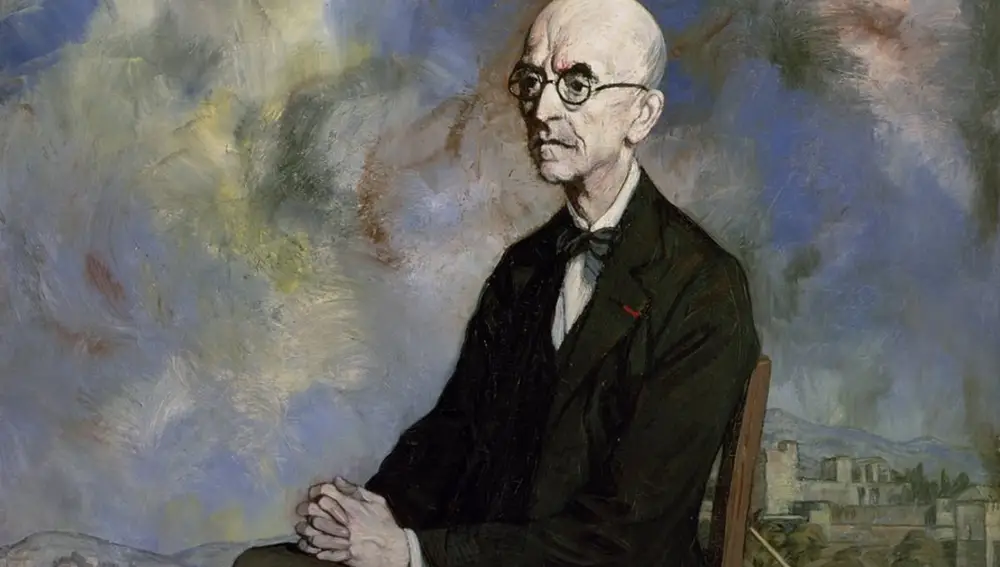
In 1974, while Francisco Franco was still alive, Spain issued a 100-peseta banknote bearing Zuloaga's 1932 portrait of Falla, a tribute the state had denied him in life. Falla's grave in Cadiz lies close to the sea, a site he, with his fear of drafts, would likely have found uncomfortable, though undeniably beautiful.
Test yourself
Who completed Falla's unfinished cantata 'Atlantida' after his death?
Why did Falla refuse the Franco regime's offer to return to Spain?
Where did Sergei Diaghilev stage Falla's 'El sombrero de tres picos' with sets by Pablo Picasso?
Where it happened
Cadiz, Spain