

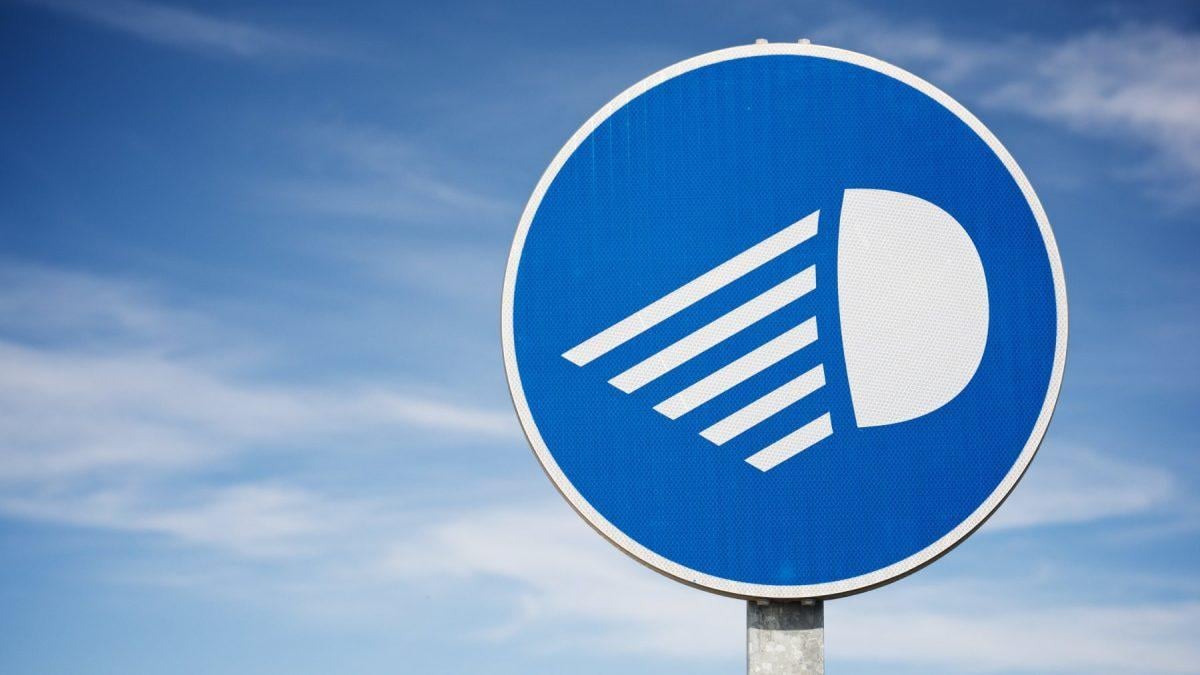
Motorists in Spain face fines of 200 euros if they fail to turn on their headlights after passing a circular blue road sign.
The warning applies to sign R-413, which displays a white headlight symbol with downward pointing beams on a blue circular background, Spanish motoring publication El Motor reported.
The sign makes dipped headlights mandatory from the point where it stands, regardless of the time of day or the weather conditions. Drivers must keep their low beams on even when the sky is completely clear and daylight visibility is good.
The rule is designed to ensure vehicles remain clearly visible to other road users, particularly in areas where lighting levels can drop or change suddenly. Dipped headlights provide illumination that reveals the roadway ahead without casting a glare that could blind oncoming traffic.
El Motor stressed that drivers must not confuse the sign with the high beam warning light found on car instrument panels. The slanted lines on the road sign represent dipped headlights, which are aimed downward towards the tarmac rather than straight ahead.
When drivers can turn headlights off
The legal requirement to keep dipped headlights on ends only when motorists encounter sign S-24. This sign also features a blue background with a headlight image, but adds a question mark next to the lamp symbol.
Road authorities commonly place sign S-24 at the exits of road tunnels to mark the end of the compulsory lighting zone.
Reaching sign S-24 does not give drivers automatic permission to switch off their lights. Motorists must keep their lights switched on if night has fallen, if heavy rain creates poor driving conditions, or if other weather hazards reduce road visibility.
Headlight rules across Spanish roads
Spanish traffic regulations also enforce mandatory lighting requirements on roads that do not have dedicated signs.
Motorcyclists must travel with dipped headlights switched on at all times of the day throughout Spain. Passenger cars do not have a universal requirement to keep headlights illuminated in normal daylight conditions, but drivers must switch them on at night, during fog, in heavy rain, and whenever visibility drops significantly.
The same obligation applies to vehicles using designated special lanes, such as reversible lanes or lanes arranged for traffic heading in the opposite direction.
Failing to comply with Spanish lighting rules carries a fixed fine of 200 euros. The penalty does not normally involve a deduction of points from a motorist's driving licence.
El Motor also warned motorists with modern vehicles not to place complete trust in automatic headlight systems. Ambient light sensors do not always respond accurately to shifting weather conditions or daylight tunnels, meaning drivers should manually check their light switches to remain on the right side of the law.