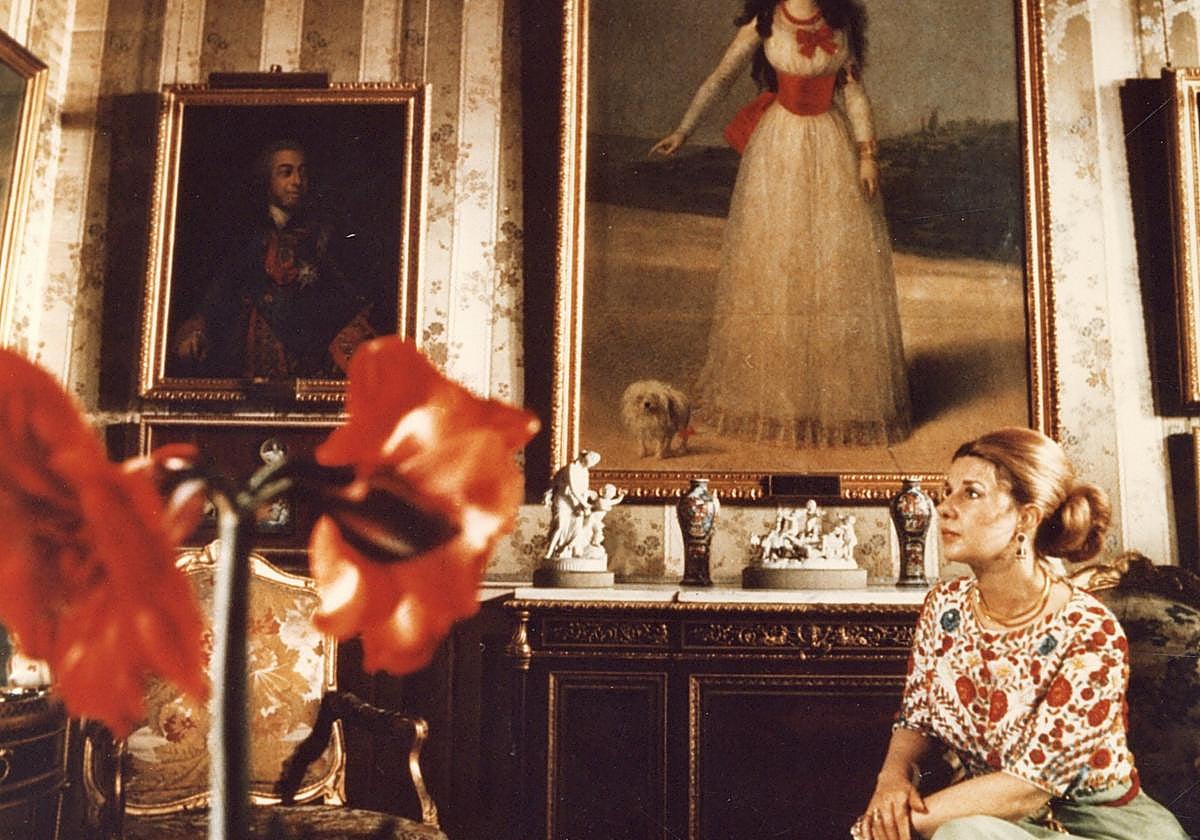
Cayetana de Alba, the late Duchess of Alba, spent much of her life surrounded by some of the greatest masterpieces in art history, including Francisco de Goya's 1795 portrait of María del Pilar Teresa Cayetana de Silva, the 13th Duchess of Alba, which hangs in one of the main salons of the Palacio de Liria in Madrid. Less widely known is that she also painted herself, and a new exhibition at the same palace is now putting some of her own work on public view.
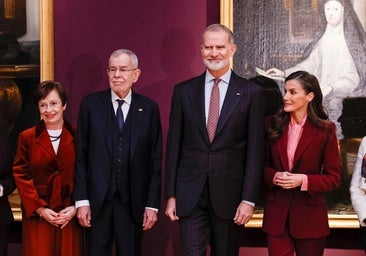
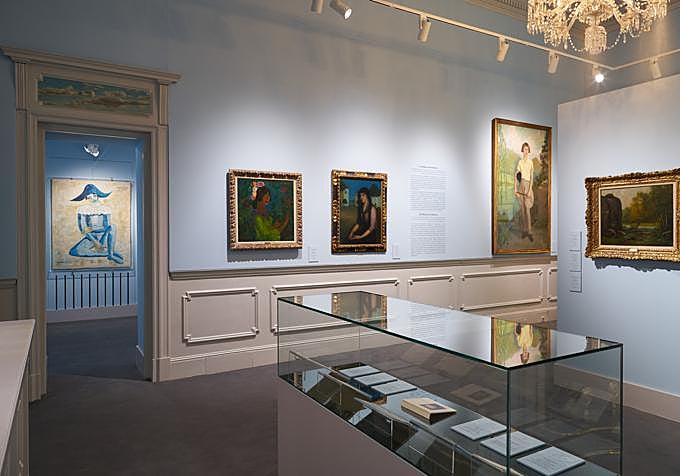
The show, called Cayetana. Grande de España, opened at the Palacio de Liria to mark the centenary of her birth and runs until 31 January 2027.
In an interview recorded by Spanish broadcaster RTVE in 2009, for an exhibition on her family's art collection at the Museo de Bellas Artes de Sevilla, the duchess said that when she painted she did not imitate any master. She described her own work as coming naturally to her, calling it a little impressionist and a little naive.
A teacher from Federico García Lorca's circle
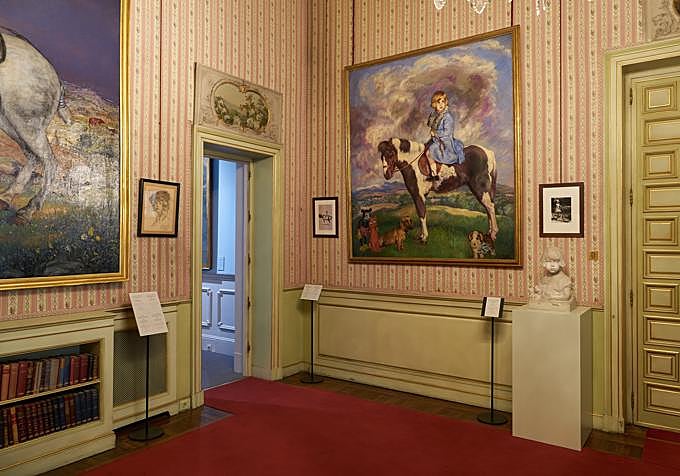
Much of Cayetana's interest in art traced back to her close relationship with her father, Jacobo Fitz-James Stuart, the 17th Duke of Alba. At just four years old she had already posed for the painter Ignacio Zuloaga, who depicted her riding her pony, Tommy, in 1930. The sculptor Mariano Benlliure also captured her likeness as a child.
Her painting teacher was José Caballero, a painter from Huelva and one of the more interesting figures of Spain's 20th century avant-garde. Caballero was a close friend of the poet Federico García Lorca, for whom he designed the stage sets of Blood Wedding. He also collaborated with Pablo Neruda and moved artistically from surrealism toward informalism.
Cayetana, who affectionately called him "Pepe Caballero," said in the same interview that he had been one of her favourite artists and the person who taught her to paint, a friendship that shows how far her artistic interests ranged beyond the classical masters hanging on the walls of her palaces.
Her painting studio at the Palacio de Liria
A photograph from 1960, kept by the Fundación Casa de Alba, shows Cayetana de Alba sitting on the floor of her painting studio wearing a black jumper, printed trousers and ballet flats. It offers a glimpse into one of the most personal rooms of the aristocrat's palace.
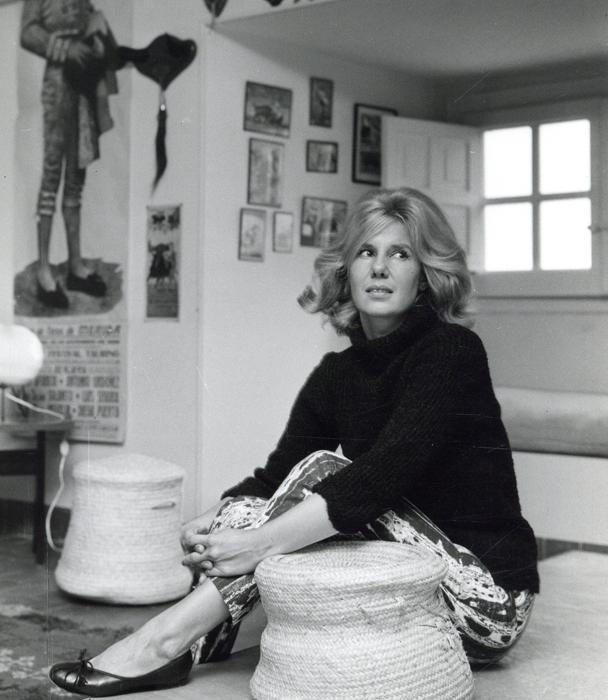
The same space held two of her great passions. Her daughter, Eugenia Martínez de Irujo, recalled during the presentation of the exhibition that her mother's painting studio shared its space with a flamenco tablao, where Eugenia herself used to dance as a child.
Still lifes that reached the auction market
Beyond landscapes and human figures, Cayetana also enjoyed painting still lifes and floral compositions. Some of these works left her palaces altogether and entered the art market.
In 1964 she painted a picture of a vase of flowers, which she later parted with. In 1997 she donated the piece to a charity exhibition organised in Seville by the association Sida Contigo. The painting, signed simply "Cayetana," ended up in the hands of the painter, poet and gallery owner Pablo del Barco, a neighbour of the Palacio de Las Dueñas.
An exhibition celebrating her artistic legacy
Eugenia Martínez de Irujo said her mother had a very strong personality and an enormous curiosity about everything connected to art, culture, music, dance and fashion. She curated Cayetana. Grande de España together with Cristina Carrillo de Albornoz.
That artistic sensibility runs through the whole exhibition, which brings together more than 200 pieces. Alongside the paintings Cayetana made herself, visitors can see haute couture gowns, photographs by Richard Avedon and Cecil Beaton, and correspondence with figures including Jackie Kennedy and Queen Elizabeth II of England.
Having lived surrounded by works of incalculable value, Cayetana found in painting a way to express herself without following the conventions of the great masters she so admired. Cayetana. Grande de España can be visited at the Palacio de Liria in Madrid until 31 January 2027.
What happens next
The exhibition Cayetana. Grande de España remains open to visitors at the Palacio de Liria in Madrid until 31 January 2027.
Test yourself
Where is the exhibition on Cayetana de Alba's art being held?
Who taught Cayetana de Alba to paint?
What did Eugenia Martínez de Irujo say shared space with her mother's painting studio?
Have your say
Does learning about a public figure's artistic hobbies change how you see them?
Where it happened
Madrid, Spain