Greek actress Eleni Radou announced on Tuesday, November 24, 2026, that her mother had died, revealing the news in a post on her personal Facebook account.
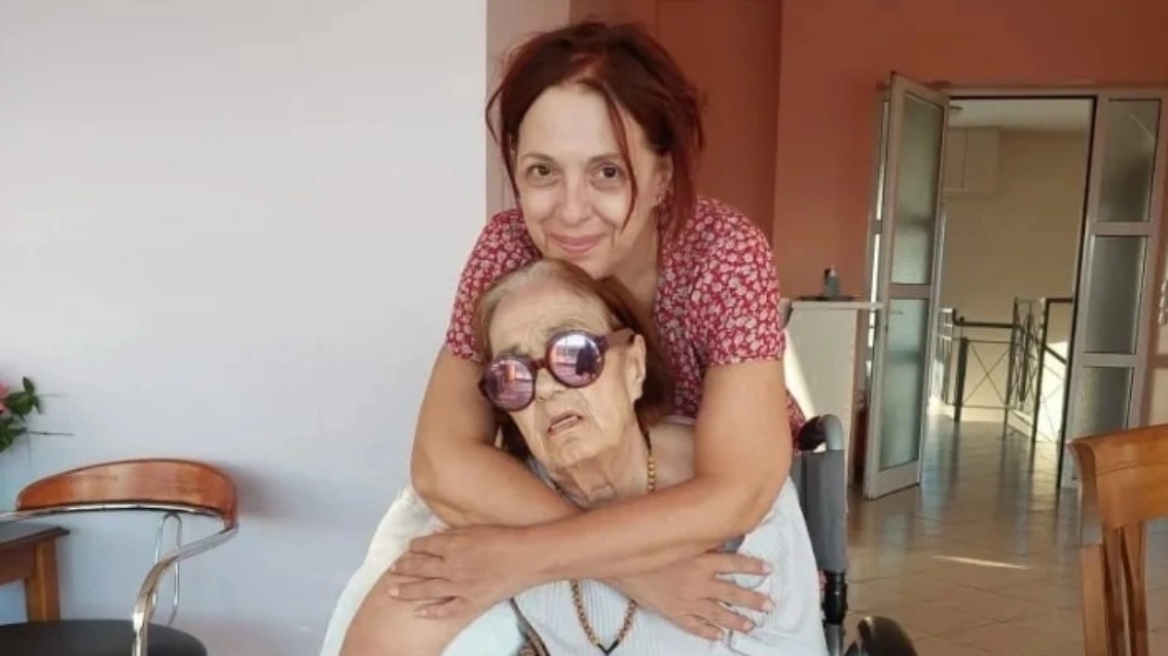
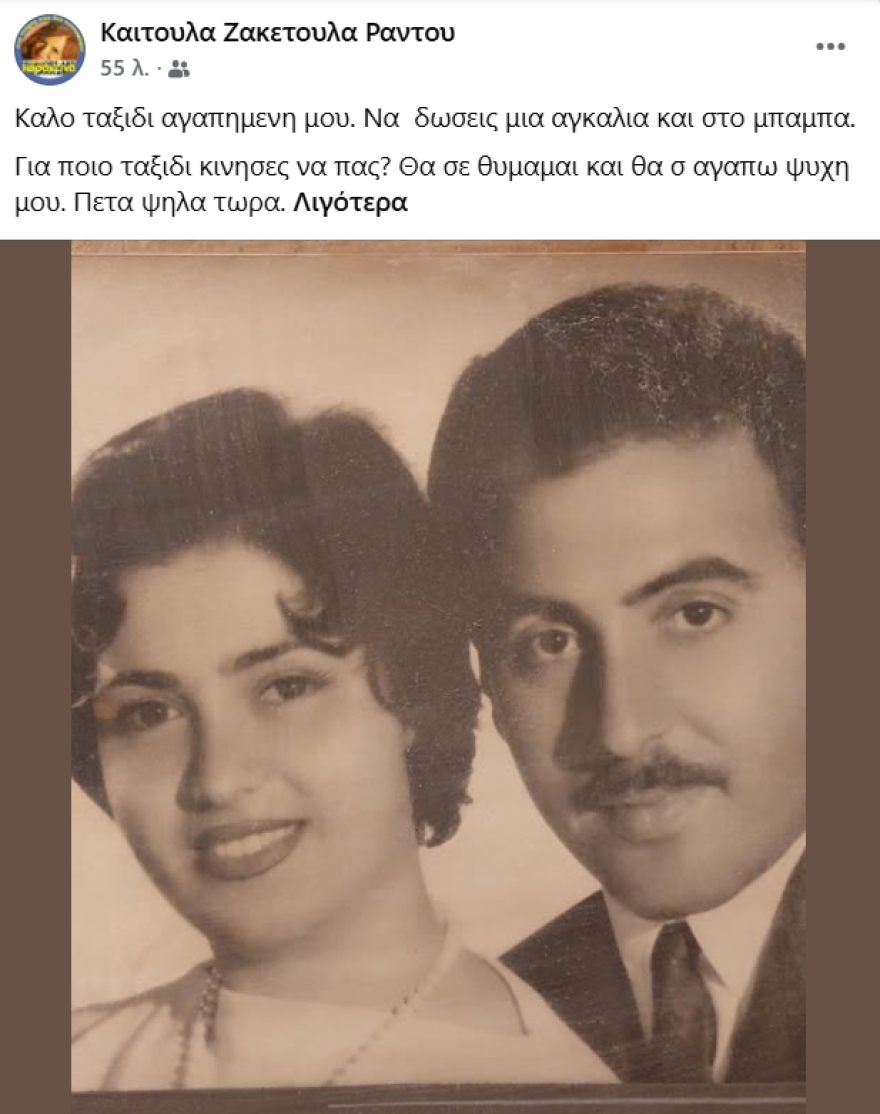
Radou shared a photograph of her mother standing beside her father from years earlier. In the caption, she wrote a farewell message wishing her mother a good journey, asking her to give her father a hug too, wondering where she was travelling to, saying she would remember and love her, and telling her to fly high now.
The actress included a link inviting followers to view the post.
Radou's mother had been living with dementia, and the actress had personally taken on her care. In a September 2024 interview on the programme "Studio 4", Radou said she had never been able to reconcile herself with the illness.
A painful illness
She described dementia as dangerous and unbearable, explaining that caregivers live with someone who might unknowingly put something fatal in their mouth. She said she hoped state support would eventually be introduced for everyone caring for a relative who is immobile and dependent.
She said she could not come to terms with the disease, noting that it moves through many stages, and that just as you adjust to one, a worse one follows. To cope, she said, she worked constantly to distract herself. After seven years of caregiving, she said, she still broke down every time she visited, and that even with psychological support, a caregiver is left practically helpless. She said going on holiday was difficult because even with hired help there was always something only she could do, and that she had to be back every Tuesday.
Caring largely alone
In an earlier interview that same year on a podcast hosted by Maria Bakodimou, Radou said anyone taking on the role of caregiver needs support from a psychologist to cope. She said being forgotten by a parent cuts so deep that it inevitably shakes a person psychologically, describing her mother as alive but, in a sense, already gone. She said chaos had at times taken over the house, both with the hired carers and within the family, and that the confusion was contagious, particularly when her mother was still able to speak.
She said that recognising trauma does not mean resolving it, adding that after enormous work on herself she had not managed to change, only to understand why she acted the way she did. She said she had tried to calm what she called the monster inside her.
The first symptoms and a daily routine built on fear
Radou said the first symptom of her mother's dementia had been a lack of emotion, with any feelings that did surface tending to be aggressive. She said her mother had reached a stage of not speaking at all and needing the care of a baby. Within a family, she said, usually only one person ends up as the caregiver, who becomes as dependent on the sick parent as the parent is on them.
She said there had been many moments when she felt hurt that caring for her mother brought no love in return, since the illness left her mother unable to feel any of it. She said she visited every day out of fear that missing days would mean her mother would no longer recognise her at all. She said living alongside someone with dementia means fighting your own ghosts, and that you learn to give completely selflessly, first for your child and later for your parent.
She recalled moments of walking in and finding her mother's expression hostile, saying she would leave in pieces, struggling to cope. She described once telling her mother not to look at her that way or she would throw her off the balcony, and said she constantly talked to herself to stay focused on what needed to be done. She said it was hard to accept that it was the illness, not her mother, speaking, and that the guilt over considering a specialised facility with supervision had been exhausting, because at home she felt she had control. She said her mother had also suffered a stroke and required hospital care.
"I won't leave her side"
Asked about the possibility of disconnecting her mother to end her suffering, Radou said people tend to disappear when things get hard, and that she did not want to leave her mother's side while she was in such a difficult state. She said she liked that she had not abandoned a fight that was already lost. She said that when her mother eventually died there might be a terrible kind of release, but that she had never wished for her death in order to achieve it.
She said she had kept visiting, seeing and touching her mother for around six years, and that this was something she could not change. She said that if her mother ever asked to be disconnected, she would tell her to ask someone else, because she herself could not do it. She said no one is ever truly ready for death. She added that if she herself developed dementia later in life, she would want her own daughter to treat her the way she treats her mother, admitting that was not necessarily an admirable thing to say, but that she simply would not want to be abandoned.
The play born from her mother's illness
Radou's mother is closely tied to the actress's stage show "To Parti tis Zois mou" (My Life's Party), regarded as one of the most successful Greek productions of recent years and repeatedly sold out. The show grew directly out of Radou's personal experience caring for her mother through dementia.
Speaking to host Tasos Tryfonos on the programme "Tet a Tet", Radou said her greatest fear was whether she would be able to keep performing the play after her mother's death. She said she was afraid that once both her mother's cycle and the play's cycle closed, that was the moment she would collapse. In another interview, she said she had created the show to come to terms with her mother's end, but had not managed to, and that the closer that end came, the more devastated she felt.


Test yourself
What did Eleni Radou announce on Facebook on November 24, 2026?
What illness had Radou's mother been living with, according to the actress?
What is the name of Radou's stage show inspired by her mother's illness?