

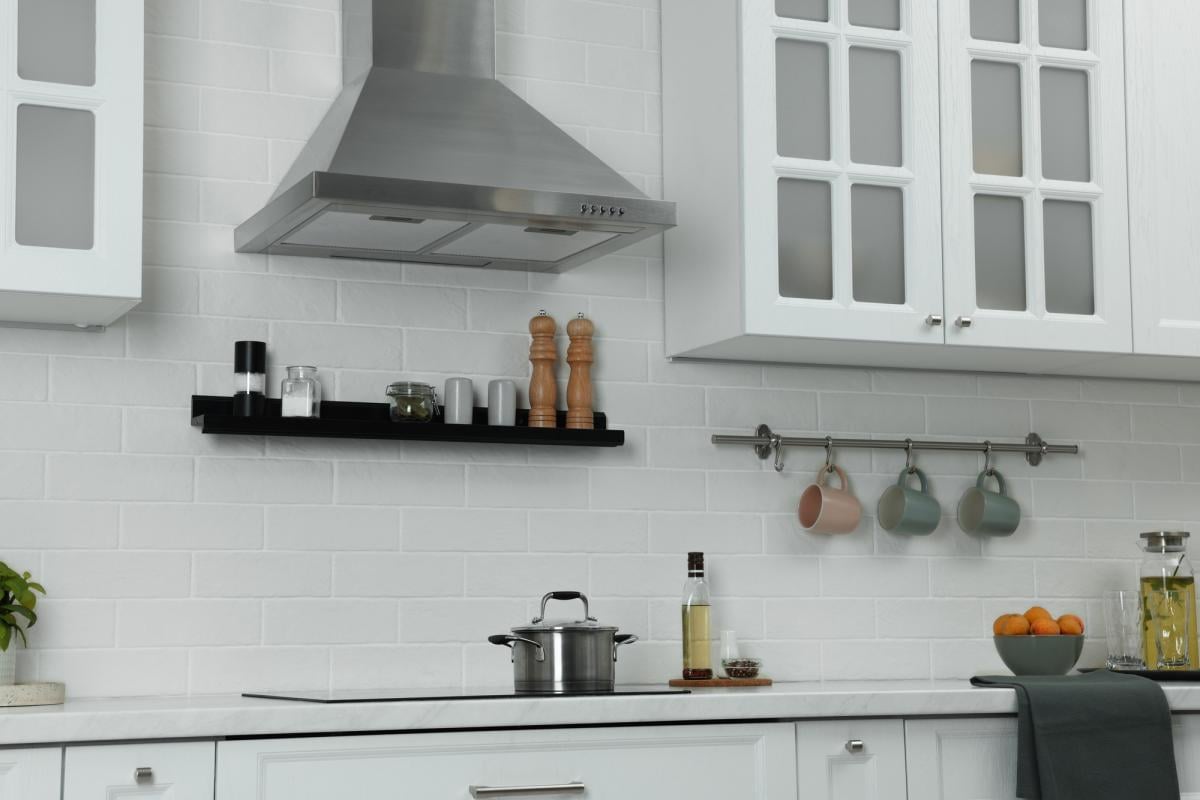
Homeowners are increasingly abandoning traditional ceramic tiles above kitchen countertops in favor of specialized interior paints, Polish home design portal Dom.wp.pl reported.
The shift offers a faster and significantly cheaper alternative to costly tile installations while eliminating dirty grout lines that trap grease, food splatters, and moisture.
Tile backsplashes have served as a standard kitchen feature for decades, but grout seams present a persistent maintenance challenge. Over time, grease, water vapor, and food residue collect in grout joints, creating narrow crevices where mold and fungus easily thrive. Cleaning these porous seams often becomes difficult and labor intensive.
A smooth painted wall removes grout lines entirely, eliminating hidden corners where moisture can accumulate. Daily cleaning requires only a single wipe using a damp cloth combined with a small amount of standard dishwashing liquid.
Choosing paint also dramatically reduces renovation time. Instead of a multi-day project involving heavy dust, hammering, and wall chiseling, painting can be completed in a single day. Purchasing a can of high-quality paint and a roller costs a fraction of what a professional tiler charges for labor alone, excluding the cost of purchasing ceramic tiles, tile adhesive, and grout.
Selecting specialized kitchen paint
Selecting the correct paint formula is critical because standard acrylic wall coatings quickly absorb stains from tomato sauce or hot oil splatters. Experts advise using next-generation ceramic paints or high-quality latex paints, which cure into a hard, non-porous barrier that repels moisture and grease. Hydrophobic properties ensure that dirt particles remain on the outer surface rather than penetrating into the wall material.
Homeowners should select products rated as Class 1 resistance under the European standard PN-EN 13300, which evaluates the wet scrub resistance and durability of interior paint systems. Class 1 certification guarantees that the coating can withstand repeated washing with a wet sponge and mild detergents without losing its original color or creating shiny patches. Additionally, quality kitchen paints contain specialized biocidal additives to prevent mold and mildew growth in humid, warm conditions.
Step-by-step renovation process
Surface preparation is the most critical stage of applying wall paint above a kitchen countertop. The wall must be thoroughly washed using painter soap or a degreasing detergent to remove oil residues, then allowed to dry completely. Painter tape and protective plastic film should be applied to shield countertops, electrical sockets, and the undersides of wall cabinets.
A coat of primer is recommended if the wall surface was previously repaired or exhibits high absorbency. Homeowners can then apply the first layer of paint using a specialized short-nap roller, such as microfiber or velour, which creates a smooth finish without leaving stipple marks. After allowing the drying time specified by the manufacturer, typically between two and four hours, a second coat completes the project.
Long-term flexibility and design trends
Dom.wp.pl emphasized that painted kitchen walls represent a practical, durable alternative to traditional ceramic tiles rather than a temporary design trend. If homeowners want to change their color scheme after a year or two, the wall can be repainted within a few hours without construction noise, dust, or extensive renovation costs.
The advice aligns with a recent report by Ukrainian news agency UNIAN outlining major interior design anti-trends for 2026. Designers noted that white tiles, glossy finishes, dark blue kitchen islands, massive rectangular range hoods, matte black hardware, wall-to-wall cabinetry, and monochrome kitchen schemes are increasingly viewed as outdated.


